[00:00:00] Speaker A: RPG Lessons Learned. When the game is over, when your players are gone, that's when lessons are learned.
Find us
[email protected].
email us at rpgllpodcastmail.com and find us on BlueSkyPGL.
Hi, welcome to RPG Lessons Learned, the show where you can learn about our mistakes. I'm Dusty and with me ways is Tanner. Hi, Tanner.
[00:00:33] Speaker B: Dusty, how you been, man?
[00:00:34] Speaker A: I can't complain. So we're here to talk about a campaign that you're running with some of your local friends.
Relatively local, that you are playing entirely online.
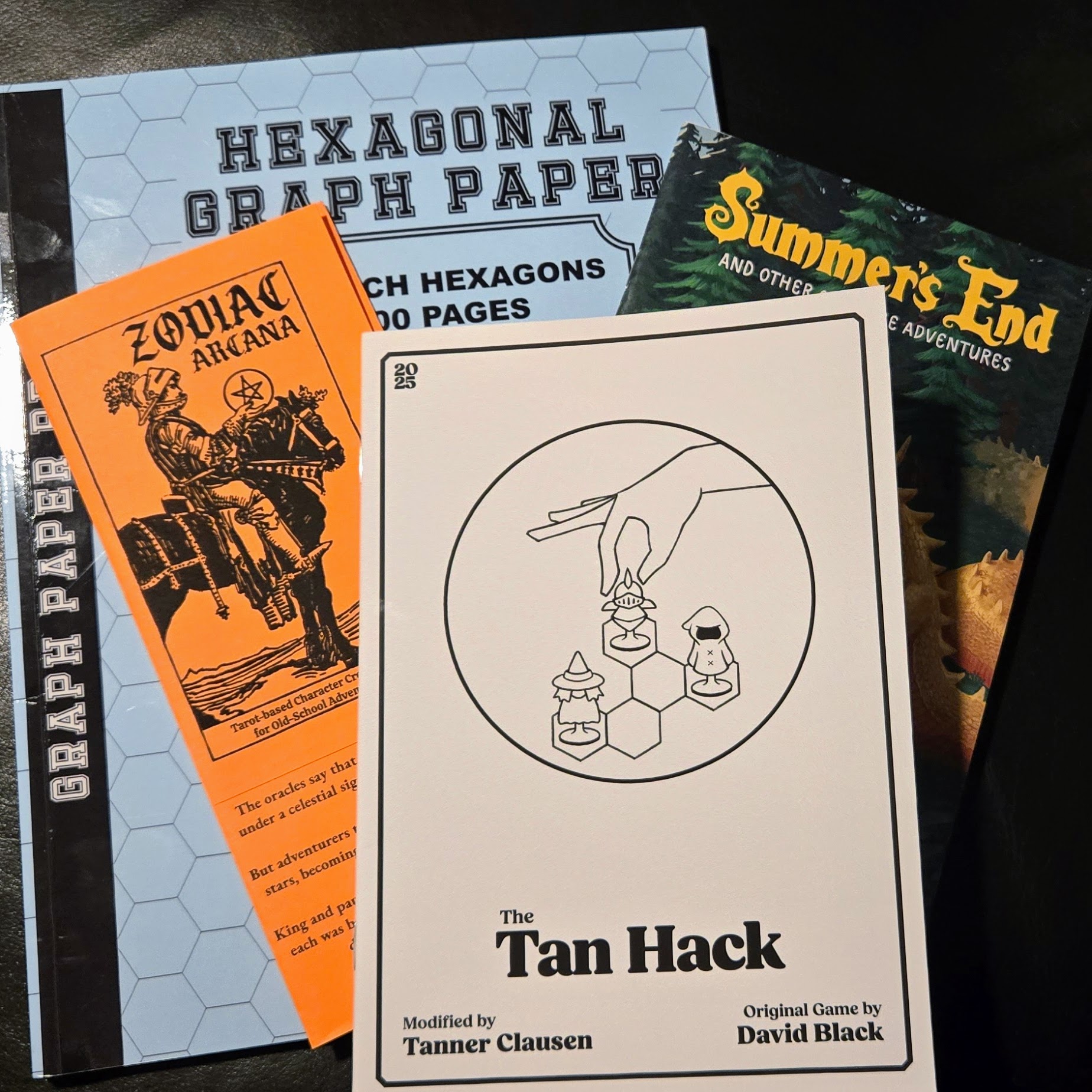
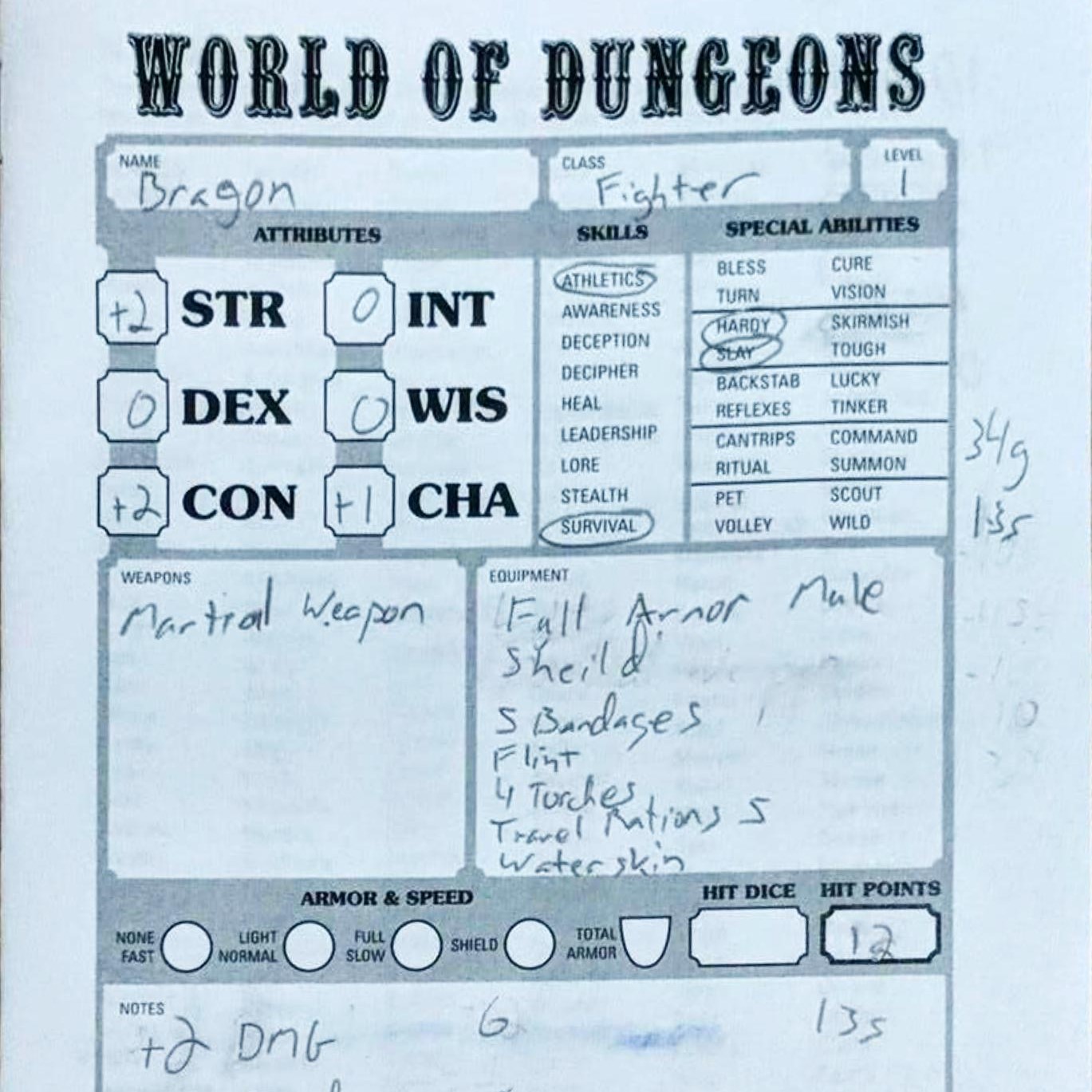
[00:00:45] Speaker B: Yes. And we're playing entirely in the tan hack as well. So you may have remembered, dear, uh, listener, that I kind of developed my own version of the black hack that I really enjoy. Uh, Dusty, that's the game that I ran slug, uh, house for us in. Um, and yeah, I've been, I've been enjoying it. I'm calling the campaign Curwood after the setting in which I created to set it in. And it's a hex crawl, as all the best games are. And this is with my group that I played Lancer with, so listeners might remember my Lancer campaign. I'm playing with most of the same people from that.
[00:01:28] Speaker A: So I'm sure I told you my favorite aspects of the tan hack at the time, but it's been months and I've had a chance to stew on it and, you know, some memories linger, other memories fade. Do you want to hear what my current favorite part of the tan hack was? Filtered through months of memory.
[00:01:47] Speaker B: Yeah. I'm really curious to see what kind of stands out over the. The months of time.
[00:01:52] Speaker A: The food and inventory management.
[00:01:55] Speaker B: Ooh, that's good.
[00:01:56] Speaker A: I love the food mechanics. Like, I remember that. Very strong. Like having to think about food.
It made the dungeon crawl feel, um, grounded. Uh, and I really like having to choose.
Um. Oh, uh, man, I gotta put this shock down and pick up the salt. I gotta put this down and pick up this. I really liked managing inventory. It, uh, it was annoying at the time because it forced me to make decisions and I would rather have just carried everything.
[00:02:22] Speaker B: Yeah.
[00:02:23] Speaker A: Like a character in an old school adventure game like Monkey island where I just have infinite pockets.
[00:02:28] Speaker B: That's a little more Resident Evil.
[00:02:30] Speaker A: Yes. But in retrospect, having to choose added depth to the game and in retrospect, that feature looms large in my mind, is one of my favorites.
[00:02:39] Speaker B: Well, excellent. I'm glad to hear that. Um, I want to take very little credit from for everything in the tan hack because it is Kind of Frankenstein together from a bunch of ideas that I read other places. So if I say a feature or get ah, a compliment about a feature of it, I'm not taking credit for it. I don't remember where I first heard about the slot based inventory type stuff, but yeah, it's led to some great moments and I love the kind of in character like OSR games. I think maybe get a wrap for not having the biggest like role playing moments. But it is fun when like the wimpy halfling is like asking the fighter, hey, can you carry my extra food for me? And like stuff like that. Like the My cleric is like, I can only I can't hold all these scrolls, so can you carry them? Um, so that's always fun. Uh, and yeah, I also make every kind of art object that the players pick up cost, um, an inventory slot. But I kind of say, hey, all of your money and coins can fit into one slot just for the ease of bookkeeping and stuff.
[00:03:41] Speaker A: That makes sense.
[00:03:42] Speaker B: Yeah.
[00:03:43] Speaker A: So this campaign, it's a Hex crawl, right?
[00:03:45] Speaker B: Yes sir. Yeah, we are about five sessions into it.
[00:03:48] Speaker A: What drew you to, you know what? I should run a Hex crawl?
[00:03:52] Speaker B: Um, I think so. My last campaign that I ran with them, Lancer, like um, I said it's about 60% of the same group as my Lancer campaign. Three out of the five players. Lancer was very linear for us and it was very, the choices were very kind of binary. Like hey, do you, do you want to choose option A or B to interact with this faction or whatever. And then the combats were incredibly complex and I kind of wanted to flip that on its head. So in OSR stuff the um, the combats are pretty simple and straightforward, but the beauty is that all these different parts of rules for OSR games fit great in like an open world exploration of a, uh, continuous region with travel rules, you know, survival rules and then dotting dungeons around. So the, the basic premise of this is that there are five dungeons in this. I think there's like 18 hexes or something like that in this 18 hex region. Well actually I have it in front of there's 16 hexes in the 16 hex region. There are five dungeons and then they're trying to find some magical McGuffins in each one.
[00:05:02] Speaker A: So with any good hex crawl or old school computer rpg, uh, it starts with a good like base of operations. Talk about the base of operations.
[00:05:11] Speaker B: Yeah. So there's basically one point of civilization in the center of Sherwood called Hadley's crossing and there's a big river that runs through the region and it's, it's mostly swamp and forest with a couple of hills as far as terrain types go.
But this one crossing, this one town is the best place to cross the river in. You can cross the river anywhere but it might cost you. It's not going to kill you, but it might cost you supplies or resources or inflict a condition upon you. So I tried to make it this point like many towns are where like you have to go through here to get to the other side of the river. And yeah, it's a, it's kind of a homey little town. Um, they've already pissed people off there. Um, which is great.
Um, the evil baron of the town has old adventurers who are quote unquote tax collectors who are trying to do threatening players. Money is so good. Like I think I talked to you one time about like I had my players get mugged by Githyanki and another campaign. It takes them off man. But they know they're like we only get XP for bringing treasure back to this place. We can't just kill everybody here. But that conversation has been had. They usually stay in a temple. There's like a church there to each of the seven goddesses of the campaign setting. And yeah it's ah, it's ruled by kind of an old retired adventurer who's now a bastard who wants to live forever.
[00:06:37] Speaker A: So how many sessions enter you?
[00:06:39] Speaker B: 5.
Number six will be the next one. So I started them in a dungeon because that's a lesson we have learned before. Dusty start games about dungeon Crawl. Start them in the dungeon and then uh, once they conquered that dungeon, the dungeon for those one wondering is a great page dungeon uh called Lair of the Key Master by Ben Milton. Um, and they got one of the McGuffins there and then they were free to explore as they wish.
[00:07:08] Speaker A: So favorite moment from those five sessions actually give me like two or three favorite moments from, from five sessions of Hex Crawley.
[00:07:16] Speaker B: Favorite moment number one. Uh, this one actually happened this past session. So this happened when they were in the dungeon.
Uh, Aberrant Reflections which me and Dusty had talked about. Four Dusty. I'll remind you and the listener that the key to that dungeon is that there is a uh, basically a mirror dimension. And the whole goal of the game is basically trying to interact with an object from the mirror dimension and bring it back to a place where it's a really, it's a real pain in the ass to get there. So My players eventually got the gauntlet and the bell that allows them to, um, interact with the mirrors and go into the mirror dimension. And then my cleric player said, hey, I have this spell called portal. And the way you have it written here, Tanner, is create a portal that you can walk through any door that you traveled through earlier. And I just use that to bring everything back to the start of the dungeon and skip half the dungeon. He didn't phrase it like that, but I'm like, hold on, let me audit this. And I read. And I'm like, yep, that. That would work like that. I read the. The magic item descriptions. Like, that would work like that. That would work like that. And I'm like, yes, you may. So they didn't have to go through that whole southern route with the golems and Isaac and the flesh Tunnel and the mimic. They. They went out, uh, through that upper loop and then just teleported back.
[00:08:44] Speaker A: Man players, am I right?
[00:08:46] Speaker B: Yeah. And they were being very considerate. He was like, hey, Tanner, I understand if this, like, breaks this whole dungeon, like, you can tell me that I can't do it. I'm like, no, I'm honoring the rules. I'm trying to play fair. Um, they were astounded by how much treasure they got from the final room, though. So they were like, we need to look at the rest of this dungeon to see if there's more treasure like this. So they are going to explore the rest of the dungeon, but they just have the advantage of, like, we got the good stuff already.
Oh.
[00:09:15] Speaker A: So the way this happened is the system that you created and the spell that you created interacting with this dungeon that someone else created. I love those conflicts. It reminds me of this YouTube video from, like, 10 years ago, where someone is playing different. Classic. Any games, but. But with a portal gun.
[00:09:33] Speaker B: Oh, yes.
[00:09:34] Speaker A: Yeah. Yeah. And it's showing how a portal gun just totally breaks every other game ever.
[00:09:39] Speaker B: Yeah. Or, like, um, like, you can play, like, Ocarina of Time on PC with a mod that lets you just, like, climb any wall like you can in Breath of the Wild. And, like, that just totally breaks all these Zelda puzzle dungeons when you can just, like, yeah, I'll just climb up there. Like, I. I do appreciate that. I would be a little bit peeved if a. I hadn't run this dungeon twice already, and I got. I've gotten my money's worth out of this dungeon a ton. And if this was my first time running it, you know, I'd be a little bit peeved. But I'M like, dude, this is the story of the game now. This is fun.
[00:10:11] Speaker A: I really loved the D and D movie. Like, it wasn't perfect. It wasn't a perfect movie, but it's the best D and D movie ever. And there are what, two live action plus three live action. Now this third live action one is the best blow bar. Best D D. I like the movie a lot.
[00:10:26] Speaker B: Yeah.
[00:10:27] Speaker A: Except for the Hither Thither staff.
[00:10:29] Speaker B: Hither thither? Is that Portal? You didn't like that part?
[00:10:33] Speaker A: I did not. That magic item is not in anything.
They. They did it for the movie just to be like, uh, uh, let's do Portal. Yeah.
[00:10:42] Speaker B: I also don't like that they made like, they felt the need to put a tiefling in. But my. Our sentiments against tieflings is a longer conversation.
[00:10:49] Speaker A: That's fair. So that was your first favorite moment. What was your next favorite moment?
[00:10:54] Speaker B: My players, if you're listening to this and you haven't, this is a little bit of a spoiler, but, oh, don't worry.
[00:10:59] Speaker A: By the time I edit this and release will have been months.
[00:11:03] Speaker B: Months.
My players, because this is their first OSR game, they don't have a meta understanding of, of what is a random encounter and what is planned content.
And I think that that space is so magical because everything in the world seems presented with equal importance. Right?
So they ran into a random encounter that was a group of silent elves who are trying to harvest their bones and debone them and grind their bones up for a witch to turn into bread.
Um, that's like a feature in a hex. But they ran into these elves and so they were like, well, we were attacked by these elves on the street. Like, what? Like, what do we do? Like, do we chase after them? We killed them all. They ran away because there's rules for, like, running away and stuff. And so they were like, well, do we stop what we're doing looking for this treasure and try to hunt these elves down? And there was like this really interesting conversation that I think once, you know, kind of the GM is rolling, a random encounter kind of loses a little bit of its magic. Not that, like, random encounters can't lead to great moments. Um, but I'm trying to preserve that magic of, um, that illusion for as long as possible. You know what I mean?
[00:12:21] Speaker A: Is that a good case for. We should try to do a better. Like, you do a better job of this than I do. This is always the lesson that I learned when I play with you, is that you do this better than I do where we don't let the players see too much behind the screen.
[00:12:33] Speaker B: Yeah, I think, I don't know. But we also talk about like so many times, Dusty, that like metagaming is good.
So I, I think it's, it's a fine line. I think that you have to.
And maybe this is just like an intermediate GM skill that like you have to know when the metagaming would add to the session versus detract from it. For example, here's a, here's a counter example where metagaming. I straight up metagamed and told them it was good or that I found it to be good. When they were in aberrant reflections, they rolled, they investigated a place where there was treasure and I rolled on my random treasure thing and I gave them an ebony and rose gold spyglass. And they were like, oh, how could this be used in the dungeon? And I said pause. This is a randomly rolled treasure item. This does not go in your key items section of your inventory. This is purely a treasure thing. It functions as a spyglass if you need a spyglass. But this is not a key to the puzzles that you're encountering. And they said thank you for telling me that, uh, you know, as soon as possible. So I think you kind of can do it both ways. I'm hoping that even though eventually they might learn that the random encounters are random encounters, that there's still the magic of interacting with those. And like they do create gameplay moments obviously. So I'm, I'm going to ride this one as long as I can basically. But I don't think that it's a, you know, it's a case by case basis. I think that's fair.
[00:14:07] Speaker A: But man, you and I sure do love the emergent, the story that emerges from the gameplay versus the story that you imbue the gameplay with.
[00:14:16] Speaker B: Yeah. And I think that I'm curious to, as to when we play L5R together because that kind of is going to go back to my roots of running like a linear story game. Not the sense that like I'm railroading you, but in the sense that like I'm guiding you towards a story and I'm curious to see if that's going to create some friction with us or not.
[00:14:35] Speaker A: Oh, that will be interesting.
So you did a thing, you shared it. You have dropped dungeons into um, this world and you referenced a pre published dungeon, um, aberrant reflections.
So you've dropped pre published dungeons like already published someone else wrote it and published it and you can Buy it into your hex world.
[00:14:58] Speaker B: Yeah.
[00:14:58] Speaker A: So it seems like a lot of groups want to turn every act of creation into kind of a side hustle. Like, sure. Couldn't you turn this hex crawl into something that you could then monetize and sell, but certainly not if you're dropping other people's content into it.
Um, I've gotten. I've come back to where you are. Yeah, I now just steal, um, other people's content to drop into my game, figuring that my players are players and therefore they don't buy books. Um, much to Watsi's annoyance and dismay. But it's true. Players don't buy books. What. What's your journey been like to go away from? I must do everything original in case I sell it or release it, versus I'm just gonna steal stuff.
[00:15:39] Speaker B: Yeah, I think that's interesting. I think that there's very little, uh. So when somebody sits down to want to DM something or run a campaign, I don't know how much actual demand there is for somebody else's entire meal. I think that if you have the urge to DM or run a game, gm, you already have kind of a creative bone in your body, and you want to do stuff and you want to use other people's stuff at best, as material. And I think that's why dungeons and, like, drag and drop, like, fight, like, how many five room dungeons can you find online that you can just plop wherever? But, yeah, I don't know. I think it's also kind of like an ego thing, realizing that, like, my work and time would be better spent, like, serving something for my players rather than a hypothetical person that would do stuff, um, that would enjoy my stuff. But, like, let's be honest, there's enough content out there. There's already enough content out there for. For everybody. I mean, like, like I said, I took all these dungeons from somebody else and. Or not all of them, but a lot of them. I took most of the text of my tan hat game from other people who have done stuff. So, like, I think that it's kind of an ego thing of realizing, like, there's enough stuff out there. I'm just gonna run it for me and for my table. But, I mean, I still put stuff out there, but it's just like, I'm not. I put it out there for free. I'm not trying to make a career out of it or, like, become an influencer or get clout. I'm just like, this is cool. I like laying stuff out here. It is if you want it.
[00:17:14] Speaker A: Yeah, I like putting out bite size stuff. And maybe my question is presumptuous. Maybe you were never as hardcore I must do everything myself as I was for a. A while. I started out just gleefully stealing and um, just kind of running the game like, like the G in RPG was the capital letter. Like there's some role playing, but it's a game. Uh, and then I started doing the podcast the first time around, you know, 10 years ago, however many years ago, and boy, I just got obsessed with doing everything myself. That way I could publish it and it would be original. Yeah, thank God I got away from that. Did you. Was my question presumptuous or did you have that same cycle?
[00:17:51] Speaker B: No, I definitely did. And there's, there is some stuff that like, it's. It feels good to, to have made something and to put it out there like it is its own reward. But at the same time, I'm very mercurial with what I get into and what I don't. I get into phases where I'm like, I'm really into this thing and then I kind of leave it by the wayside for a while. Basically for me, like putting out the tan hack and putting out some of the supplements and dungeons. I did like that. It's also just like way more of a bite sized project than it is to like put out an entire campaign setting.
And I find, especially with Hex Crawl stuff, I read other people's Hex Crawl stuff and I'm like, man, this X entry inspires nothing in me. Like, what is the gameable content here? Like, a lot of times you would find, and I'm just making this up, this isn't anything in particular, but you'd be like, a group of soldiers has made a camp here.
There are six D10 archers and four D10 swordsmen. They are here on, uh, the orders of this guy. And like, that's the Hex feature. And I'm like, is there anything to interact with there? Is there a reason my players would. On the other hand, the way that I would write a Hex feature would be a trading post is here owned by an exiled merchant. He sits here guarded by sellswords. He trades in general wares and takes tolls on those traveling between town and the baronies to the north.
Lately he's been investing in warlock silk and plans to buy his way back into his old social circles with his newfound wealth. So like, immediately that's a useful place for players to get stuff without having to go back to Town. This guy has a reason for being there and he has kind of an agenda a little bit and there is interactivity implied there. And I think that a lot of hex dungeon or, uh, hex crawl things are just features. And so, like, my brain doesn't. I need to write things for me and my brain and a lot of people don't write things for me and my brain. Uh, some people do, but not a lot of people agree.
[00:19:49] Speaker A: Very few, relatively few things have, like, truly inspired me. And, boy, there's a lot of stuff out there. But the good news is there's something out there for everyone.
[00:19:57] Speaker B: Yes. And I think that a lot of people value verisimilitude in their hex crawls more than I do. Like, I don't need to have an understanding of, like, how trade works in my region. I'm like, ah, there's farms, people build stuff and they send stuff off the map, you know, um, but a lot of people want this kind of interlocked, interconnected society that makes sense on multiple levels. But I've come to terms with the fact that, like, while some verisimilitude is good, my campaigns are essentially fun houses. That they're like, it's a choose your own adventure fun house. Like, you go and you see a cool thing and you go, whoa, that's weird. And then you move on. So, like, if I get that out of a hex feature, that's good enough for me.
[00:20:45] Speaker A: How are you managing mapping?
I'm looking at the document you sent me. I'm looking at, um, some of the dungeons that you've dropped in, and some of those are hex dungeons that you wrote, others are not. Others are more traditional dungeons that are on a 5 by 5 or a 10 by 10 grid. Then there's the overall hex overworld map of 16 hexes from the overworld map to different dungeons. How are you handling mapping?
[00:21:10] Speaker B: So we are playing completely on roll 20 for virtual tabletop. I have a hex map of the region and I have the different hexes obscured. And so when they go into a new hex for the first time I reveal it, they can see what terrain type it is and then they can start exploring from there. And then when they go to one of the five dungeons that's in the, in the game, I have a different page on roll 20 for each of those dungeons and I have drawn a crude map of each of those dungeons. So the hex dungeons are obviously very easy to map. They're just hexagons. Um, but the other ones, I, I bought some like, old school dungeon tiles on roll 20 a while ago. And so on a Saturday afternoon, I'll spend an hour or two and I'll just kind of assemble that dungeon with the, the pieces I have and lay it out for them that way.
[00:22:02] Speaker A: So that's cool.
[00:22:03] Speaker B: And then I also have, if there's random encounters, I have two forest maps, two swamp maps, and two hill maps that are just like battle maps that I can just place them on because I think my players like those.
[00:22:17] Speaker A: So awkward question that you can say skip and we can edit this out and your players never have to hear it. I find that when players are given a lot of freedom, some divisions in the group begin to appear.
These two people really want to do this, but these two people really want to do this. How is your group navigating, making decisions about what to do next in the wide open world of hex crawling?
[00:22:41] Speaker B: It has been, I want, I don't want to say an issue. It has come up. I don't think it's like a, an issue, but like indecision or. Yeah, like you said, like, we want to do this, we want to do that. I have taken to asking, designating one player per session and being like, and I think I'm going to do this formally going forward and just be like, you know what, Eric, this week you're the tiebreaker. Like, you're, you're the caller. You know, in terms of how Gary Gygax would have played his game, like, you can make the final say on party movements and, and large scale stuff. So, um, but they're all, all my players are friends with each other. We're all, they've all actually known each other, I, I believe longer than I have. So they all get along pretty good. And there's already an existing dynamic there, so there's no like, social awkwardness that I could detect in terms of like, I don't want to step on this person's toes. So, um, there are, there have been a couple times where I'm like, okay, I need you guys to make a decision now on what you want to do. And then usually that is enough to say, all right, all right, all right, we'll go northeast instead of southeast. You know, it happens. But I think that's part of the game is like, if you're not making in, like, if they were, if they didn't want to do anything, then I would be concerned. But the fact is, is that they have, they feel like they're being pulled in Multiple directions and have to hash it out. I think that's part of the game in terms of exploration.
[00:24:09] Speaker A: Did you do a Session Zero to agree on tone like hey, no torturing, hey, no out and out murders or assassination. Like did you do anything like that?
[00:24:18] Speaker B: I didn't. Um, I have interesting thoughts on Session Zeros and maybe we can dissect that someday. I think that those types of things are really great when you are assembling a group of strangers or a group of maybe casual friends. I feel like I know all these people pretty well and I feel like they wouldn't do things that would weird other, other people out at the table. And I feel comfortable enough where there, if there was a problem I could just address it with them. Um, so no we didn't. I gave them a pretty lengthy lecture out of Game on Discord about like this is how OSR games work. These are the assumptions that they make. You know all these great things that we, that people have said about why OSR games are good but also like what comes with that, the higher lethality, you know, more player, uh, direction, stuff like that. So it wasn't really a concern. And I think five sessions in I would have run into that. And we're all pretty light hearted at the table, I think. So I don't know if anything would come up that would really push a player into doing something that objectionable morally, you know, to us by and large.
[00:25:31] Speaker A: I, I think Session zeros, like much has been made of nothing uh, over the years. But at the same time I don't want to forget that Frankenstein dungeon, the first ever hex dungeon that I ran for you where we were on different channels.
I was on HBO at 11:00pm and you were on TNT at 7:00pm yeah. So I don't do a full. Like I think, I think the entire session is a bit much. But I will be like, hey, this is Indiana Jones slash Marvel movie.
[00:26:04] Speaker B: Yeah.
[00:26:04] Speaker A: Hey, this is like Saw three.
Hey this is, you know, whatever and kind of I uh, find movies to be a really useful shorthand to not have a full session zero. But just hey, this is the tone we're going for. And that has been working well for me.
[00:26:20] Speaker B: Yeah. And maybe that would be a good, a good compromise because I think the problem with me with Session Zeros is that it's already hard enough for us to find time to play. When I uh, when we get together I want to play. But on the flip side, a very pro Session Zero person would say well this is a thing to make sure that Your game doesn't fall apart at session three when something objectionable happens. I think that we all kind of just respect each other enough and we're all mature. I mean, we're all in our 30s at this point. Like, I think that, you know, if we were teenagers or 20 somethings, maybe it would have been a little bit different.
Um, I did give them, like I said, kind of handouts in the tone and in the mood of the game, but. But nothing as far as, like, content warnings or ratings. And I mean, you've played all the dungeons like that I've been in. Um, or I've run a lot of the dungeons for you. I mean, there's nothing really in there. I mean, like, the Mystery Flesh Tunnel is pretty gross, but it's almost like black, um, comedy, if anything, you know, where, like, it can get really, really gross and crazy for a moment, but it's part like, you should be laughing along with the horror movie rather than being disturbed by it.
[00:27:28] Speaker A: Looking at the list of dungeons, I think the most objectionable thing that I can recall were the Ducks with Nipples and Temple of a Thousand Swords, the drug.
[00:27:36] Speaker B: They're on their way to Temple the A Thousand Swords now, so we'll see if they.
[00:27:41] Speaker A: I love that dungeon so much. It's so good. I want to run it for someone else. So you've run it for me, obviously. We talked about it. I have never run it for anyone else yet.
I really want to. We'll see if it happens.
[00:27:54] Speaker B: It's a great one to get to the table.
[00:27:56] Speaker A: That's a good question, though. Looking at these five dungeons, are these Tanner five favorite OSR dungeons?
[00:28:01] Speaker B: Uh, they might be. You know what they're.
I really liked. I ran a hex dungeon that I don't think I ever showed you or talked much about this show, but this was when I was running my 5th edition game for my friends who were moving out of country.
And so I basically threw them through a bunch of dungeons. And I was running this 5e game in a very OSR mindset in terms of the challenges presented. And I ran the Dream Web of Arachne for them. And I really liked that dungeon. But that dungeon was so designed for the individual campaign setting that we had. And my players, I knew one of my players was a drow and she was looking for a magical artifact. I knew that my players liked weird, psychedelic stuff, and it fit into that game really well. It would take a lot of work to put that. To kind of lop off all the parts of that game that were attached to my campaign setting. So I really like that one. But other than that. Yeah, I'm trying to look through my OSR folder and see like what else. What other stuff have we have we run that. You, you thought besides Moon Priests like that you thought, oh, I can't believe Tanner didn't put this one in there.
[00:29:13] Speaker A: Moon Priest was the main one. Like Hideous Daylight is also a wonderful, wonderful um, dungeon. But it's almost uh, an entire campaign unto itself. So not dropping that in makes sense.
I can't believe you didn't put the Columbo adventure in.
[00:29:29] Speaker B: You know what? I'm going to get it to the table this year. Dusty.
[00:29:33] Speaker A: No, I can't think of anything else off the top of my head that I, that I think you should have included.
[00:29:38] Speaker B: Yeah, and I mean like God, there is such a wealth of stuff. Like you said, there are so many great, great, great dungeons put out there and stuff. Like if I had all the time in the world, you know, I could easily have found and fit 5, 10 more dungeons in this region. But I think for you know, 16 hexes with three features in each hex, like one of those features being a dungeon I think is, is a good fit.
[00:30:01] Speaker A: At some point it becomes unrealistic that there's so many dungeons around the small town.
[00:30:05] Speaker B: Yeah, for sure. And I, I like the vibe of this being kind of like a logging town kind of up, you know, not at the end of civilization but pretty close. And it's really only, you know, it's a river crossing town. So naturally some trading posts popped up there but there are some evil pernicious fey in the forest that are, are causing problems and stuff like that. So it's, it's a good kind of points of light type, type setting.
And this is just a point of light in the darkness in terms of four ah E vocabulary.
[00:30:37] Speaker A: So this is a good opportunity Tanner to find out like if these are your five favorite OSR dungeons. Like dude, let's throw some recommendations uh, out there. What dungeons to Tanner slot in here and why.
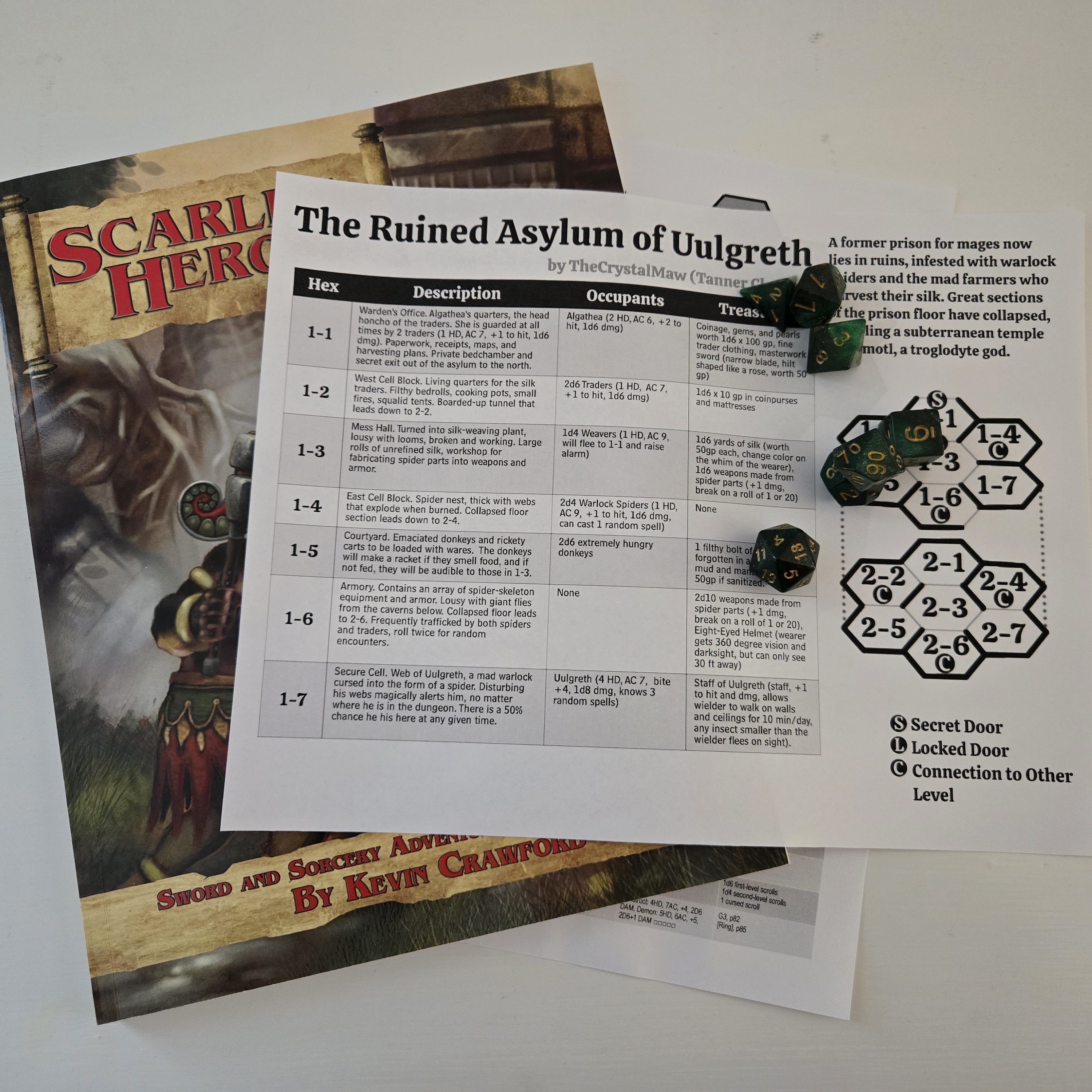
[00:30:48] Speaker B: Yes, I will start with my 2 my self promotion. So um, you can find these on my itch page actually both of these and I will link these in the description or Dusty will. Um, so you can download both of these ones completely for free if they sound cool. We got the ruined Asylum of Oolgreath which is uh, they did that one. That's the double decker X dungeon with the troglodytes in the bottom level.
Um, they became friends with the troglodytes too, by the way. And they did the Eat the Fly Guts ritual and they got one of the MacGuffins from the Troglodytes.
[00:31:22] Speaker A: Nice.
[00:31:23] Speaker B: We did Slime Tunnels of Alora, which I never ran that for you. That's another one I made for my 5e group.
Maybe that one once I run that one in particular. Maybe we should talk about that because it's never been featured on the show. But that one is, is freely downloadable as well. Takes place underneath a giant oak tree and there's oozes and people doing foul, uh, B movie experiments down there. Oh, then I did, uh, Aberrant Reflections. Great puzzle Dungeon, Lair of the Key Master, which is part of Ben Milton's Summer's End adventure collection. Great one page puzzle dungeon. I found it. It needed a little bit more fleshing out maybe than your average puzzle dungeon did, but great skeleton to assemble a dungeon from. And then Temple of a Thousand Swords, uh, by Brad Kerr, I believe.
Great, uh, dungeon, uh, I mean we, you can listen to the episodes where we talk about most of these, luckily, and man, that dungeon is a hoot. They haven't done that one yet, but I'm really excited for that one. So so far they've done the ruined Asylum of Ulgrath, Temple of the Fallen Star, AKA Aberrant Reflections, and Lair of the Key Master, which is where I started the uh, the campaign in.
[00:32:37] Speaker A: And then one final question.
It's a hex crawl. It could go on and on and on. When do the players know they're done? What goal do they have where they'll say, okay, we're done. This was a satisfying campaign.
[00:32:49] Speaker B: That's a great question. And that's kind of the problem with open ended games is either they like, you have to guide them to a story ending, or the players have to Dusty they're done in a positive Tanner and say great. Or the players Dusty they're done in a negative Tanner and the game peters out.
So the overall thing that my players have bought into is that these five artifacts in the dungeons will cause, uh, whoever owns them to become the next rightful rulers of Chorwood. And the Baron of Hadley's Crossing is employing a bunch of adventurers to try to find these MacGuffins first.
And I think the final session will become, hey, like you have all of these items, you confronted the Baron and his men somehow and now you know, power is yours to do with what you will. And whether that means a sequel, uh, series where we get into campaign level play, or maybe the Current player characters become NPCs and we explore another aspect of the world or something like that. I'm leaving that very open. But my players have at least bought into the work trying to collect the five McGuffins to become at least, you know, to keep them away from the Baron.
[00:34:03] Speaker A: Nice.
Any lessons you've learned from M this Hex Crawl, or is is this. Have you reached the point where you're applying all the lessons that you've learned and you're just having fun?
[00:34:14] Speaker B: I mean, I am applying all the lessons I've learned and we are having a ton, a ton of fun doing this. So I wouldn't take away any of that. I mean the game is like a 95% success rate. Couple lessons learned is that, number one, do not expect players to read rulebooks even when you personally mail them a copy of the rule book that you wrote. And the rule book is like 40 pages long. My players still don't really understand they need to be reminded how usage die works every time. And a lot of my players have never played D and D before. So like, the Idea that a D4 is smaller than a D6 is not intuitive.
So I'll give them credit for that. But also like, the way the armor die works in the Black Hack I think is pretty simple, but there has been like a surprising amount of stumbling of like you break an armor die and then later you can roll to try to repair it or it's gone forever. I think they get really tripped up on the fiddly bits of OSR stuff.
So even if you try to create a stripped down version of the game, like be prepared to have to coach players a little bit and be patient because it's really easy to take it personally. And you know, maybe if I was the person I was five or 10 years ago when I was running this, I would have taken it personally. But now, I mean, Dusty, you were smiling and laughing like we know that players who aren't GMs themselves, they just don't read stuff. You know, the game happens between 6 and 10pm on the nights it happens. And then. Yeah, look at, I got other stuff to do, you know.
[00:35:46] Speaker A: Yeah. Players there to have fun and does it feel somewhat creative to them? Sure. Are they getting to ham it up? Sure.
But man, players don't buy books is what I said earlier. And players don't read books is a good corollary to that.
[00:35:59] Speaker B: Yeah, players don't read books that you bought for them.
[00:36:02] Speaker A: Yes.
[00:36:04] Speaker B: And then, uh, lesson number two, I would say even Though I didn't have a session zero. You know, I did kind of have a conversation, an offline conversation about the expectations of the game. If I went straight from Lancer and threw them into this game without explaining the difference in philosophy and how the game is played and how I will be running it, I think there would have been a lot more stumbling blocks than there were. So include that. And also listen three create rules in an OSR game for running away. Because once it's on the table, players love to run away. Actually, I used to think that players would never retreat from a battle, you know, but have some way to adjudicate how players would run away from a threat. Those are my three lessons. Like I said, it's 95% a success because I've got great players and they like exploring the areas that I that I put down for them. And I'm stealing a bunch of really, really great dungeons.
[00:37:00] Speaker A: Awesome. Tanner, thank you so much for sharing your campaign with me and the royal. We, all of us who listen to it.
[00:37:08] Speaker B: Yeah, I'd love to do another follow up, one maybe closer to the end of the campaign when we get there. So I will, uh, I'll be taking notes and stuff and maybe we can chat again a little bit later on. Perfect. Thank you for listening.
[00:37:20] Speaker A: People call them reviews, postmortems, retrospectives.
We call them lessons learned and we're sharing ours with you.