[00:00:00] Speaker A: RPG Lessons Learned. When the game is over, when your players are gone, that's when lessons are learned.
Find us
[email protected].
email us at rpgllpodcastmail.com and find us on BlueSkyPGL.
[00:00:25] Speaker B: Hello, everybody, and welcome to another spooky episode of RPG Lessons Learned, the show where you can learn from our mistakes. Enter if you dare to find your regular Crypt Master, Dusty. Dusty. How's it going, Tanner?
[00:00:40] Speaker C: I'm doing well. Yourself?
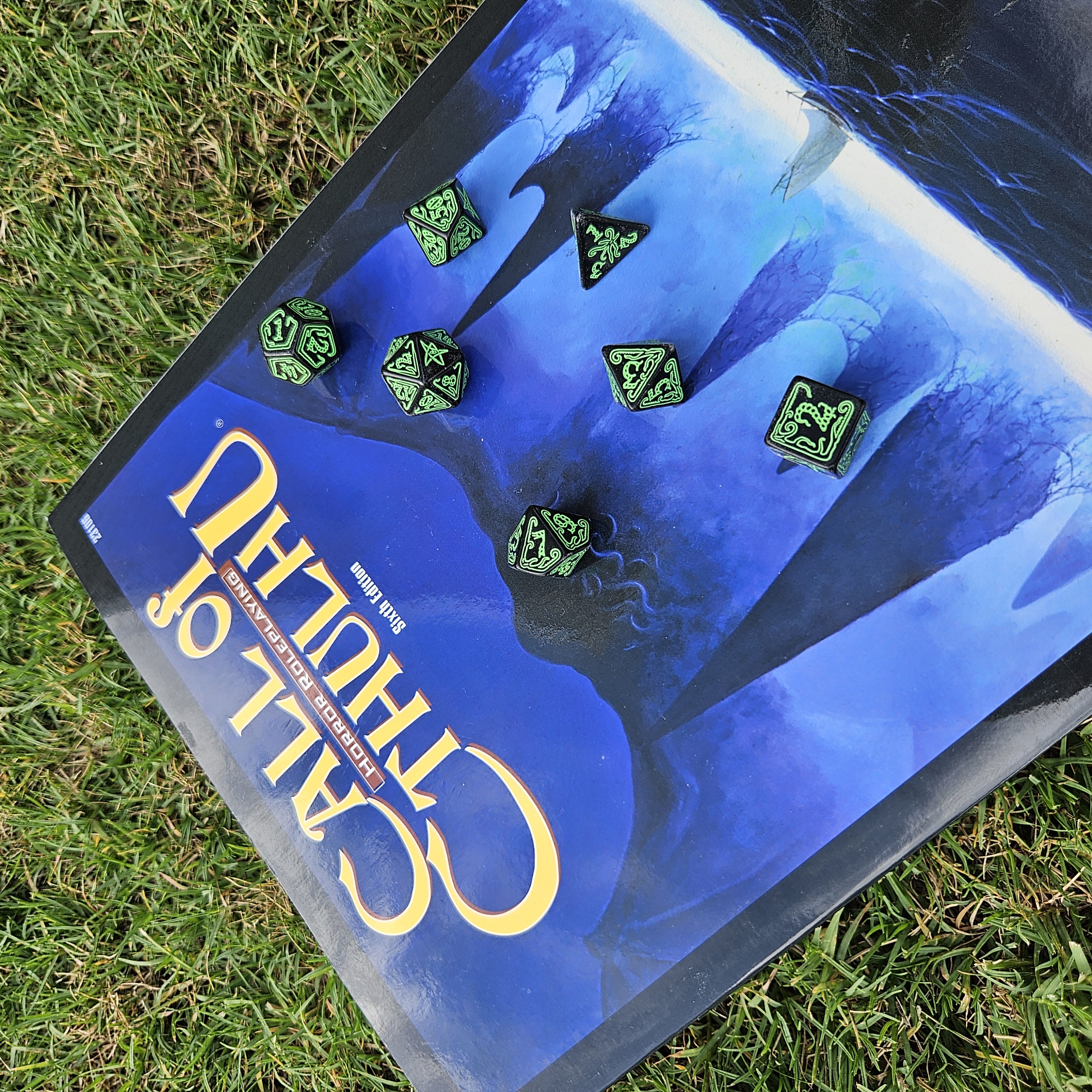
[00:00:42] Speaker B: I'm doing good. And I'm Howard Phillips Tanner, and we're talking about H.P. lovecraft's Call of Cthulhu role playing game that Dusty is playing with, uh, his great off screen GM Martin and, uh, and his group. So, Dusty, I just want to say, first off, you know, a lot of people are like, oh, I wish I could play with Matt Mercer. I want to play with critical role. I want to. I want to play, uh, at Martin's game. From the way that you've described it, I'm so jealous that I don't get to. So, Dusty, you've been playing Call of Cthulhu with Martin and he's running it.
[00:01:15] Speaker C: He is running it, yes.
[00:01:16] Speaker B: How is that going? Tell me, tell me.
[00:01:18] Speaker C: The setup really well. It's so different from fantasy games and people, like, talk about how quote unquote lethal or old school D D is. Dude, it can't hold a candle to call Cthulhu.
[00:01:34] Speaker B: Yeah. So you're playing the basic role play or. Yeah, BRP. Right. Uh, the D1 hundreds.
[00:01:40] Speaker C: Arguably, Call of Cthulhu came first before BRP. BRP is like where they took, like the generic version.
[00:01:46] Speaker A: Yeah. Yes.
[00:01:47] Speaker C: They took Sandy Peterson's Call of Cthulhu and they used it to make some other games like Runequest. And I think there was a game based on, um, uh, the Eternal Champion. What's that guy called? Elric.
[00:01:58] Speaker B: Yep.
[00:01:58] Speaker C: The Michael Moorcock. Um, Elric Storm Burner. Yes. I think there, I think there was a D100 around that and then it became kind of BRP, the generic version. But yes, it's all the same skill based D100. You know, you have a 47 chance of doing this and you roll your, your two D10 to see if you roll under 47 to see if you do it. It's, it's all that system. Um, Call of Cthulhu runequest, brp, which
[00:02:26] Speaker B: is, from what I understand, like the most popular way to play role playing games in Japan. I have friends who live in Japan. I need to ask them this, but we've Talked a little bit before, I don't know if it was on Mike, about the crazy Japanese Call of Cthulhu modules. And I remember when I was a kid reading the Yu Gi oh manga.
[00:02:45] Speaker C: Okay.
[00:02:46] Speaker B: Remember Yu Gi oh?
[00:02:46] Speaker C: You know, I do.
[00:02:47] Speaker B: Guy with cards and stuff. They had a side arc where they were playing a role playing game. This was. I only knew of D20 games, but every time they rolled dice in there, they were rolling a D100. You know, they were. They were rolling tens places and one place is on D10s. And I thought, whoa, Yu Gi oh invented a whole new way to play role playing games. But I realize now that they were getting that from how popular Call of Cthulhu was in Japan, which is based on the game that obviously you've been playing lately.
[00:03:17] Speaker C: Yes. Disclaimer. I have never been to Japan, but I have watched YouTube videos and read articles online that claim that Call of Cthulhu is the most popular role playing game in Japan. And yes, I love the translated modules. Poisoned Soup and I think it's called who is the Swamp Man? Um, that some. Some online creator has translated these fan created Call of Cthulhu adventures in Japan into English. Uh, for us to see how Call of Cthulhu is enjoyed. But yeah, Call of Cthulhu apparently super popular in Japan.
[00:03:48] Speaker B: I know for a fact that we have at least one listener in Japan, my best friend, and she will be able to tell me if this is true or not.
[00:03:56] Speaker C: Oh, I want to go to Japan and I want to buy a Call of Cthulhu adventure in kanji in Japanese. And now I will not be able to read it.
[00:04:07] Speaker B: Great thing to have on the shelf, though.
[00:04:09] Speaker C: But I just want it on the shelf. And that's not an invitation for you to have your friend send it to me. The fun of it would be going there and picking it out myself as my souvenir I bring back. So that's. That's on my bucket list.
[00:04:20] Speaker B: Awesome. So are you playing this, uh, one on one, or are you playing this with a group? With Martin?
[00:04:25] Speaker C: Uh, as usual, we are playing with Martin's brother. And just like we do, uh, just like we have done in OSC and Osric and Castles and Crusades, we are each playing two characters. So I'm playing two characters, Bernard's playing two characters, and Martin has two GM PCs as he frequently does, as we've discussed in the past.
But again, he does it very artfully and he never drives the plot. But know, if Bernard and I are both like fighter types, Martin's like they need a cleric.
[00:04:54] Speaker B: Yeah.
[00:04:54] Speaker C: And he will roll up a cleric.
[00:04:56] Speaker B: True experts know when to break the rules. Right? That's one of those, those situations. We've talked about that at length with Martin's game. Um, so what kind of game is he running? Is he running a completely original story or is he basing it on. Do you know? I guess if he's basing it on other adventures.
[00:05:14] Speaker C: Oh, I don't actually know. Maybe, maybe a listener can tell us. Uh, I did not ask Martin about the origin of the game, but I'll tell you the rough plot.
[00:05:21] Speaker B: Sure.
[00:05:22] Speaker C: It's the American west, post Civil War. And all six player characters, my two, Martin's brothers two, and Martin's two are friends of this guy named Hieronymus. Ah.
And Hieronymus has a silver mine over the border of Texas in Mexico. And we've traveled there to discover Hieronymus dead, frankly, in his silver mine and mummified. And then we stumble across a, ah, a Cthulhu esque artifact.
And we have to deal with a bunch of stuff in town, including cultists who want the artifact, some zombies that were accidentally created by the artifact, and then a totally unrelated like Chupacabra type cryptid that's also wreaking havoc in and around the small town.
And we're also like, trying to get the silver mine going so we can like make money. Because we start off with. We arrive in this town of Mexico with almost no, um, money to be able to do stuff or be respected in the town.
[00:06:21] Speaker B: I do think I could be more jealous of this game until you describe the setting. Dusty. Holy cow. I have. I'm such a dork in enthusiasm, not in knowledge for Old west history and stuff like that. And I know that you've talked in past about the verisimilitude that Martin brings to his, his settings and his worlds and stuff. And I can only imagine that if he's drawing from real history, it's got to be like a whole level up from that. Yeah.
[00:06:49] Speaker C: Yes. I mean the risk of military is there. Uh, some of his NPCs speak only Spanish.
[00:06:54] Speaker B: Um, does he speak Spanish? Does he just like speak Spanish at you?
[00:06:58] Speaker C: Martin. Martin. I, he, he knows enough that he, I don't think he's. I would not call him fluent in Spanish. He is fluent in German, Russian and English. Oh, so Martin is one of those people that like picks up languages and he is like seriously fluent. Like did semesters abroad.
Wow. In. In Russia. And his family is German. So he is fluent in those three languages. Um, but he knows enough Spanish to realistically portray his NPCs as not understanding you, as not. As not understanding us. And we're like, damn it. And I'm relying on my personal, like. Like Dusty personal high school Spanish.
[00:07:34] Speaker B: Yeah.
[00:07:34] Speaker C: To try to get by. And, like, we're not allowed to use Google Translate. It's a lot of fun.
[00:07:38] Speaker B: That's so good, man. So, um, this is a horror game, right? And we talked in our last episode about setting expectations and session zeros. I would guess that you guys did not have a session zero because you guys have been playing together for a long time, and it seems like you guys know each other's boundaries. What. What's the, uh, what movie would you compare this to? What. What's the rating of this campaign in terms of, uh, objectionable content for minors?
[00:08:05] Speaker C: Uh, there is never, ever any sexual content in Martin's games. Like, we all just agree that that's not why we're sitting around the table. Um, so none of that. As far as the level of violence, I don't think any of us are too into describing gore, but death is always right around the corner. So I would say not quite a slasher flick, like a Jason style slasher flick. Um, gosh, help me think, Tanner Is there a movie that's like, a noir detective thing, that has elements of the supernatural? You know what? Maybe Bram Stoker's Dracula. It's the level of horror of Bram Stoker's Dracula.
[00:08:42] Speaker B: Gotcha. That's a great level, frankly, for any game to be at.
And, yeah, so Call of Cthulhu. I think it kind of comes with some assumptions at least. Certainly, if you read the rule books, that it's more obviously it's more about the cosmic stuff than it is about, like, gratuitous, uh, depictions of anything. Right. Like, the assumption is that your characters are seeing that and that's why they go bonkers rather than the GM having to, like, include that in the game. Does that make sense?
[00:09:14] Speaker C: It does, yeah. And we made quite a few. And I know how ableist this can sound, but it's a mechanic of the game, so go with me. Sanity rolls.
[00:09:21] Speaker B: Yep.
[00:09:22] Speaker C: I mean, the artifact that we found, we found this really strange silver, uh, uh, a, uh, tunnel system of tunnels underneath the silver mine. And clearly the artifact's been there for millennia. And I don't really know, like, there's a lot of really weird stuff in the silver mine that we think the artifact was incidentally causing just by its presence, kind of a hideous daylight type situation. None of it was, like, things we had to fight.
[00:09:44] Speaker B: Gotcha.
[00:09:45] Speaker C: Just like weird crystallized trees that were walking past and, like, weird lakes of sulfuric acid and, like, stuff like that. And this one room that was incredibly hot, and we had to, like, figure out how to tie, you know, wet stuff, wet clothing around it to make it through this incredibly hot. Anyway, and then we finally get the artifact. And the artifact is, like this featureless, um, silver cube with one glass port. And the one time, like, we messed with it and kind of lost sanity is when we looked through the port and there was a giant eyeball, impossibly big. Like, you're not. Look, it's not. It's not like you're looking into the box. It's like you're looking through the box out into space.
[00:10:24] Speaker B: Oh, uh, yeah.
[00:10:25] Speaker C: And a giant eyeball saw us, and we all made sanity rolls and we fought cultists who wanted this thing. And it was just. It was a ton of fun.
[00:10:35] Speaker B: How, uh, talk to me about the lethality of the game, I guess. How are people meeting their end?
[00:10:40] Speaker A: Yes.
[00:10:42] Speaker C: I, um, love skill based RPGs. And I really like Call of Cthulhu because we got into a lot of gunfights.
[00:10:47] Speaker B: And by skill based, you mean specifically your characters, Divine, defined by a skill list of, like, how good you are at lock picking, mechanics, electronics, that kind of stuff.
[00:10:57] Speaker C: And you don't level up, but you do progress. And the way you progress is you mark any skills that you succeed on during the game, and at the end of the game or at the beginning of the next game, you can roll. And if you roll your percentile dice higher than your skill, you get to raise that skill by, I think it's 1d6 points. So you're constantly, like, getting better and better at stuff as you do it. So that's what I mean by skill based. And we're having gunfights because, again, it's the Wild West. And one of my characters was a former Union soldier during the war who was quite good with rifles, but terrible with handguns. And how lethal is it? We almost died several times. No player character actually died, but mostly because Martin's brother and I played very conservatively.
[00:11:40] Speaker B: Okay.
[00:11:41] Speaker C: Very, um, careful, like, we took death very seriously. We took combat very seriously. We're using cover at every opportunity, firing from behind stuff. We were doing a lot of running away to what we said in our podcast last episode.
[00:11:55] Speaker B: It's a little bit more Deadwood than it is spaghetti Western.
[00:11:58] Speaker C: Yes. Um, yeah, it's Not Clint Eastwood. It's, um, like, yeah, it's, it's Silverado. Like main characters can die and, and will die.
[00:12:06] Speaker B: That's awesome. Um, are you playing this game as you, Dusty, are you playing this game as your characters? Because I think one of the considerations when you have multiple player characters is that you kind of have to take a more detached point of view. And it's more. To me, it would seem more like Dusty is controlling his avatars in the world rather than if you had a group of six people, Dusty would get really into his. His one character. Is that assumption correct?
[00:12:37] Speaker C: I, um, was not playing as myself. But yes, your assumption is right. You, you do find yourself more abstracted from your characters and you find yourself asking. You have to ask. You can't default to what would I do? You have to ask, what would Charlie do? Or what would Timothy do? My two characters were Timothy Daltrey, based on my favorite James Bond, Timothy Dalton. If you disagree, come at me.
[00:12:57] Speaker B: Was he the Living Daylights?
[00:12:59] Speaker C: Yes, yes, yes, he was. And. And License to Kill.
Um, seriously, he's my very favorite James Bond. I think of all the celebrities I could meet and be starstruck by, Timothy Dalton would be like, number one. I wouldn't know what to say. That's awesome. I could meet Daniel Craig and be like, whatever. I probably wouldn't even say hello. I feel like I was bugging him. But if I ran into Timothy Dalton, it would be bad.
[00:13:20] Speaker B: Well, Dusty, I've prepared a very exciting surprise for this episode. Timothy Dalton.
[00:13:25] Speaker C: Oh, my God. No, you didn't.
[00:13:27] Speaker B: Uh, no, he's busy.
[00:13:28] Speaker C: Of course. So I played him like, you know, what would Timothy Bolton. Bolton. What would Timothy Dalton's James Bond, who lived in a very lethal world. Like, those were two of the more realistic James Bond movies.
[00:13:41] Speaker B: Yeah.
[00:13:41] Speaker C: You know, how would he navigate the situation and you know, some social stuff. Like he was always playing one guy off the other. And then Charlie Dodger was my union veteran, kind of my former soldier. And I played him very much like a, like a, like a Lonesome Dove type character. He's got a strong ethical, moral, like, cowboy code type compass.
[00:14:02] Speaker B: I always have such respect for you anchoring your characters in celebrities, um, or, you know, ah, famous characters from movies. Whether, you know, we did with Bellicose or when we played Legend of the Five Rings, you had war as your samurai. Um, I think that is such a great cheat code in terms of like, you know, obviously characters can evolve and stuff, but, like, it gives you a great center and then you can Explore from that center. What would Timothy Dalton, James Bond be like in, you know, 1860s Texas, Mexico, if he ran into a Chupacabra like those.
I can tell that you get a lot of fun from creating those situations for yourself.
[00:14:47] Speaker C: I do. And as I play with these two brothers, you know, Martin and his brother, you would think when the party needs to split up, that my two characters would go do something, and Martin's brother's two characters would go do, but we don't.
It's one of mine and one of his. Uh, you know. No, but as I'm saying this, it used to be my two characters and his two characters.
[00:15:09] Speaker B: Yeah.
[00:15:09] Speaker C: And in the last, I don't know, five, six years of playing together, it has become one of mine and one of his doing this, and then one of mine and one of his.
I just think we've gotten to know each other better and we gel better as a group.
[00:15:23] Speaker B: Yeah. And that's one of those kind of unwritten things in terms of RPG advice, whether that comes from blogs or videos or whether that comes from, you know, how to run a game chapter in a book that, like, really, like, 70% of the skill is, like, knowing who you're playing with in a lot of ways, which is obviously impossible to teach. Um, but, yeah, it can create great moments where if you split the party. Hey, you're both there. Which is. Which is awesome.
[00:15:48] Speaker C: Do you want to hear how the campaign ended?
[00:15:51] Speaker B: Oh, is it done? I thought you were still ongoing.
[00:15:52] Speaker C: No, no, no. It might have been last time we spoke, but we have since played, I think, two sessions, and the campaign is now over.
[00:15:59] Speaker B: And here's how many sessions total? Was it, sorry, three or four? Okay, cool. So very, very manageable.
[00:16:06] Speaker C: Yes. Yeah, we've gotten to where we do that. We had one, like, 17, 15, whatever, session campaign. But since then, we do short stuff, like, short forays. There's a lot of games we want to play together, but we take death so seriously because Call of Cthulhu is so lethal. And we were, like. We were really imagining, like, what would these characters do? Like, they wouldn't throw their lives away. The way the campaign ended is we. We lost the. The artifact to the cultists.
[00:16:33] Speaker B: Oh, no.
[00:16:35] Speaker C: Yeah, we. We arguably, like, we had these weird encounters. We had this weird adventure. We learned some things about the artifact. We made sure we wrote those down for posterity. But ultimately, the artifact slipped through our fingers and wound up in the hands of the cultists. Now, they did succeed in summoning something, and it seems to have killed all of the cultists for us that they knew not what they messed with.
[00:16:56] Speaker A: Yeah.
[00:16:57] Speaker C: But the artifacts also gone.
And, um, I like to imagine that maybe three or four years from now, Martin's like, hey, we should play Call of Cthulhu again. Maybe we should play in the 20s. And I like to imagine we might find this box again.
That would be so different set of characters. But, yeah, we lost.
[00:17:14] Speaker B: That is so excellent.
[00:17:16] Speaker C: Wow. Wow.
[00:17:16] Speaker B: Uh, wow. And that's like, so in fitting with the way that, like, Lovecraft stories can end.
[00:17:22] Speaker C: Right?
[00:17:23] Speaker B: Like, the bad guys can win and something bad can happen to them. And, you know, it's not maybe the
[00:17:28] Speaker C: end of the world.
[00:17:28] Speaker B: Like, it didn't happen here, but like, yeah, it got away from you. That I love how honest you guys can be with your games and your experiences. That that can be a valid ending. Because a lot of GMs and a lot of groups I don't think would let that be a valid ending. The GM would be like, okay. I mean, I. I certainly would be thinking, okay, well, the box got away from the players, but maybe, you know, the story can become about this and then the box can get back in their hands and we can kind of keep going. But it's so refreshing that you guys are so trusting enough to be like, yeah, that was our story. Right.
[00:18:02] Speaker C: Martin is. I can't say he's completely uncompromising because there are moments at the table where he's like, uh, re roll that.
Um, so he. He will be a little lenient sometimes, most particularly when he thinks it's unlikely that your character would have failed that bad. He's like, you're. You're. You're an ex soldier. Reroll that rifle shot. Um, he does that maybe once a session.
He'll be lenient. Other than that, though, other than maybe once a session where something is truly egregious, he is uncompromising, and it makes for a really unique and wonderful game that I love.
[00:18:38] Speaker B: That's so cool, man. Um, did you ever get a behind the scenes look now that the campaign is over? Did he ever spill the beans on kind of what was going on? Or does he keep that close to
[00:18:48] Speaker C: the chest even after he spilled a couple? Like, he, He. Here's what he told us. This thing was like looting bodies. And he did tell us, oh, yeah, that was a Chupacabra. That was totally unrelated.
[00:18:59] Speaker B: Interesting.
[00:19:00] Speaker C: And then we were like, where'd the zombies come from? He's like, oh, the zombies are because of the artifact, like the proximity, like, created and call it Cthulhu zombies. Like, you can't shoot them in the head and they're done.
[00:19:07] Speaker B: Yeah, they're magical kind of. Yeah, yeah.
[00:19:10] Speaker C: The entire thing is animated. You have to basically blow it apart to kill it. He kind of spilled the weeds of some of that. But he did not give us where did the artifact come from? Why was it in the mine? How long has it been in the mine? Where'd the artifact go? He didn't give us any of that. So as far as our characters in this Mexican town dealing with situation, he told us some of the ancillary stuff. But as far as, like, the key relic, slash artifact, if that were to come up in another game three, four, five years from now, in a later era with different characters, we would have nothing metagame to go on other than, you know, what we experienced.
[00:19:47] Speaker B: One of my dream campaigns that I've had written down in a Google Doc for almost 10 years now would be to do a Trail of Cthulhu game in a very similar way to maybe the way that this would go where I would. It would be about, uh, an artifact of some evil power.
And the whole campaign would be revolving around the artifact. And the players would roll different characters for each session, or I'd provide them. The first session would be about like, a bunch of Roman soldiers find this thing in Gall. And then the next session would be kind of like the medieval era. And then the next session would be about maybe like World War I or something like that. And then the final session would be like modern day or something like that, and be able to string together a cool story where this artifact is kind of the center of it each time. Um, my challenge, though, would always be like, how do we keep from metagaming?
Where, like, your players would know something about the. The past and stuff like that. So it would be cool if Martin figures out a way to do that. And if he does, you got to report back and let me know My
[00:20:52] Speaker C: idea for your game. Make the. Make the player characters blatant. Um, reincarnations.
[00:20:58] Speaker B: Oh, that'd be good.
[00:21:00] Speaker C: And give them a certain number of, like, tokens. Like two tokens. A session you are allowed to met a game.
[00:21:06] Speaker B: That would be cool.
[00:21:06] Speaker C: Why is a session. Yeah, where you have a flash of insight from your end and maybe for fun, make them reincarnations of each other's characters, not their own characters.
[00:21:16] Speaker B: Oh, and they swap around or rotate a little bit. Yeah, that'd be cool. That'd be cool. Um, well, awesome. So it doesn't sound like, are you Disappointed that it ended this way or were you just kind of happy it
[00:21:28] Speaker C: happened in the moment? Yes. Always in the moment. Yes, Always in the moment. My baser self would like the. The instant gratification of getting the girl and being the guy and getting all the treasure and living happily ever after as we left, you know, Martin's home to go have wings, which is our. Which is our ritual. We play the game and then we have wings as we left. Yeah. I mean, did I feel disappointed?
[00:21:53] Speaker A: Yes.
[00:21:53] Speaker C: Um, did I feel. It's kind of a Tanner sure. But then my more enlightened self, not calling myself and completely enlightened folks at home, but my delayed gratification self says, God, it was so much richer and so much more interesting and I'll think about it so much longer for so many more years because we didn't have the popcorn. Instant gratification. So was I disappointed the moment?
[00:22:16] Speaker A: Yes.
[00:22:17] Speaker C: Looking back on it, am I.
[00:22:18] Speaker A: No.
[00:22:19] Speaker B: That's a very mature outlook to have and to be able to acknowledge that, you know.
Yes. Part of me wanted to, but. And that's something that can kind of only come with not only being a mature person, but also being mature in your Dusty with your. With your group and knowing that everybody else at the table probably felt the same way to a certain extent. Right.
[00:22:40] Speaker C: I mean, it can only Dusty bittersweet if you let yourself Dusty the bitter.
[00:22:44] Speaker B: So true. You only. You miss every shot you don't take.
[00:22:46] Speaker C: You miss every shot you don't take.
[00:22:48] Speaker B: I think Confucius said that.
[00:22:49] Speaker C: Yeah. Men who live in glass houses should undress in the basement.
[00:22:53] Speaker B: That's damn true. Um, oh, that poster on your wall says, I couldn't read it this whole time.
[00:22:59] Speaker C: But no, in all seriousness, um, I don't know. I keep seeing these YouTube videos that are like, hey, you know, we're in a comfort crisis. We're comforting ourselves to death. We're never doing anything uncomfortable. And think like only consuming media with happy endings and satisfying endings can. Can be a version of the same thing.
I really enjoy the not cookie cutter endings that we have in Martin's very realistic, largely uncompromising campaigns.
[00:23:26] Speaker B: I think we've kind of talked about that in a more oblique way in the past. I feel like I remember us having a conversation about how, like, role playing games are awesome because they aren't these scripted, focus tested types of stories. And, and you really value that. And I do too, obviously. Um, so I think that that's kind of, maybe shades of the same kind of sentiment there in terms of like, these aren't. These are unsafe. You know, it sounds more dramatic and edgy, but, you know, in terms of media, like, nobody would pick up the screenplay to the campaign you had.
[00:23:58] Speaker C: Right.
[00:23:59] Speaker B: Sony would not make that movie.
[00:24:01] Speaker C: That's true. What a great jaunt into a different system. And the way I would describe Call of Thule, it's not that you completely avoid combat, but, like, if our characters are setting up an ambush and we're choosing the ground and we're choosing how combat starts. Yeah, I'll engage in combat. If we're caught flat footed and we have to give up the artifact or die in a blaze of glory. Oh, you mean this artifact. Here you go.
[00:24:23] Speaker B: Yeah, exactly.
[00:24:24] Speaker C: And I love, um.
It's tough to call it realistic when you have things like chupacabras and zombies in the game.
[00:24:32] Speaker B: It's grounded, right?
[00:24:33] Speaker A: It's.
[00:24:33] Speaker C: It's. It's more grounded. It's less reliant on, you know, being the hero and battling your way out of every single situation.
Uh, it just. It tells a good way. It tells a different kind of story and what a great palate cleanser and what a great way to experience variety.
[00:24:51] Speaker B: My final question is, imagine that I am your coworker Dusty. And I'm saying, hey, I heard that you were playing in a Call of Cthulhu game.
I played a little bit before, but I want to run a really cool Call of Cthulhu game. Um, what lessons should I take from Martin's game and the way that you guys play to set up, uh, my own game for success?
[00:25:16] Speaker C: I would say Call of Cthulhu takes place in a much more modern world.
D and D emulates these sword and sorcery fantasy stories where the pureness of your heart will win the day.
Call of Cthulhu takes place in a setting that's more like the Cowboys era or the 1920s era, where your skills will win the day or not.
And lean into that.
[00:25:45] Speaker B: And then what does Martin do so well that I can steal for my game?
[00:25:50] Speaker C: It's that, uh. It's that knowing when to compromise. Again, he's not totally uncompromising. There are times when he'll throw you a bone, but it's knowing when to be uncompromising in a way that might be unsatisfying in the moment, but that will enrich the game for so many years as you remember it.
[00:26:06] Speaker B: That sounds great, man. I've got a lesson I learned from here. Real masters know when to break the rules. The rules exist for a reason. Obviously. Me and you like playing by the rules. But I think we are both comfortable enough with our groups and at this point in our GM in career that we know when a rule is bent, when it would add to the game versus detract from the game. And I think Martin sounds like he knows that too.
[00:26:29] Speaker C: Yeah, Martin has. He's a GM with GM PCs.
Uh, he. He doesn't let us do whatever we want. He does not obey the rule of cool, and he's still an amazing gm.
[00:26:41] Speaker B: Excellent. Anything you'd add? Any lessons you'd learned from, uh, from this series of games?
[00:26:46] Speaker C: A lesson that we often come back to. Try different systems. If you're listening to this podcast, because you're really in love with this one system, Great. Phenomenal. Love that for you. Um, don't do it just because I say so, but I think if you're listening to this episode, you probably, in your heart of hearts, want to try something a little different. Try that new system.
[00:27:05] Speaker B: Excellent. Well, we'll leave it at that. Thank you, everybody, for listening. Dusty, I really want to hear about your next game with Martin, so be sure to report back. You're my man in the field for this, for this guy, I need to know. I need to write down his secrets.
[00:27:18] Speaker C: We'll do. We'll see if we can get him to play with you one day.
[00:27:20] Speaker B: That'd be awesome. All right, everybody, thank you for listening.
[00:27:24] Speaker A: People call them reviews, post mortems, retrospectives.
We call them lessons learned, and we're sharing ours with you.