[00:00:00] Speaker A: RPG Lessons Learned. When the game is over, when your players are gone, that's when lessons are learned.
Find us
[email protected].
email us at rpgllpodcastmail.com and find us on BlueSkyPGL.
[00:00:23] Speaker B: What up, chums? We're here at RPG Lessons Learned, the show where you can learn from our mistakes. Dusty been flatlining some people for Eddie's and we're going to talk about it. Dusty, uh, you're the main host of the show. How's it been, man?
[00:00:37] Speaker A: Tanner, I cannot complain. I've been doing more gaming than I thought I reasonably would on the gaming machine that we talked about me getting some time ago.
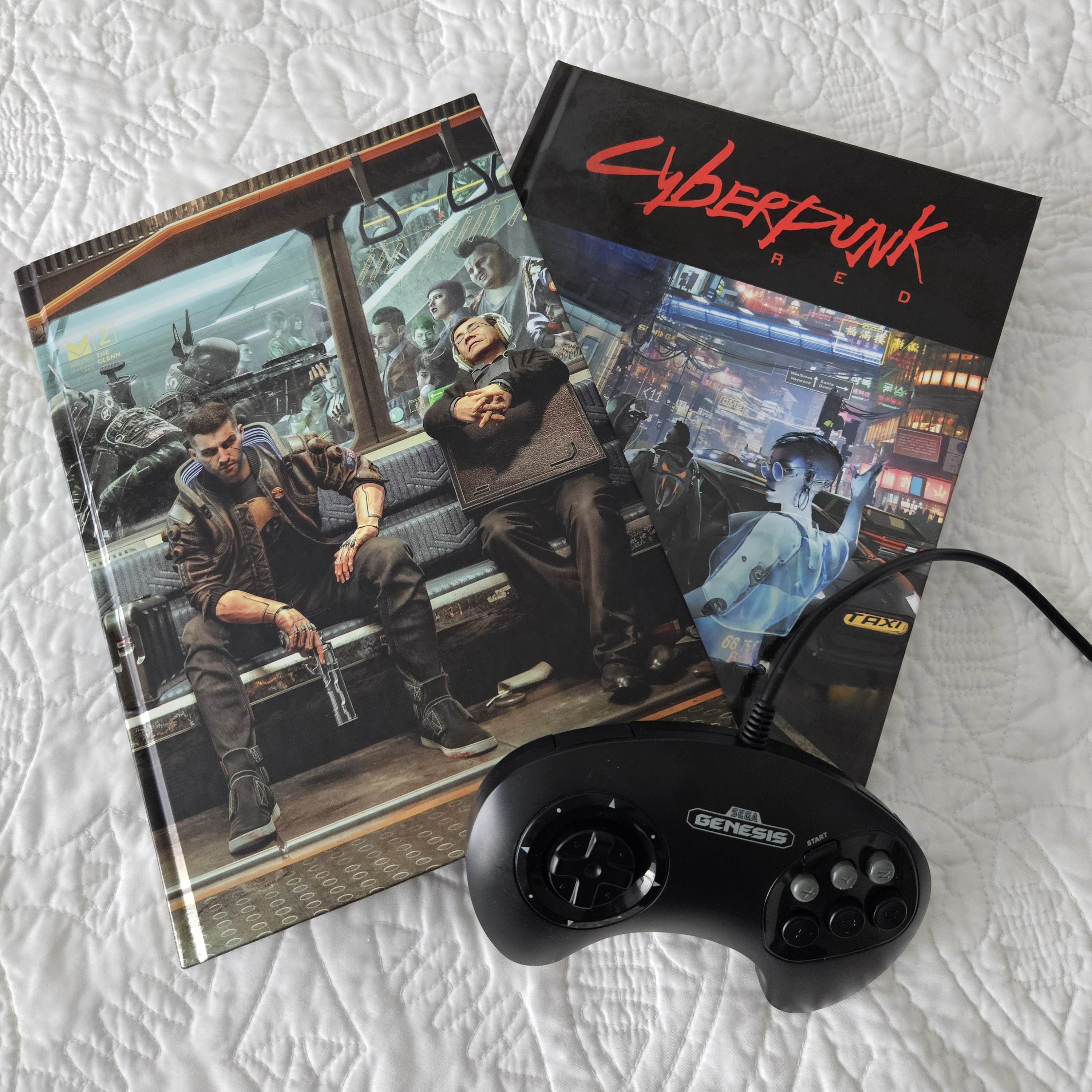
[00:00:47] Speaker B: Yeah, man. You've been playing Cyberpunk 2077, the hottest game of five years ago. No, I'm just playing. It's fine. Uh, it took him four years to fix it. So I kind of wanted this episode to be a sequel to our episode about Baldur's Gate, because you did not like Baldur's Gate 3. You did not like your time with it. I think it's one of the best games ever made. And we kind of debated that a little bit and its relationship specifically to like, tabletop and expectations, which I thought was really, really kind of a fun angle to approach it on. Because anybody can talk about Cyberpunk, the video game, you know, but I think not many people have probably played the role playing game and played cyberpunk. It's gotta be pretty small. And I think we kind of have the opposite opinions of Cyberpunk in that you are enamored with it, judging on your 90 hours in it. I can see on Steam, and I did not like the game much at all. I put it down pretty early. I don't want to launch it. I got to, you know, the part with the parade in the story missions, I got to about there before. I'm like, I see what this is doing and I'm not really down with it. So I just wanted to kind of give you a sense of how much of the game I saw you have played. Have you finished it?
[00:02:03] Speaker A: I guess I should say no. No, I have not. In fact, I am at roughly the same part in the story. And I decided, let me stop and do all the side quests.
[00:02:12] Speaker B: So at this point, oh, my God.
[00:02:13] Speaker A: I have done every side quest, police mission. I have done every side quest, um, side job given to you by fixers. I have done every cyberpsychotic, uh, that I have unlocked. I think there's, there's, I Think there's some. I have done a lot because I think some more unlock with. With the story. I have played through, I think most of the dlc.
So, no, I'm at about the same story beat as you, but I've just done every side mission that I possibly can.
[00:02:42] Speaker B: So I want to say to the listener, we're not going to avoid talking about spoilers. So, like, if you don't want to know anything about what happens in the story of the game, I would recommend going and playing the game or checking it out, you know? Uh, but me and Dusty are going to talk about things that kind of happen later in the game, after the first couple hours that seriously change up, like what the thrust of the game is.
So if you don't want to know anything, this is your warning. However, if you know about Keanu Reeves, maybe, you know, you're probably okay with this. And Dusty, you've certainly played more of the game than I have. So I've made peace of the fact that I'm probably not going back to the game. So I don't want you to feel restricted about what you. What you can or can't say.
[00:03:26] Speaker A: Sure.
[00:03:26] Speaker B: So, Cyberpunk the game versus Cyberpunk the Tabletop. What is the difference in your impression of. I guess we started, I think by the end of our time with the Tabletop game, with the three sessions I ran for you, you probably had an impression of the world and the setting and the tone. Did that change a lot once you started playing the 2077, the video game?
[00:03:49] Speaker A: Not really.
They, um, gave context to each other. I think it's really Clever that Cyberpunk 2077 is set in 2077, because Cyberpunk Red is set in 2050s, if I'm not mistaken, from memory, 2053, something like that. So it's two decades earlier.
Um, so I didn't feel like if I saw anything that was discordant with what we had played, I could just dismiss it as, hey, 20 years have passed. So I think that was genius on the part of our Talsorian games. And, um, the developers of Cyberpunk 2077, I will say, having recently listened to our Cyberpunk episodes, the impression I had where it's like, hey, it's not a lot of netrunning and it's really more like RoboCop the game than it is like Neuromancer. The game holds true.
This dystopian future where corporations have all the power is very reminiscent of the Robocop films of the 80s. And you know, I love RoboCop. So once I made peace in cyberpunk red that I was basically playing RoboCop. This is just more of that.
[00:05:00] Speaker B: It's not an especially intellectual setting. You know, I think cyberpunk as a genre, lowercase cyberpunk can get into really interesting stuff like if you read Neuromancer or like the Matrix where it can get religious, it can get metaphysical, it can get, it can ask big questions. And I don't really think cyberpunk is the video game or the setting is super interested in those questions. I think my. And you can disagree with me or respond if you want. It feels like it's happy being a uh, GTA Grand Theft Auto style world with a different coat of paint rather than. It's almost like how in fantasy you can have Lord of the Rings or you can have the second Conan the Barbarian movie. Like in terms of like how smart is this? Maybe those aren't the ones that you would pick but like the sophistication maybe is a better term. And I think cyberpunk is kind of on that lower end of of stuff. And then you know, obviously sci fi you, I mean you can look at Larry Niven or Greg Bear or whatever as, as the titans on the super intelligent side of sci fi. And I'm not saying this as a ah, judgment because I do like kind of dumb takes on stuff. I like dumb fantasy. I like like Crawl is one of my favorite movies that's a dumb movie. But I feel like cyberpunk kind of lives cyberpunk, the video game and the tabletop setting kind of lives more in that low brow maybe kind of version.
[00:06:36] Speaker A: I fully agree. It's, it's like the difference between reading do Android Stream of Electric Sheep which is really inward facing and it's this kind of. I mean yes, there, there are events that happen in the story, but it's really a character study of um, the Deckard character and then watching Blade Runner, which is less inward focus. Yes. There's hints that Deckard may or may not be a replicant. Yes, there, there's some cool like stuff alluded to and, and you get some of that too. Like the things that are going on in your head in the game give you those same hints. Like Blade Runner the. But like Blade Run of the movie it's much more focused on the setting and the action than it is the characters.
[00:07:15] Speaker B: Yeah. And I think it's to be reductive. Like it's a great new setting to blow dudes heads off and in the same way that like Robo RoboCop is, it's a great new setting for R rated violence and content with stuff that looks cool and stuff that sounds cool and stuff that's cool to experience and live through. And then sometimes like with the brain dance stuff, it's like, it's asking like, what is a person? But then it does really worry about it, you know, it kind of suggests questions rather than that asks them. So this is. Sorry, we kind of went on a tangent here, but that is to say, to circle back, you kind of feel like you had the vibe of the, of the. The setting from the tabletop.
[00:07:54] Speaker A: Yes. Yeah. The fact that it was not worried about being transhuman, not worried about, you know, a lot of net running, not worried about a lot of like leaving your body and exploring the net and that it really is much more like, hey, this is robocop. Hey. These corporations are playing off each other and ordinary people are getting crushed by those machination between these giant, you know, mega corporations.
[00:08:14] Speaker B: Yeah, um, I have a couple questions for, uh, you. And then maybe you have some questions for me about some stuff too. So was it fun seeing Rogue in the game after meeting her in the tabletop?
[00:08:26] Speaker A: I did not connect that that was Rogue that you. Yes. Wow.
I didn't like Rogue in the tabletop. Holy God. Jesus, you blow my mind. I didn't like Rogue when I met her. And you role played her not. Yeah, uh, I didn't like her at all. I didn't trust her. I didn't realize you had done that. Damn, man, you blow my mind.
[00:08:45] Speaker B: Listen, I still got it. What do you think of Johnny and, uh, Keanu?
[00:08:50] Speaker A: I have known people like that, that kind of hate everyone and everything.
So it feels well drawn and it feels like that person could achieve a certain amount of celebrity. I think he is the Lestat of the cyberpunk universe. If you think of cyberpunk is like, you know, is it. It's like a world where instead of having cyber hardware kind of openly a vampire and there's different kinds of vampires. He's very much the Lestat.
[00:09:17] Speaker B: Um, yeah. Kind of disillusioned to the point of violence. Like so far removed. And obviously in the game, when you're interacting with him, he's not a human anymore. Like, he's not. He. He has nothing, um, but sort of his ID that sits in your brain and kind of snarls at you for. For hours. And I think it's, um. I don't love Keanu Reeves. I think as much as Some other people do. I think that it's awesome that Keanu is like, in all of these really seminal, important cyberpunk works though, like the Matrix, Scanner Darkly and Johnny Mnemonic. Yeah. Uh, and now this. I think it's cool that he's like kind of the poster boy of weird cyberpunk stuff, you know, I think his acting skills have been litigated enough. I think he kind of. It kind of works here.
Did you like, uh, having a character living in your head and commenting on everything you do is such a video game thing like that could never work at a tabletop game if I had a GM npc in your character's mind that was like commenting on stuff all the time, you know, But I think you.
[00:10:25] Speaker A: I think you need that in the video game. It helps set up a lot of the history. It helps me feel like, you know, this world, there's more to it than just what I'm seeing.
And that he has this history from like 20 years ago when he was alive and knowing these people and thinking about this stuff or, you know, him being appalled at what's happened with Militech or Arasaka or whatever. I think the world would feel less real to me if I didn't. If I didn't have him in my ear giving me his take on stuff. I also think it's a. It's a good way to add. You said, like, the. The flavors of the introspection.
[00:11:00] Speaker B: Mhm.
[00:11:00] Speaker A: The conversations that I'm having with Johnny that are arguably in my head in the middle of a mission when I'm, you know, there's a mission where you like, sneak into this fan's house to steal samurai memorabilia. Samurai being the band that Johnny Silverhand was in back when he was alive. And Johnny Silverhand in your head is like, commenting on this stuff. Those moments, I think, add a lot to the game and make the game feel like a narrative and make me feel like I'm inhabiting V. M as a character. But I also think part of the reason I stopped and did a lot of side missions is I got a little tired of hearing Johnny talk. And as you might imagine, they have a lot less Keanu scripted stuff on all the side missions. That's much more on the main missions.
[00:11:38] Speaker B: He kind of chimes in like once or twice per mission, I feel like. But yeah, I think the main story is kind of about Johnny. Ah, in a lot of ways. Um, I agree with that. I think that V. Are you playing as female V or male V? Always.
[00:11:53] Speaker A: I don't Know why I always play as female? Someone's going to hear this and be
[00:11:56] Speaker B: like, is they're gonna try to psychoanalyze you.
[00:11:58] Speaker A: Yes. And I. I don't know. Ever since I rolled. Well, my main character in World of Warcraft was a giant male minotaur.
So I either.
Yes, absolutely. A shoe halo. If you want to talk about what they call themselves. Tanner, if you're gonna correct me, I'll correct you.
But, um, stock zug.
Um, I never had an orc or a troll. I just really love the Tauren. My main was a Tauren, but then I had this little, like, female blood elf priest. Sometimes it's fun to, like, look at something pretty. For most of the game.
[00:12:33] Speaker B: Yeah. Me and my friends, uh, give each other blood elf greetings a lot. We say Baladash Malinoi to each other a lot.
[00:12:39] Speaker A: The moment when I fell in love with playing female characters in video games, if I'll say analyst myself, was in Kotor, the original Kotor.
[00:12:46] Speaker B: Oh, good call.
[00:12:47] Speaker A: For whatever reason, I decided to play female because of that.
When it showed. Oh, God. Massive spoiler for Kotor. When it showed Darth Revan.
[00:12:57] Speaker B: Yeah.
[00:12:58] Speaker A: In the. In the flashbacks and Darth Revan was female, I was like, oh, I didn't even know this is going. Yeah.
[00:13:06] Speaker B: Oh, man. I gotta put a spoiler in for Kotor now as well.
[00:13:10] Speaker A: Yes.
[00:13:11] Speaker B: I. I really fell in love with. In Mass Effect, I think the overwhelming sentiment is that Jennifer Hale as female shepherd is, like, way better than the guy who does male, uh, Shepherd. And that's like the canon version of Shepard. Now, I also played as female V. I played as, like, a corporate samurai, basically. And that voice actress, I think it's Charami Le. She does a lot of stuff. She's in Persona 5 a lot. I think she has a very interesting vocal style, and I think. I think she's great. Uh, I'll say that about the game, but now I'm going to shift into, um, asking you some more questions. But in the way I'm loading these questions, I'm revealing my opinion about the game. Oh, how do you feel about how much pro cop stuff there is in cyberpunk, the game? Cyberpunk, like, you can work for the cops. Like, why do they let you do that? How do you feel about that?
[00:14:08] Speaker A: In fact, it feels like fully half the missions you work for the cops. There's the, uh, NCPD scanner missions, which I've done, all those where you're explicitly getting paid by the cops, the people who pay you. When you take out a cyberpsychotic. A cyberpsycho. Yeah.
[00:14:21] Speaker B: Kill. Kill mentally ill people for the state for money.
You can do that.
[00:14:26] Speaker A: I'm taking them alive because of what's her name who gives me the missions. I forget her name. Encourages. So I'm taking them alive.
[00:14:31] Speaker B: Okay.
[00:14:32] Speaker A: But still, the cops pay you when you complete those missions. And then it feels like a good portion of the side jobs are like. Like, dude, one of the ones I did in, I think it's Doctown, where, like, two cops got themselves in trouble by being crooked, and I have to rescue these two cops.
[00:14:46] Speaker B: Yeah. It's like, I get that cops are supposed to be gritty, you know, and, like, they're supposed to be shades of gray and, like, nobody's good in this world, man. But at a certain point, if your game is called cyberpunk, I'm of the opinion that, like, you have to have the courage as a narrative designer to not make the police sympathetic or an ally or an employer if your game is about being punk.
[00:15:12] Speaker A: Yeah.
[00:15:12] Speaker B: And. And clearly they wanted the game to be everything is the thing.
[00:15:16] Speaker A: I'm looking for the 1970s kind of counterculture, you know, cops or pigs vibe. And by the way, if you're real law enforcement and you're listening to this, my real feelings about law enforcement are a lot more nuanced.
[00:15:28] Speaker B: Yes.
[00:15:29] Speaker A: I have a ton of empathy for law enforcement because I don't want to respond to a major accident on a highway.
[00:15:36] Speaker B: Right.
[00:15:37] Speaker A: And that kind of stuff is. Is horrific. So if you're real law enforcement, take what I'm saying here.
What we're saying here is not a slight on you as a real human being, but in a cyberpunk universe, I want counterculture cops are bad because cops represent authority. And in punk stuff, authority in all of its forms is bad.
[00:15:58] Speaker B: Right. And I think that the game is too aaa. I think it's just too big, it's too mainstream to be brave about that. You know, like, for example, like, I don't think, like, Grand Theft Auto could ever have a real message. It's too big. Like, it's the big. In the same way that I don't think there are the Avengers. Age of Ultron has a message. It's like, the biggest budget entertainment thing, and those have their place. And I'm not looking down my nose at it, but, like, at a certain point, I'm like, why are you calling this cyberpunk? Like, yeah, I don't know. I feel like a lot of my beef with this game is that it's so made in the image of Grand Theft Auto. And I wanted something more made in the image of the Witcher. And it's, it's just, it's just not that. And that's my own expectations. I'm like, this is the next game by the people who made the Witcher. And I'm like, I'm playing. I'm driving with the wasd keys, listening to an annoying person call me on a phone and shooting a dude in the head 500 times. I'm like, I don't want this from, from this. So that, that was my other thing. Um, here's another beef I have Dusty and you can respond to this or not.
[00:17:06] Speaker A: Go for it.
[00:17:07] Speaker B: I think this, the way that this game treats sex work is like vile. The prostitute has to die to motivate a character. Like they like it's such a trope from like Noir Detect. Like this is like 100 year old trope of like sex workers get harmed and punished in order to motivate characters to do things. You know what I mean? And like especially I forget what the main character.
Evelyn, right?
[00:17:36] Speaker A: Uh, yes.
[00:17:37] Speaker B: Early on, like her story was so sad. It's sad, but it's sad that like this is the only.
In a world where sex is everywhere and presumably everybody's doing whatever they want. Like why are we still telling these like so tired, trophy harmful stories in that way? You know? And I don't. Maybe this is just more of like a personal beef, but like I feel like sex workers get abused enough in like real life and we don't need to necessarily. Like, like there are very few stories in which there is a sex worker who is just like a normal character, you know what I mean? As opposed to a sex worker who's a damsel or harmed in order to motivate another character.
[00:18:21] Speaker A: Yeah, that's fair. Um, I guess the real answer is I hadn't, I hadn't considered it strongly. In fact, when you started your question, I was about to proudly inform you that I did not engage with any of the sex work because, uh, I think it's jig jig street where there's, there's two like sex workers in the game that you can like pay and go have an encounter with. I've chosen like not to do that. I think V has my V. Um, I'm use female pronouns for. V has other things on her mind. Like Johnny. Uh, I don't think she's having casual encounters. So I'm choosing not to engage with a lot of that content like the adult con. I'm not having relationships. I'm not pursuing Judy. I'm not pursuing, like, any of the potential romantic. I'm just not really interested. I'm more interested in V's story. But when it comes to the Evelyn stuff, you're right. I simply hadn't considered it. I was viewing Evelyn as someone that you get to know, and the corporate machine chews them up and spits them out. And you're meant to hate the corporations for that. And I do. And the voodoo boys for that. And I do.
[00:19:23] Speaker B: Yeah. Voodoo boys is a good, uh, segue into my final question, and then I'll be done complaining, I promise.
[00:19:29] Speaker A: No, it's okay.
[00:19:30] Speaker B: One thing that really jarred me from the Tabletop game to the video game is that the Tabletop game is an American production. Mike Pondsmith is an American.
He's writing a game set in a dystopian America based on what, I presume the things that he saw and experienced in life and inspired him.
I feel a strange sense of authorship or, like, I don't know if it's, like, patriotism or, uh, like, indignancy when, like, a European writes Americana about America's problems. Like, I would not ever, if I was working at an American video game studio, I would not ever write a game set in Spain about Spain's problems. You know what I mean? Like, I. I think cyberpunk is a game about Americana. Uh, and it's about, like, the dark underbelly of, like, this is a place that America could go if everything goes wrong. Right.
It felt like, to me, and maybe this is an insecurity I have that I'm totally open to confronting, but, like, it felt almost preachy in a way that didn't. It was, like, satire without, um, empathy in a lot of ways. And I feel that way sometimes about maybe stuff from south park or GTA or other things that are, like, they kind of point at the problem from a point of view of somebody who's never experienced that problem. Like, this is a game made in Poland.
Did anybody. Does anybody there really know about the Latino experience in South Southern California? I know, Tanner. I don't. I wouldn't make a game about that. But, like, the game and the developers kind of take a high ground that I don't know if they have.
[00:21:14] Speaker A: Interesting.
[00:21:15] Speaker B: And I'm not saying, like, it's. It's off limits to make anything a, uh, piece of art about another person's culture. I think that, you know, any form of expression is valid, but I just kind of question, like, the. The point of it, and, like, what if it's coming from the right place? A place of, like, we see what's going wrong and we feel pity for you Americans. Or maybe I'm just projecting too much.
[00:21:36] Speaker A: I don't know. So on the one hand. So on the one. Actually, first of all, before I go into any hands, it's clear to me that I'm playing this game pretty uncritically because I'm not thinking about that kind of stuff. I'm just kind of. I'm 10 years older than you. I'm a child of, you know, movies of the 90s where the Latino characters were stereotypes and the characters that came from Caribbean islands were stereotypes. You know, the voodoo boys, the Valentinos for the Latino stereotypes, the Tiger Claws, my God, the. The America in the 90s was terrified of the Yakuza.
So it's media that kind of fits in with the media of the 90s that I consumed. Like, my God, the Dolph Lundgren Punisher, where the Yakuza were the bad guys. RoboCop 3, where the Yakuza were the bad guys. Um, so the Tiger Claws being portrayed that way, the Valentino is being portrayed that way, the voodoo boys being portrayed that way kind of fits in with my childhood one. So I'm playing the game uncritically because it just unconsciously fits with a lot of things I was raised with. But having said that, and I'm about to present a very uneducated opinion. So listeners, uh, feel free to write in and educate me if you want or don't. Don't take on that emotional labor. But here's what I'm going to say. I find it kind of lovely that other countries feel free to comment on the American experience. I think America feels perfectly entitled to do Dungeons and Dragons. And what is that if not, um, fictional? Alsace and Lorraine between France and Germany, or fictional, you know, England, Albion type places.
Very, you know, historical European. So we feel free to do that. We feel free to do the Teenage Mutant Ninja Turtles appropriating, you know, the concept of Eastern martial arts.
[00:23:18] Speaker B: And I love Legend of the Five Rings, so I'm not, you know. I understand what you mean. Yeah. Like, and I would never presume to say that the American experience doesn't affect all these other countries because we have such a cultural hegemony over large parts of the world. Like, I would bet a lot of people in Poland grow up watching American shows and American cartoons and American comic books to, like, I'm, uh, Not.
It's hard to. For me to articulate it, because I don't want to ever say that anything is off limits. But I just question if it's coming from a place of understanding and empathy as a point of critique or. Or if it needs to.
[00:23:57] Speaker A: You know, I don't know if it needs to. Let's talk about two.
Well, two things, specifically. One, spaghetti Westerns, Judge Dredd. So spaghetti Westerns. I love the idea that American movies made westerns such an archetype that there are people in Italy like, I want to tell those stories about the American west because I've seen all these Western movies. I love that, and I love that they felt free to do so. And then Judge Dredd, famously written in England about, you know, the mega cities and the excesses of America and kind of this Clint Eastwood character. I'm pretty sure Judge Dredd was based on Clint Eastwood. And they're criticizing things they see in the American culture that's overwhelming them. And like Hollywood movies and TV shows and whatnot. I kind of love that other countries will comment on what they see about America through our media. And I love that, uh, this is just me restating God. I've got a bad habit of repeating myself back to the Italians doing spaghetti Westerns. I find fan fiction very empowering. The fact that someone would, uh, look at a world and then write fan fiction to kind of like, take back myth and tell stories in a shared look. How fun is it to tell stories in the shared world of, like, Zeus and Hera hating each other and Hercules being caught in the middle as the tool of, you know, I'm sure the ancients felt that way and felt free to.
[00:25:17] Speaker B: There was no one, one true story back then. There was no one canon of this is the way it really happened. And people like, it was a collaborative cultural thing. Yeah.
[00:25:27] Speaker A: Comic book, same things. Like how many times have the Batman origin story been told by different authors who put their spin on it? So I love fan fiction, and I think, what is. What are spaghetti Westerns put together by largely Italian creators if not really fun fan fiction about westerns? So I'm kind of okay with these Polish developers putting this together. But then again, uh, I'm not Afro Caribbean. I'm not Latino. I'm not, you know, Japanese American or Japanese as presented by the tiger claws.
And maybe there is more to critique there. But anyway, to sum up, for reasons of my upbringing, I have been kind of ignoring it as I play. And then for reasons of Judge Dredd and spaghetti Westerns, I'M delighted that Europeans feel free to talk about American culture.
[00:26:13] Speaker B: That's a good perspective. And I appreciate you, um, engaging with me in a mellow way about it and kind of broadening my view.
Um, I think maybe a lot of this kind of comes from my distaste at like the south park style holier than thou. Like satire can be, is, can be punched at. Everybody punching all. Don't, don't punch up, don't punch down, punch in all directions. What are you actually standing for kind of way. And I think me not liking. I mean, everybody is this way. I think when, when you really like something, you're more willing to overlook its flaws. You're more willing to be like, yeah, you're right, that is kind of bad. But it doesn't really bother. But when you don't like something already, like, you know, I was done playing the game kind of when I was having these thoughts about it. I think, um, it's easier to look about other, look at other aspects of it. Uncharitably.
No, I appreciate you like checking me on that though and being like, you know, it's not denigrating anybody in like particular and maybe I'm just approaching it probably is.
[00:27:18] Speaker A: I think I'm probably more objectively wrong than you are because one of my arguments is, well, it fits with the racist media of my childhood, so I'm fine.
That's not a great argument, I admit. And my other argument is I think it's neat that other people feel free to take what they see portrayed in movies and riff on it when the movies themselves are also racist. So you're probably more right than I am. But I'll also say I'm a hypocrite as well. I did not like the full frontal nudity and adult content in Baldur's Gate.
[00:27:47] Speaker B: There's a lot of that in cyberpunk.
[00:27:48] Speaker A: But cyberpunk has the same thing and I have no problem. And I have to ask myself why?
And I think the answer is I think Dungeons and Dragons, uh, I look at every, you know, beginner box or starter set or Essentials kit that I have and they all say like ages 11 and up.
[00:28:03] Speaker B: Sure.
[00:28:04] Speaker A: I think it's marketed to a younger demographic than even cyberpunk. The tabletop role playing game is.
[00:28:09] Speaker B: I agree.
[00:28:10] Speaker A: So I think the full frontal nudity and sex in Dungeons and Dragons is a little off putting to me because I think D and D while, while I play it as a, as a 44 year old is still like very much for kids and aimed at kids and intended for kids. But adult content in Cyberpunk, like, makes sense. You're playing something that's a little more morally ambiguous. You're questioning authority a lot more.
[00:28:31] Speaker B: It's edgier in a lot of ways.
[00:28:32] Speaker A: It's edgier. It's meant to be more adult with adult plots. So the same exact content, the nudity and the sex, doesn't bother me in cyberpunk the way it does in D and D. Baldur's Game, I think, I
[00:28:43] Speaker B: think that's a, uh, that's a really apt point because I could never see a published D and D adventure having the content that Baldur's Gate 3 does. I could absolutely see a published cyberpunk adventure having the content ratings that the game does, the video game does. So I think that's fair. Um, it kind of shocked me a little bit too with D and D, but more in a, like, I can't believe wizards let them do this kind of way than ah, like I'm personally shocked by it.
I would like to make this episode a compliment sandwich because you clearly really like the game and I don't want my woke sjw, ah, freaking critiques of it to take over. And I would never want to take away anybody else's fun with the game. So I want you to talk about maybe now that we've kind of talked about the content of the video game a lot, Are there any lessons that we can take from the game that you could apply to Tabletop or whether that's like, directly, you know, like, oh, you could put this in a cyberpunk tabletop game and that'd be fun. Or like, are there any story or character type things that you could see applicable to like broader like tabletop RPG stuff?
[00:29:56] Speaker A: I really love how every mission in Cyberpunk 2077 can be approached, you know, in any of the styles. You can do a lot of net running and like, hack people from afar. You can do a lot of stealth stuff. You can bust down the doors and go in with, you know, machine guns blazing. I like how every mission.
[00:30:18] Speaker B: Big deus ex guy too, right?
[00:30:20] Speaker A: Yes. Yeah. And that's, that's, that's. Yeah, same thing. Exactly. I really like the thought that's put into each mission to allow there to be multiple approaches or even mixed approaches where you can be stealth till it goes wrong. And then, oops, now I gotta kill everyone. I like that. I think we should all think about our Tabletop adventures the same way. Like, oh, there's social stuff. I Love that maxing out cool.
Um, and maxing out body lets me intimidate people with either guns and knives and cool or, um, my brawn and body. I love that it opens up dialogue options. I think designing adventures and designing content to be engaged with in multiple ways is really, really smart. The story I find interesting enough. It's really more the gameplay and the world and the powering myself up and the leveling up by getting better and better weapons and better and better Augmentics.
Augmentix is a Warhammer 40K term. Uh, what's the term they use in the. In Cyberpunk Chrome. Yes, I think, uh, I'm enjoying all that. The story. Like, dude, I got tired of Keanu, which is why I started doing all the side missions.
[00:31:25] Speaker B: It's a lot of Keanu if you. Yeah, it's more Keanu than you would get in any movie. For sure.
[00:31:31] Speaker A: For sure. Um, but yeah, uh, take multiple approaches or think about players taking multiple approaches as you design your missions. That's the number one lesson.
[00:31:39] Speaker B: Excellent. Yeah, I would. As maybe a postscript addendum. I didn't ask you about this. Do you have any interest in the new Vampire, the Masquerade Bloodlines 2?
[00:31:50] Speaker A: Not really, no. You.
[00:31:52] Speaker B: Because you like the first one a lot.
[00:31:53] Speaker A: A lot, a lot. Loved it.
[00:31:55] Speaker B: Yeah. Uh, and, dude, love the tabletop game and the setting and stuff, but I do like.
[00:32:00] Speaker A: I do like the original Vampire. Um, and I like the. The vampire 20th edition or 20th anniversary stuff. I did not like 5th edition. I even sent you my 5th edition book. I felt that, uh. What's the word I'm looking for? Ambivalent about vampire 5e just didn't.
[00:32:15] Speaker B: Just.
[00:32:16] Speaker A: Just didn't connect with it.
[00:32:17] Speaker B: Yeah. And the new. The new game has a lot of baggage, too. I don't know if you know anything about it, but, like, it was developed by this developer, and then they were like, spinning their wheels on it, and then they got the game taken away from them and the developer shut down, and then they handed it to this other studio to kind of chop it up and finish it and put it out. So you. You don't have enough time. You're not interested. Dusty shaking his head right now.
[00:32:42] Speaker A: I love dude, Nukem3d. I grew up with Duke Nukem3d. Yeah, Duke Nukem Forever was in development hell for years, and it was a shit show. It was a. It was a caricature of what dude, Nukem3d was.
[00:32:53] Speaker B: Shake it, baby.
[00:32:54] Speaker A: And then I think Vampire bloodlines love it. Played it a lot. Played it, um, multiple characters, multiple ways. Had a lot of fun engaging with it. Uh, the sequel's been in development hell by arguably different creators, and I just don't want to engage with another Duke Nukem forever.
[00:33:10] Speaker B: That's fair. And, you know, sometimes, like, there's plenty of things in the world that I like and I enjoy, and then they're like, there's a sequel, and I'm like, I got what I needed. Like, I liked the last thing. But, like, I don't. I don't need more. I'm not so desperate that I'm, like, banging down the door to need more. You know what I mean?
[00:33:28] Speaker A: I have a hard time watching season two of shows.
[00:33:30] Speaker B: Yeah, that's fair. Um, so, yeah, lessons Learned from Cyberpunk 2077. Um, you know, maybe the story and themes and a couple other things have mixed reception from at least me, but, um, in terms of the mechanical stuff, there's a lot to like there, and I think there's a lot that you can take in to Tabletop, uh, spaces in terms of, like, immersive sim style, you know, freedom to approach different problems, uh, with different solutions. And, you know, we should be designing our adventures in such a robust way that there are multiple ways to. To engage with it.
[00:34:07] Speaker A: Cool.
[00:34:07] Speaker B: Thank you for listening, everybody.
[00:34:09] Speaker A: People call them reviews, postmortems, retrospectives.
We call them lessons learned, and we're sharing ours with you.