[00:00:00] Speaker A: RPG Lessons Learned. When the game is over, when your players are gone, that's when lessons are learned.
Find us
[email protected].
email us at rpgllpodcastmail.com and find us on BlueSkyPGL.
[00:00:23] Speaker B: Hi. Welcome to RPG Lessons Learned, the show where you can learn from our mistakes. I'm Dusty and with me, as usual, is Tanner. Hi, Tanner.
[00:00:31] Speaker C: Hi, Dusty. How you been, man?
[00:00:33] Speaker B: I can't complain. I feel like every episode I edit starts with one of us going, it's been a while since we've played.
[00:00:40] Speaker C: That's called being an adult, Dusty.
[00:00:43] Speaker B: It is. It's been a while since we played. You ran me through a game of L5R, fifth edition.
[00:00:49] Speaker C: Hm.
[00:00:50] Speaker B: I believe I understand that this adventure is an adventure of.
Of your creation.
Entirely your creation. Uh, is that true?
[00:00:59] Speaker A: Yep.
[00:00:59] Speaker C: Correct. Um, we had our fun with the closed shell castle game, the Sins of Regret adventure.
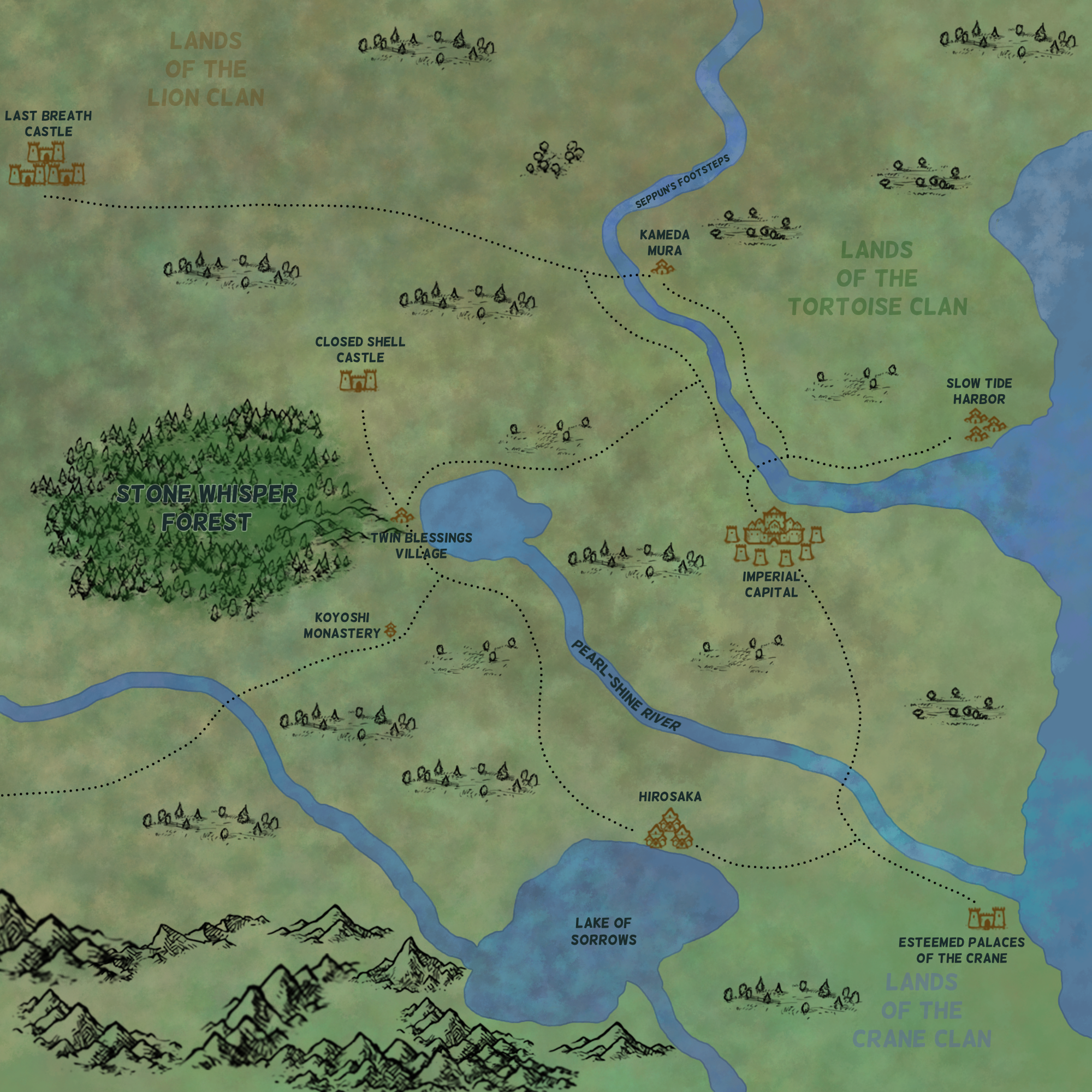
And, uh, that adventure had you playing as a ronin, uh, Kindun. And, uh, like all awesome adventures, it opens up, it leaves so many questions unanswered as to like, who is messing with the castle? What does the castle need? Who's in charge of the castle now?
Um, and we kind of spun that off into, uh, a little mini campaign that I'm going to run for you. So I anticipate the campaign. I don't know, maybe it's getting away from me. I have at least probably like three or four sessions worth of stuff to give you, so maybe a little bit longer than our cyberpunk game, if you're cool with that.
[00:01:44] Speaker B: I am. That sounds fun.
[00:01:45] Speaker C: What would you rate this, uh, session on a scale of 1 to 10?
[00:01:49] Speaker B: Oh, I messed up a lot. But I think consequences for your actions is just an absolutely key component of roleplay. I had a ton of fun, despite. I didn't have that much uncertainty, actually. I just, I just had a lot of fun making decisions and being like, oh, crap, that's not good. Um, I'm gonna go high, man. I think I'm gonna go like an eight.
[00:02:10] Speaker C: Yeah, I was gonna say an eight too. Um, I. I felt the energy, the pacing felt really good. And, and that's not just me. M as the gm, that's obviously what the player decides to do. We kept it moving, we kept it fresh and we had a cool, uh, little story, little action, little intrigue, little mystery. It was, it was a good time.
[00:02:28] Speaker B: I love it. There was a plot point that I guessed where I guessed that a samurai had his wakazashi taken against his will. And that Turned out to be true. I'm relieved this is an adventure that you wrote so that you knew I hadn't, like, read spoilers or anything.
[00:02:44] Speaker C: Yeah, yeah.
[00:02:44] Speaker B: Um, but you telegraphed that pretty well. Were you surprised that I picked up on that plot point to that extent, given how well you telegraphed it, or did you telegraph it for that reason?
[00:02:53] Speaker C: I wanted it to be an interesting mystery to know. So I guess, basic story of what you're happening. You needed a lot of money, and you were going to a town where there was a wealthy samurai who was willing to help you. But he lost his wakazashi gambling with some, uh, miscreants. And you came in, you beat, uh, up the miscreants, killed a couple of them. Um, you got his wakazashi back, his sword back, you got your father's sword, which was unexpected. And, um, you got a little bit less money than you were hoping for. But we take these and we roll on. So I intended it to be intriguing. Um, I did not intend you to sort of clock it.
It's not like I prepared a big mystery of you going to find out how he lost his wakazashi. It would have come up fairly organically to start with, but you kind of just came in, like, pre. Armed with a pretty good idea of what happened. And I think that made for a cool scene as. As you were sort of, uh, the streetwise, uh, the streetwise samurai. As you came into that situation with him.
[00:03:57] Speaker B: You also gave me a traveling companion.
[00:04:00] Speaker C: Yes.
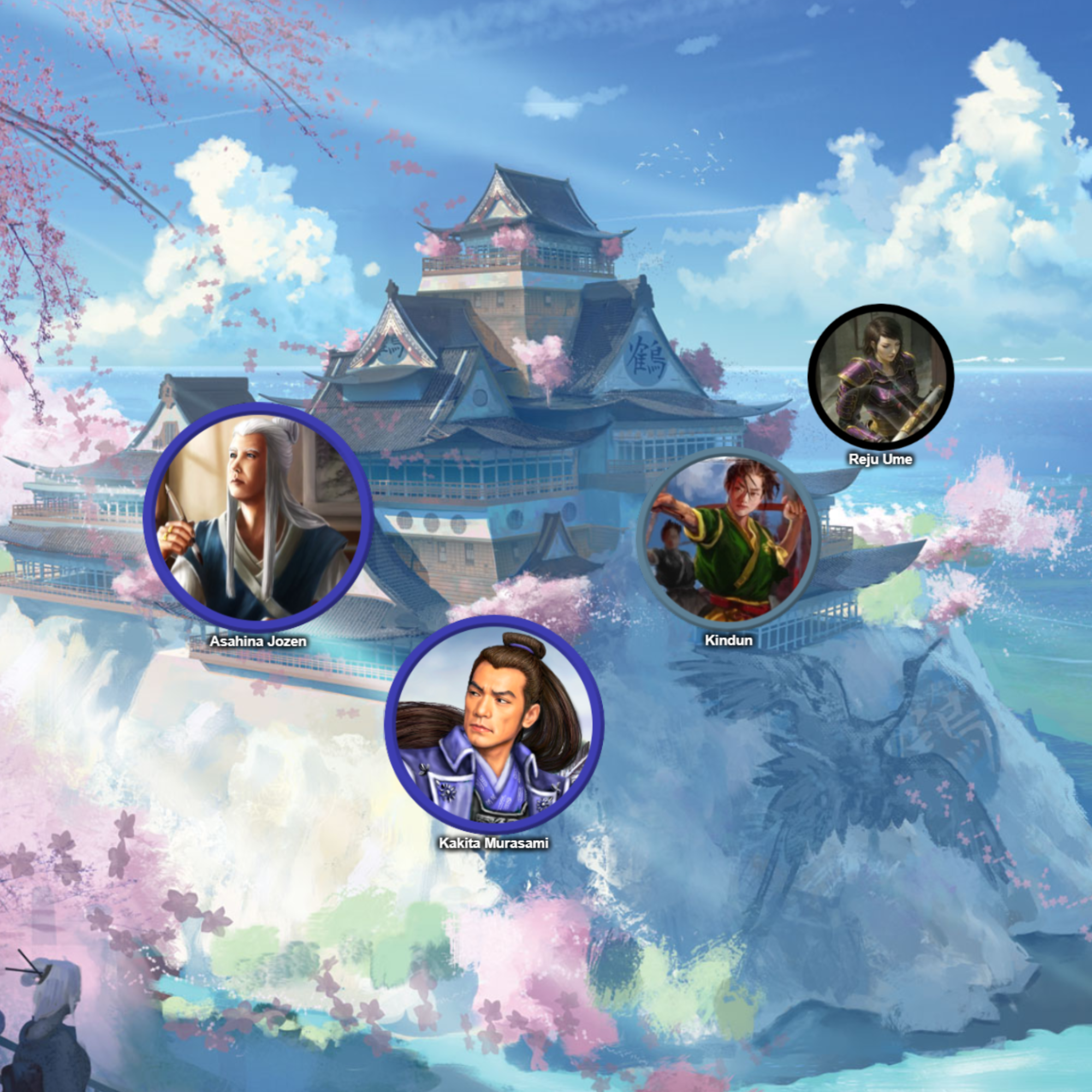
[00:04:01] Speaker B: So Umay, whom I'm referring to as Umesama, and this is an offshoot of when we played, um, the Veiled Society. And I gave you a butler who was familiar with the city of Speculatum. You gave me Umesama, who is familiar with the world, um, specifically of Rokugan, but more specifically in and around, um, Twin Blessings Village and Clothio Castle and the surrounding environs. Um, I really enjoyed. I had a lot of fun like. Like that moment where I used an opportunity and noticed the missing wakazashi on the street.
Followed a long scene where Umesama, Ume, I'm, um, referring to as Mesama, to be polite. Ume is, um, an actual samurai, not a ronin, whereas I'm a ronin, and we're on this kind of ronin type mission. And she's kind of keeping an eye on me, but also kind of helping me. I'm really enjoying minding my P's and Q's and putting on kind of a performance for her, but then also for the samurai. Where I noticed as Wakazashi's gone, like this was a really fun one to role play this. This might be the most roleplay heavy adventure we've ever done. I spoke more in character in this adventure than I think any adventure ever.
[00:05:12] Speaker C: That is. I didn't think about that until you said it like that. That's gotta be correct though. Um, unless, I mean we had a lot of.
In terms of like be inhabiting a character, I think I would agree. I really want to give you a lot of compliments with your Mutes and Masterminds game because I think that was a very well thought out world with a big cast. But in terms of like inhabiting one character and role playing them a lot, I think you might be correct.
Um, so it wasn't annoying that I gave you a gmpc?
[00:05:43] Speaker B: No, not, not in the slightest. I think we talked about how Martin did it correctly and I think that's freed us both. Well, it freed me up to try it and I think me trying it with you freed you up to try it and not treat it as the cardinal sin that people think it is.
[00:06:00] Speaker C: Absolutely. And I want to. I uh, kind of want to talk about that. So I gave you a system to sort of try and insulate a one on one game from like really dramatic, uh, swingy roles and stuff like that. So basically you have a system where it's uh, sort of a relationship system. And as you progress, um, and get along with her, she can help you on roles. But she is never a character that is uh, like rolled in combat or anything like that. She's not, she. There's no character sheet for her. Um, she just exists to sort of be your backup. And one important thing. This is sort of a tip, but this came to mind. You can tell me if I was successful or not. He would only ever ask you questions or offer you opinions on stuff that was not super consequential without being asked. So she. I tried to give her a lot of moments where she said, how do you feel about that kind dune, what do you think is going on? And stuff. And I don't know if this is going to ruin the illusion, but I feel like that gave you a great springboard to role play and um, kept her as a supporting character rather than a main character.
[00:07:15] Speaker B: And I like, I unreasonably want her to like me or like my character. Isn't that weird?
[00:07:21] Speaker C: It is. So I want to, um. There's this author I saw on Instagram, her name is K.R. house and she. I Found this, like, reel that she posted back in October of whatever year you're listening to this, dear reader. And she kind of pouched this in terms of either GM advice or writing advice of, like, how to have like a really, um, straightforwardly strong, interesting character. And she said that a character needs to have something they're seeking, a reason to dislike them, and something admirable about them. Oh, so the fact is that she's not just a do gooder, but you still like them, but there is still, like that friction. And I'm giving all credit, uh, to KR House. Please, uh, check out their work. But I wrote this down as part of preparing her. So something that she's seeking is restoring the name and the material wealth of the Reiju family a reason to dislike her. She looks down on the poor and less fortunate. She has disdain for them.
Um, but something admirable is that she will back up kindoun at any task at any time. She's reliable. So those were my goals in sort of roleplaying her.
[00:08:35] Speaker B: Mission accomplished. I found myself wanting her to like me and then also chastising her, uh, in turn, like when she asked me, like, how can you live with these people? Referring to the other ronin that we were in a disreputable inn with. And I kind of lectured her about, look, if you can't view them as people like, I do, at least view them as, you know, resources that you need to treat well so that you have your wealth and privilege.
[00:09:02] Speaker C: You were really good at making those speeches off the cuff. I was really impressed.
[00:09:06] Speaker B: We've said it before. We've said it on so many episodes. Someone out there is rolling their eyes. They know what I'm going to say. I'm, um, role playing Duncan McLeod. I do this thing where I choose an existing character in fiction that I'm familiar with, and I role play that character and. And it just lets me inhabit a character so quickly. So basically Kindun is Duncan. If Duncan were female. And having that really strong sense of character really helps me be able to deliver a speech or think about how I'd approach something or make a decision about. No, I'm not going to gamble and trick. I'm going to go in there full force and demand this wakizashi. It makes it easy to make decisions and it makes it easy to make speeches. Yeah.
[00:09:46] Speaker C: And I think you, uh, I think you did a great job. I was, like, really impressed. I. I feel like you were, um, you were stretching muscles that I didn't know that you had. You know, I, I think, I think you uh, you pushed yourself and um, you. I don't know. I. I was really impressed. I was seeing a side of you as a, as a player that I hadn't seen before. So I was more than pleased for that.
[00:10:12] Speaker B: You know, I'm going to pause and I'm going to say this tentatively and we'll see if you agree.
I'm going to praise the system for that.
Because if we were playing an OSR game tonight, the same Dusty with the same you know, mood that I started out with and the same set of decisions and the same this and the same that would not have role played this heavily. I would have relied more on the, the system of dungeon crawling, the processes of dungeon crawling. So as little we didn't roll the dice that much we had I think
[00:10:44] Speaker C: out of combat maybe three dice rolls in terms of uh, like role playing or finding out more information, something like that.
[00:10:53] Speaker B: So I think what I'm really doing is I'm actually praising the setting and not the system.
[00:10:58] Speaker C: I ask you that. Yeah, yeah.
[00:11:00] Speaker B: To the extent we think the setting and system can be extricated from each other.
[00:11:03] Speaker C: I mean I certainly don't think you could pluck this system and place it somewhere else. Like it is very.
It makes a lot of assumptions about what type of game you're going to run which is things like giving you strife, having composure be one of your stats as opposed to like there are social skill roles that can affect you. And I as the GM do have the authority to say you see something that bothers you, take three strife. Like I think that type of thing. I mean that doesn't work in OSR games, you know. So I think it is a strong setting. But I will give the system some points because it's a system built for this setting. 100%.
[00:11:43] Speaker B: Did I just have a breakthrough tonight as a years long like the last God two, three dozen episodes have been. Um. I just really like the OSR games. Gosh. I just really like the osr. Gosh. I just really like a dungeon crawl. Gosh. Yeah. These Lucy UC systems don't do it for me. I just enjoyed and now here I am going like this roleplay system was actually really nice. Boy, we got to do some fun stuff. You're saying I'm stretching muscles.
[00:12:06] Speaker C: Yeah. I mean you understand why this is my favorite game. Even if I don't think it's the best game. Like it gets you into weird.
I don't know like this game and a set. Whether you want to call this Legend of the Five Rings or the setting Rokugan or this edition. It is somehow more than the sum of its parts. Looking at the book, you know, you're like, oh, okay, I get it. Samurai stuff. But then like when you play it, you're like, this is some X factor here is driving me into places that I don't find myself gaming in often. And I haven't found it anywhere else.
So I don't know. I. I think that's sort of magical and endlessly intriguing. And I would play this game forever, um, with anybody who would want to. So I think I'll. I'll let the listeners Dusty whether they think that's the, the setting or the system. But it's. There's something going on here, right?
[00:12:56] Speaker B: Absolutely. The first was it two sessions that we played to finish up Close Shell Castle. Um, they were fun. This one was a different level. This one was. I hesitate to use the word transcendent.
[00:13:07] Speaker C: It was a little deeper though.
It was more three dimensional.
[00:13:11] Speaker B: It felt like I had more agency. It didn't feel like I was reading a Choose youe Own adventure in the way that a pre published module would. Mhm. And because I knew you wrote it. You told me you wrote it. You told me how many words of prose you wrote for this.
Because of that I felt a lot freer. Like if I know someone's writing a module for me, I try to color inside the lines because I don't want to be like a jerk player and make life hard for them. But if you wrote the adventure, I'll go wherever I want because I'm pretty sure you can adapt.
[00:13:39] Speaker C: Yeah. I think, uh, the expectations about that are pretty interesting. Um. Yeah. I don't know. I'm gonna upgrade your score to an Dusty. Based on how you just talked.
[00:13:50] Speaker B: This has. I. I remember with fondness and warmth in my heart that time you told me that the Veil Society when you were like, you know, this might be the best game you've ever run for me. I think this is the best game you've ever run for me.
[00:14:03] Speaker C: Really? Oh my goodness.
[00:14:04] Speaker B: Wow.
[00:14:04] Speaker C: Okay. Well then that means I'm going to reflect a lot more than I was going to as to. As to what succeeded and I've enjoyed
[00:14:13] Speaker B: like Temple of a Thousand Swords. Great.
[00:14:15] Speaker A: Um.
[00:14:15] Speaker B: Um, the, the. The Owl. Moon. Moonbeam. Owl. Whatever that was. That one page dungeon. Great.
[00:14:20] Speaker C: Moon priests. Yep.
[00:14:21] Speaker B: Yes. Um, what was the other Brad Keir that we ran?
[00:14:25] Speaker C: Hideous Daylight.
[00:14:27] Speaker B: Great.
Right.
[00:14:28] Speaker A: We.
[00:14:28] Speaker B: A lot of great stuff and having. And I say that let's talk about my screw up. But before we pile too much praise on each other. So I burst into this room with this Ronin and his three cronies and I guess the combats I had in the pre. In the pre generated pre written adventure, like I really was never challenged. I don't think I was very overconfident and these guys could have easily killed me.
Um, I think debatably you went easy
[00:14:58] Speaker C: on me but then also ask about that too. Can we talk about that real quick?
[00:15:03] Speaker B: Yeah, do.
[00:15:05] Speaker C: Um, I had them make some roles that were so obviously it's always hard to we talk about this. It's hard to balance one on one games in terms of like action, economy, things like, like fundamentally like that.
I actually forgot in my prep, I prepped the stats for the main Ronin and his cronies. I did not write down how many he had.
And when you asked how many he had, I was like, this is my thought process. Realistically, this guy probably has 8 to 10 cronies. I can't do that. I'm going to cut this back. I'm going to give him three. And three was too many. Even so, I think last time we talked about one of the strengths of the system is that there's a great one on one conflict resolution tool which is dueling. But we did not duel. We did a skirmish which is like sort of a more general combat. And I think that I need to be way more cognizant and prepare those with the thought and intent that they deserve because they are not designed for one on one play. So I messed up there and I tried to kind of patch it over by having the minions like take a turn to go do something else. But I figured that that was better than like just kind of beating your ass and then calling that a day.
[00:16:18] Speaker B: Well, and you put a guy in a suboptimal state. Like that was pretty obvious to me that you put a guy in a suboptimal stance where he wouldn't have as many dice to keep.
Um, so yeah, I think you went easy. I mean number one. Number two, did you screw up?
Debatably. I know that I felt that way when Krampus was way too difficult when I ran my Christmas adventure for Strangers Online.
But at the same time, man, I was standing in a room with four enemies as one person and I chose to wake them up. In retrospect, I wish I had sent Umay outside and said, go outside and close the door. And I wish I had killed at least one of them while they slept.
[00:16:56] Speaker C: That would make a character moment, though, of like.
[00:16:58] Speaker B: Yeah, that. That would not have been the Duncan McLeod thing to do. The Duncan McLeod thing to do. To do was to demand the wakazashi. So maybe I don't regret it. I don't know, man. I was just. I was pretty confident I was gonna clean their clocks, and then I absolutely did not. And that will change the way I play the next session.
[00:17:14] Speaker C: And I think that it was purely an action economy thing because you were rolling well and they were rolling average. Like it was just a matter of they got four turns for every one that you got. And I needed to consider that more. I think.
[00:17:29] Speaker B: Yes, that's true.
I wish. I don't know. Maybe a good way to have the one on one mechanic work is, you know, we talk about footwork and like, keeping one of them, you know, maybe. Maybe the most they can never get is like 2 on 1m. And I'm constantly moving and they're constantly moving so that one of them's kind of in the back and can't reach with the katana.
[00:17:51] Speaker C: Yeah, maybe. Maybe something like you can take some strife to take a second action on your turn or something like that. So, like, it would be a calculated. Like, I'm in a bad spot. I need to knock out two guys this turn. Hopefully, like, something like that. I'm gonna ponder that. I appreciate that advice. I'm writing that down.
Something.
Um, if I'm gonna do another skirmish, I'm writing this down. Action economy reconsider.
So think of some sort of house rule or. Or something like that to, uh, even the odds and keep it engaging.
[00:18:27] Speaker B: And some reader out there is like, oh, don't change the system to make it easy. But at the same time, like, we have learned the value and the drawback of one on one play.
[00:18:38] Speaker C: Yes.
[00:18:38] Speaker B: We get through so much story one on one. Like, we just. We pile through the story like we roll through the story. But combat is so tough to predict.
Yep. Scarlet Scarlet Heroes, man. My God. Scarlet Heroes figured it out.
[00:18:53] Speaker C: Uh, how do they do it? Um, yeah, maybe I should give you a defy death or something, but that wouldn't be interesting. Yeah.
[00:19:00] Speaker B: Or maybe in one on one play, it only takes one opportunity to. To do a critical on a minion and take a minion out.
[00:19:06] Speaker C: Um, do you want to talk about the dice roller that we used?
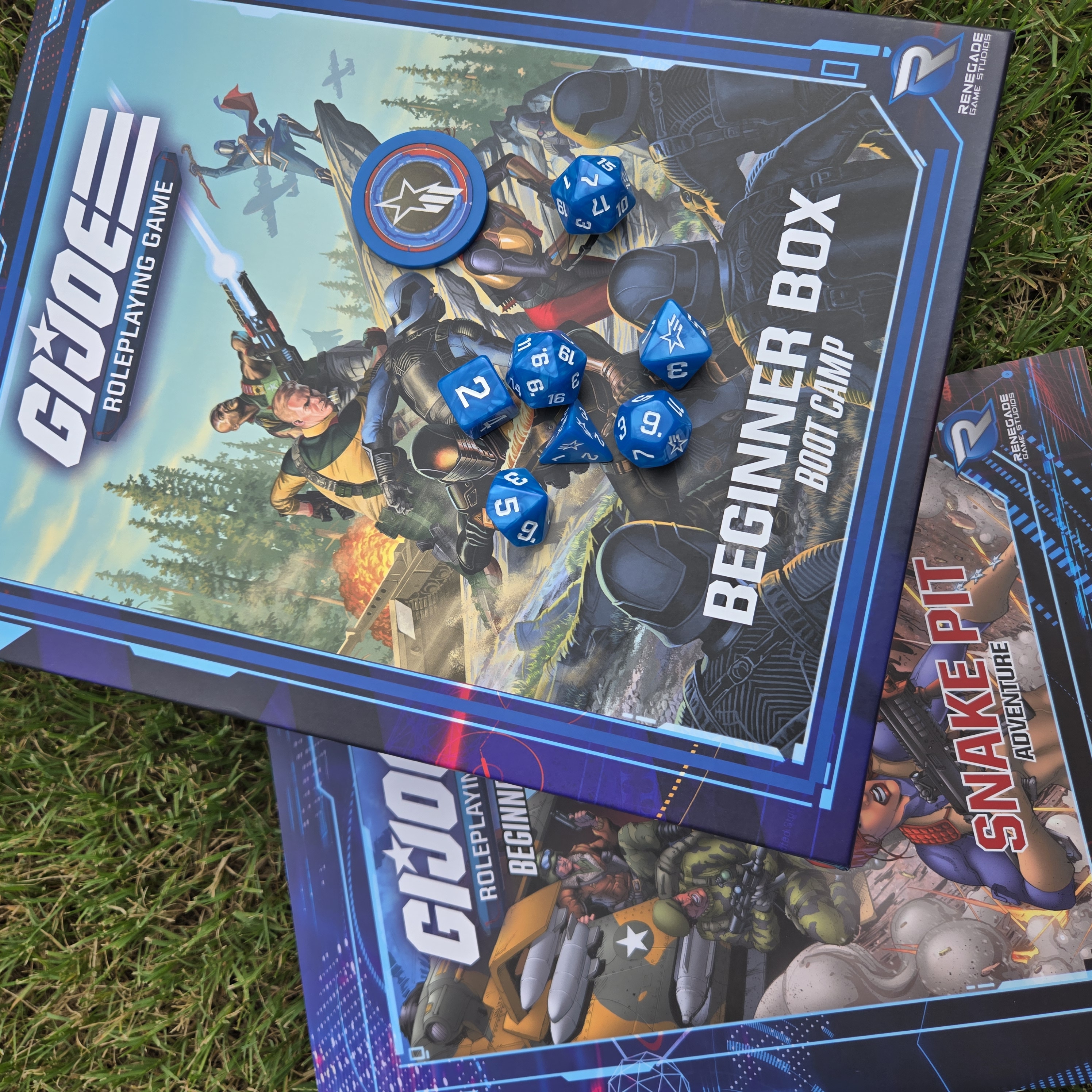
[00:19:11] Speaker B: I do. So I had bought years ago the beginner box for L5R 5E with the Jade armor adventure or whatever that is. What is it?
[00:19:20] Speaker C: The Topaz Championship.
[00:19:22] Speaker B: Of course, the Topaz championship. My bad.
And, uh, so I had a set of the physical dice, and for the last two sessions that we ran, I was rolling the physical dice here at my desk and like, interpreting them. And I. I just felt weird about it. I didn't fudge any of the roles. I didn't lie about anything. But I just, I just had this feeling of being in the session, like, man, I really want to roll openly. And I know I kind of held this up at the beginning. We didn't start playing for like 20 minutes because I'm like, well, can we try this VTT? And we looked at like three or four VTTs.
And then you remembered this online tool and you were like, well, if you share your screen and you just share that window and you share the diet. And that tool wound up being. If I would have found it myself, I would have dismissed it, but you were educating me on the cool drag and drop stuff you can do in it. We should put the URL to this tool in the show notes. I will sharing that corner of my screen and rolling the dice openly and kind of interpreting them together.
I used my opportunities and my strife way more m than I did before. And like, getting the sunburn that didn't really go anywhere. But, like, my character and Ume, my traveling companion, we're sitting on the street waiting for this guy, and I'm like, well, I'm a ronin. I'm not going to go demand anything. I'm going to go sit in a tea shop where I'm pretty sure he's going to pass. And I'm just going to wait on the street all day drinking tea, looking for this guy, like, being patient. And I took some strife before I recognized him. And I was like, you know what? I think that's sunburned. If I wasn't rolling openly, I don't think we would have used the opportunities in the strife. So I really enjoyed that dice roller. What did you think?
[00:20:57] Speaker C: I agree. And I didn't think about this until just now. With OSR games. The object of a dice roll is to get a number to compare to another number, right? Whether that's the armor class of an enemy, whether that's a skill check, DC, whether that's. Does your D6 plus two damage? Kill the goblin. There's no interpretation. It's. It's very clear. But L5R. One of the strength of fantasy flight games is little funny dice is that they're like these oracle bones that we roll and we interpret them and we interpret There are rules for interpreting them. You know, successes can do this, opportunities can do this. Maybe too many rules, honestly, but there are rules, and it ends up being a collaborative thing for the table. I remember that when we played, um, I ran a L5R 5E campaign with my home group, and that was like part of the fun of the game. It's like we'd roll the dice and then the five of us would sit around and be like, what if this happened? Ooh, what if this happened? And like, you're right. And I didn't remember that until just now. So, again, I don't want. It's already one on one. I don't want to take any more narrative authority than I have, but I love throwing out ideas at you. And even if they don't stick, I feel like you end up at a better one than you would have if you're just rolling alone at your table. Right.
[00:22:16] Speaker B: And I like you throwing the ideas out. Like, I didn't feel any kind of sense that the GM was overpowering me. I felt like we're two people playing a game and interpreting the dice is the fun of the game and we're having that fun together. So I think it was great. Here's a realization I think I just had, and as I go to say it, I'm having a sense of deja vu. Like, I've said it before, but if I have said it before, so what? I'm going to say it again, but I don't think I have. I think if you took every game you've ever played and turned it into either a movie or a novel, every game we've played up till now wouldn't be that compelling. Even the really great sessions like, uh, Temple of a Thousand Swords wouldn't make that great a movie or a novel. I think this one would be a lot more interesting to consume as a pure audience member.
I think this system created a more intriguing, interesting, nuanced story than any adventure we previously played. Do you agree?
[00:23:09] Speaker C: I do.
[00:23:10] Speaker B: I think.
[00:23:10] Speaker C: I mean, you could compare this to.
And maybe it's not a great comparison. It is an apples and oranges comparison to compare this to a dungeon crawl. Right. But dungeon crawls have structure in that there is a procedure. I can move in this room, I listen at the door, I. I use a torch, uh, whatever. This is much more of like a three act structure. We had a three act structure in there. We had the introduction with you at the castle, getting to where you needed to go. We had the second act was kind of you figuring out information and then fighting with these ronin. And the third act was the resolution at the end with Ume, where you revealed your past a little bit. We got that cool flashback. We got the Dusty that it's not as much money as you thought you had. And then another little scene as we left. So I think it's just the fact that these games, without procedures of exploring a dungeon, it turns out you can tell lots of different kinds of stories in those than you can dungeon crawls can kind of tell maybe two or three different types of stories. But this can kind of go anywhere, right?
[00:24:12] Speaker B: Yeah, absolutely.
[00:24:14] Speaker C: Serial episode of, like, a TV show. Like this was. This was the episode of Xena this week, or Hercules or Highlander, for that matter. Right. Like, we showed up at a place, there was a problem, there was a little fight, we learned more about each other, and we're on the road to the next place.
[00:24:31] Speaker B: So I like that Same great game. What else. What else should we talk about from this really satisfying session? Are you gonna publish this adventure, do you think?
[00:24:41] Speaker A: Maybe.
[00:24:41] Speaker C: I don't know. If Listener. If a single one of you writes in and tells me I should, I will. But I don't know. I kind of placed it as.
I mean, it was written for our game. I could kind of tear out all the parts of it that were part of that. And I mean, honestly, this adventure I'm opening it up now was 1, 2, 3, 4, 5 bullet points
[00:25:07] Speaker B: to fluff
[00:25:08] Speaker C: it up quite a bit. Um, but I don't know, I. I like to kind of bullet point out these adventures and find.
Lay out the scenes and the things that I think I need to happen. And then I have a lot of freedom to kind of steer them that way. It's hard. It's hard to write adventures for this kind of stuff. So, I don't know, maybe. Would you like to. Are you interested in the story, uh, that I have presented both kind of the. In front of you story of getting, uh, restoring the castle and your character story of figuring out who sentenced your family to execution for witchcraft.
[00:25:40] Speaker B: I am. I'm sure you picked up on it, but in front of Umay. I'm not talking about, you know, like. Like the village head man and his daughter who I got to know. But they're mostly who I'm thinking about. Like, I'm on this mission to go get, you know, uh, to go to a money lender and get some money to go buy some rice to feed this village through the winter. So I'm on this mission to like, save this, uh, this village head and his daughter and some other people that I met. But I'm, I'm couching it and I'm doing all this to serve this family, which obviously makes them happy. But, yeah, I'm interested in that story. And then you very generously took my, my story seeds about Duncan McLeod, King Dune, and suddenly, like, that moment where you're like, you recognize that sword, that Suba, um, and you describe the Suba like that this is your father's sword.
Like, whoa, my father, who was murdered, who was accused of witchcraft and like, burned at the stake. And then I was like, you bringing that in. I did not expect it. I was expecting more of a generic adventure, not custom tailored to me.
What fun that it was tailored to me. And now I've got.
I've got to go get this rice to feed this village, and I've got to balance my selfishness with wanting to, like, get at my father's killer, with my selflessness of wanting to get rice to this village.
Yeah, man. Yes.
The short and long term plots are both very intriguing. They're driving me to want to play more.
[00:27:12] Speaker C: You have a conflict between your duty and your desire. And that is the core that the game talks about for Samurai fiction. There's a space for those on your character sheet. It talks about how those shouldn't always be in friction, but, man, when they are, that's when the story happens, when you have to choose. And, you know, you chose your duty on, uh, this one. You kind of postponed your, Your personal story for the good of the, uh, good of the, the family that you're working for. But I like that you kind of picked up and ran with that seed. And you didn't just go, oh, no, I didn't. That's not.
[00:27:44] Speaker B: I don't.
[00:27:45] Speaker C: I don't have a father, Tanner. He actually had a golden sword or whatever. So I'm glad that you. You kind of picked up what I was putting down and you're willing to play with it because I have, uh, I have a plot of sort of what happened in. And we kind of narrated it as your character being a very young girl when it happened. So, like, she has fragments of kind of an understanding that will come to light. But. And I appreciate you willing to run that with me because that gives me a lot of, uh, room to, uh, to kind of insert this stuff where it comes up. So.
[00:28:18] Speaker A: Love it.
[00:28:19] Speaker B: You're making me really want to pick up Ice Floe, your character from Our Mutants Masterminds, and pick up Icons and figure out how the hell to run icons so that we can revisit Ice Float. I can do the same for you and your created character.
Mhm.
[00:28:34] Speaker C: I love that. Last thing I want to ask. Um, this has been, it's been a while. I think cyberpunk was the last like campaign type thing. We've just done a lot of uh, or maybe meeting some masterminds was. I can't remember what order. You can check the podcast feed I
[00:28:47] Speaker B: suppose, but Slug House was multiple, multiple episodes. Although it's a campaign or just one dungeon crawl over multiple sessions, I think
[00:28:55] Speaker C: that there was no connective story session to session in the same way. I would call that just a big ass dungeon there. What do you, what do you think of uh, campaigns? I mean obviously you like them, but is there anything you want to comment about in terms of like one shots versus long term thinking about a character?
[00:29:12] Speaker B: We've said it on the show before, variety is the spice of life.
I think my long campaign games with Martin are fun. I think the short three to five session campaigns with you and others that I play with are fun. I think one shots are fun. I think if I did any one of them exclusively, I'd get bored.
I think we were both ready for a little three to five session campaign.
[00:29:38] Speaker C: I love it. I'm excited to play more. Um, I'm going to boil this down to one lesson learned and I want to see what you think of it. I think this was a great game about expectations.
You had the expectation that this was a customer in adventure, so you had the freedom to kind of approach it how you wanted without stepping on toes. The setting and the system drive your expectations about what types of stories you can tell. So I think this is really a game about like how, when we've talked about it before, like expectations for uh, a game and stuff, but I think this is a good example of how they can succeed rather than how they can fail.
[00:30:17] Speaker B: I agree. Is this, does this go back to metagaming is okay? Like you told me that you wrote the adventure like you, you shared with me all those things that let me align my expectations. So yes, it's a game about expectations and metagaming is okay.
[00:30:32] Speaker C: Yeah, well, it doesn't get any better than that. I'm excited to play more Dusty.
[00:30:37] Speaker B: Likewise. Thank you for listening.
[00:30:39] Speaker A: People call them reviews, post mortems, retrospectives.
We call them lessons learned and we're sharing ours with you.