[00:00:00] Speaker A: RPG Lessons Learned. When the game is over, when your players are gone, that's when lessons are learned.
Find us
[email protected].
email us at rpgllpodcastmail.com and find us on BlueSkyPGL.
[00:00:24] Speaker B: Hello, everybody, and welcome to another episode of the award winning RPG Lessons Learned.
We haven't won any awards, but we're due to someday. Um, this is the show where you can learn from our mistakes. Um, I'm here with Dusty. Dusty, how's it going, man? The GI Joe himself, Tanner.
[00:00:42] Speaker A: I cannot complain.
Um, my goodness, the Saturday morning cartoon GI Joe. We just played a game.
[00:00:50] Speaker B: Yeah, yeah. Based on the Real American Heroes. Um, you are an 80s baby and I am a 90s.
Um, baby. I was gonna say like someone young and free, but we're both pretty old now. I view you. You're. I think you're almost 10 years older than me. Right? We figured that out. Maybe a little bit less. Yep. So I view you as like, you're like an older stepbrother territory here for me now. So I have, like, a vague understanding of a lot of 80s properties because 80s nostalgia has never gone away and it's only become stronger. But G.I. joe, um, it's cool. We all had G.I. joes. We were both boys who grew up playing with these things. But I had never watched the cartoon until recently.
[00:01:34] Speaker A: Fair. And in fact, for homework, which we didn't put in the show notes, I really appreciate you watching an episode of the cartoon as homework before we played this game. Yeah, I guess it's not fair to expect you to know about GI Joe. When we talked about running an Essence 20 system, your preference was Power Rangers, which you were familiar with. But unfortunately, I didn't own a copy.
I did own a copy of GI Joe, which influenced our decision.
Is it fair for me to ask you to know about GI Joe? Is it fair for me as an 80s baby to know about 70s stuff? Like, what's a 70s thing? Like star Wars? No one knows anything about Star wars before I was born.
[00:02:11] Speaker B: Right.
[00:02:11] Speaker A: Not in the 70s.
[00:02:14] Speaker B: Yeah, no, I think it's fine. I think you picked a really good, uh, episode for me to watch. Dear, uh, listener, Please go on YouTube and search for the Viper is coming.
I watched it alone and was laughing out loud to myself like crazy. It was a great way to spend 24 minutes of my life. But, um, I want to give you props because you recommended that to me and it totally got me in the tone and headspace of how absurd GI Joe is. And I think we Had a lot of fun playing to that tone here.
[00:02:45] Speaker A: Right. In my opinion, the single greatest episode of GI Joe, Real American Hero, the Viper is coming. Do check it out. So the game system is called Essence 20. It's by Renegade Game Studios.
It's a uh, D20 plus skill dice system. Tanner After playing with it for about an hour and a half, well about 45 minutes of orientation and then after that about an hour and a half of gameplay. What did you think of Essence 20?
[00:03:15] Speaker B: I think it's pretty cool. Um, I see the appeal. So the basic thing is that you have uh, a D20 and another polyhedral die and you roll them and you add them together and try to hit a target number and your skills increase the die that you add to the D20 roll. Um, and there are various ways to step up and step down those dies or upshift and downshift as the game calls it. And I think that all that stuff is pretty cool. Um, I was pretty fond of the fact that like every weapon just like does one damage and, and enemies have one, two or three gp. I like that there wasn't this fiddly damage calculation as well. Um, it feels like a good medium weight type system. I could see maybe sort of leaning on the lighter weight end of things, but it certainly did the trick for what this game was.
[00:04:12] Speaker A: I think it's a system that would be much better in a group. So the way we overcame it being a one on one game is you essentially played four copies of the same character acting as one person. So you four times the hit points and you could take four times the actions on your turn. So we joked that you were assisting yourself on rolls. But after visiting the essence20 subreddit, I was assured that players assisting one another to hit like difficult targets was a key part of the game. So you using those assist actions felt good to me. I do think I uh, like that since 20 as well. I really see its potential in a group.
[00:04:51] Speaker B: What do you mean by that?
[00:04:53] Speaker A: Where like instead of you assisting yourself it's like oh you know what, I'm going to assist him with that.
And it makes that a bunch of turns go quickly.
[00:05:02] Speaker B: Yeah. And um, I think that kind of fits into the GI Joe thing too because like they're all so specialized. It's like I'm the jungle artillery specialist, I'm Fern or whatever. And like they, the GI Joes have this like ultra specialization and it's fun for the other guys to kind of assist the main person trying to make the role and Kind of put the spotlight on them for that round or that scene. Um, yeah, I would be. I feel pretty like it's functional. It's fine. I can't really say it excites me in a way that some other systems do. I would totally play the system again. Um, but I would totally be fine if I never played it again. And that sounds rude, but it's genuinely not meant to be rude. It's very digestible. It's straightforward. Um, it gets a thumbs up, but it doesn't, uh, you know, it's a great like vanilla chocolate swirl ice cream cone. It doesn't have sprinkles and, you know, peanut butter on it.
[00:06:02] Speaker A: I was going to make a similar frozen dessert comparison. I was going to say it's like you walked into the froyo shop, you picked one flavor, you filled up your cup, you added no toppings, and you walked out. That is essence 20. It's just, it's, it works perfectly. Cromulent. Um, Perfectly cromulent. Yeah.
I feel the same way. Like if I, if I never played Essence 20 again, I'd be fine. I probably will because I'd like to play with Brian again and Brian is super into Transformers and Essence 20. The thing that Essence 20 does seem to excel at is picking up licenses.
[00:06:33] Speaker B: Yeah. For 80s 80s material.
[00:06:36] Speaker A: Well, you say that Renegade Game Studios is going to put out the Stormlight Archive RPG system. Uh, or is it. Maybe it's. Maybe it's Cosmere or maybe those are the same thing. I don't know. But it's that author that everyone loves, Brandon Sanderson, that I have not read yet. They're going to put out his system, I assume an S20. I don't actually know. All I know is that Renegade Game Studios, the same publisher, will put out the game.
[00:07:00] Speaker B: It would be cool to see what this is like in a fantasy kind of, ah, setting.
[00:07:05] Speaker A: I would be.
[00:07:06] Speaker B: I also have no affinity for Brandon Sanderson. Never read any of it, heard about it. Um, but that would be interesting to see for sure.
[00:07:14] Speaker A: So I put together a cheat sheet for the system as I want to do, as I did with Mutants and Masterminds. It was a one page cheat sheet. I do want to pause and praise the essence20 subreddit. It's not the most active subreddit, but I posted my cheat sheet last weekend to get feedback and I got two very thorough, very well thought out answers that pointed out issues in my cheat sheet that helped me run today's session with a much more thorough grasp of essence 20. So good on the essence 20 community. But Tanner, thoughts on that one page cheat sheet? Did that help you?
[00:07:50] Speaker B: Absolutely. I think you have a really good affinity for making these. Well, first off, I should say every system should have this in the book.
Like whatever system you have, it should be understandable if you have a single 8 1/2 by 11 sheet of paper in front of you that has the basics of the system system on it. Um, but you in specific, Dusty, are a really good technical writer and I think you are really good at laying these out in such a way that looks good and makes sense. And I loved it. I love that we kind of talked through it. You asked me, like, hey, do you want to learn as you go or do you want to go through the whole sheet? And for me, I prefer kind of knowing what the, um, the lines are like so that I can color within them, you know, as opposed to like presenting a situation and then having to figure it out. So we walked through it, which with some digressions and chat and stuff, took about, you know, 30, 40 minutes, which sounds like a lot. It's not. We were just like, we were kind of trying to scout ahead for the speed bumps that I think we were going to run into. And I think we did a good job because once we got going, I think the cheat sheet worked really, really well. But, like, it was great to get me from zero to being proficient to play.
[00:09:05] Speaker A: I appreciate the compliment. The cheat sheet will absolutely be linked in the show notes and obviously is available on the essence20 subreddit. And you can learn my Reddit handle Reveal.
[00:09:18] Speaker B: Um, yeah, it was, uh, it was cool. I, I really liked you walking through me at that. I think that, uh, it's cool that you can kind of boil down a system into one thing that you can glance at all at once and kind of take in all at once. And that really is something that is appealing to me.
[00:09:37] Speaker A: I appreciate the compliment. Me making a cheat sheet is me taking feedback that you've not given, but I've kind of given myself in the past as I run systems for you, where if you're going to run for Tanner, you better know the system. So to me, going through the beginner box over and over and over again, consulting the Internet, delving a little bit into the core rule book to like, make some adjustments to the cheat sheet, this is me wanting to really get the rules down pat.
Did I have the rules down to your satisfaction for a first time session?
[00:10:08] Speaker B: Yes, absolutely. I will say the one thing that kind of tripped us up was you think just an editing mistake or some sort of stylistic mistake where I had an ability that referred to stealth roles, but I had an infiltration skill.
And I don't know if that's a difference between a core rulebook thing and a beginner box thing or what it is. But like there's just the only speed bumps we hit rules wise seem to be had nothing to do with your preparation. It was all to do with what appeared to me to be editing mistakes with the book itself.
[00:10:42] Speaker A: What Tanner referring to is Tanner used a pre made character that is freely available on Renegade Games website. You have to use to add it to your cart for $0 and then check out and make an account the whole nine yards. But once you do that, you get these free like PDFs and there's two pre made characters you can get for free. And those pre made character sheets refer to the skill stealth that is not in Fantasy Grounds and not in the beginner box. So who knows what that referred to.
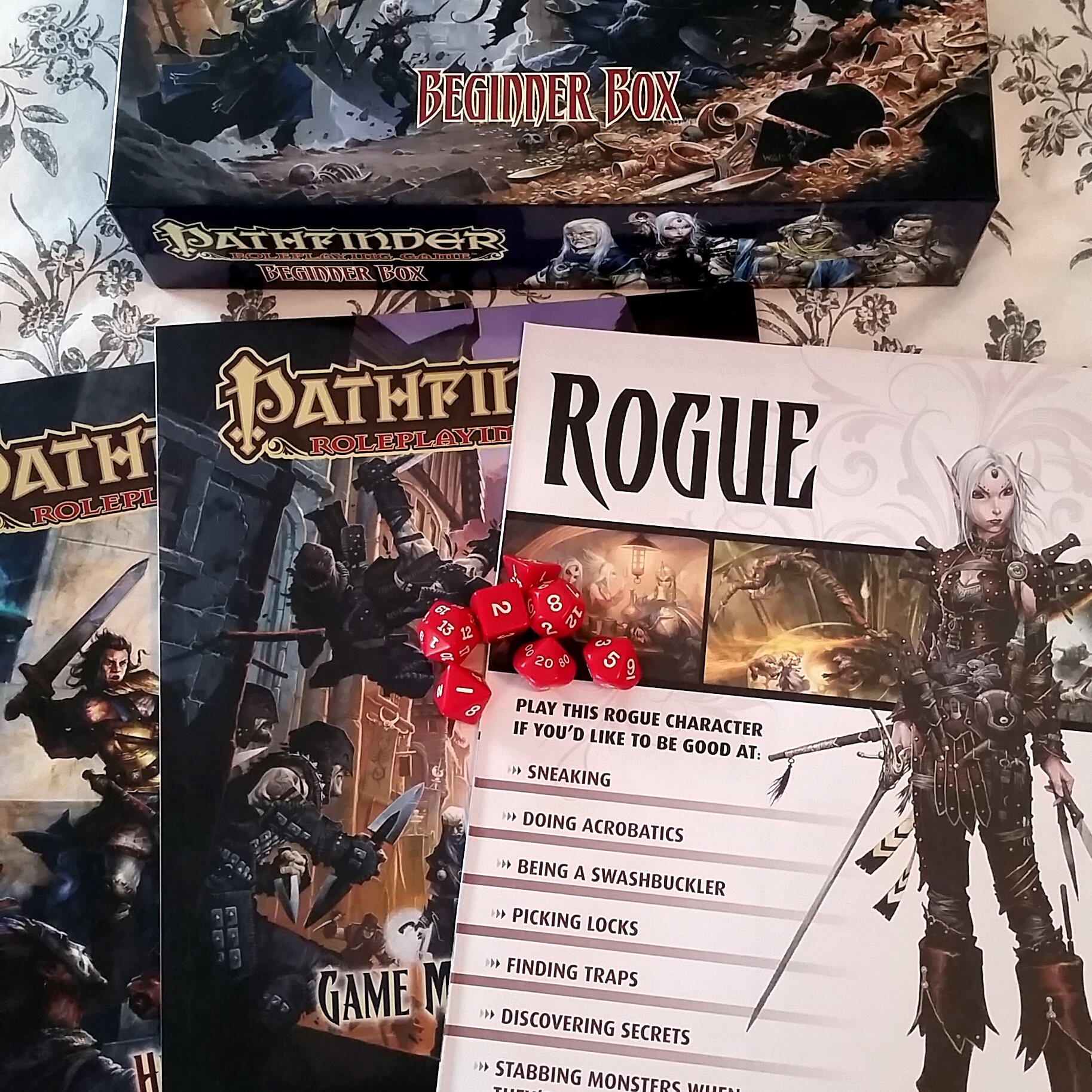
[00:11:07] Speaker B: It'd be a core rulebook thing or something. I don't know. But yeah, I feel like you shouldn't have different skills in your core rule. Like you know, the Pathfinder beginner box didn't have skills that weren't in the
[00:11:19] Speaker A: core rule core rule book.
[00:11:20] Speaker B: So that would be very weird if that was the case intentionally, but I kind of think it was not intentional.
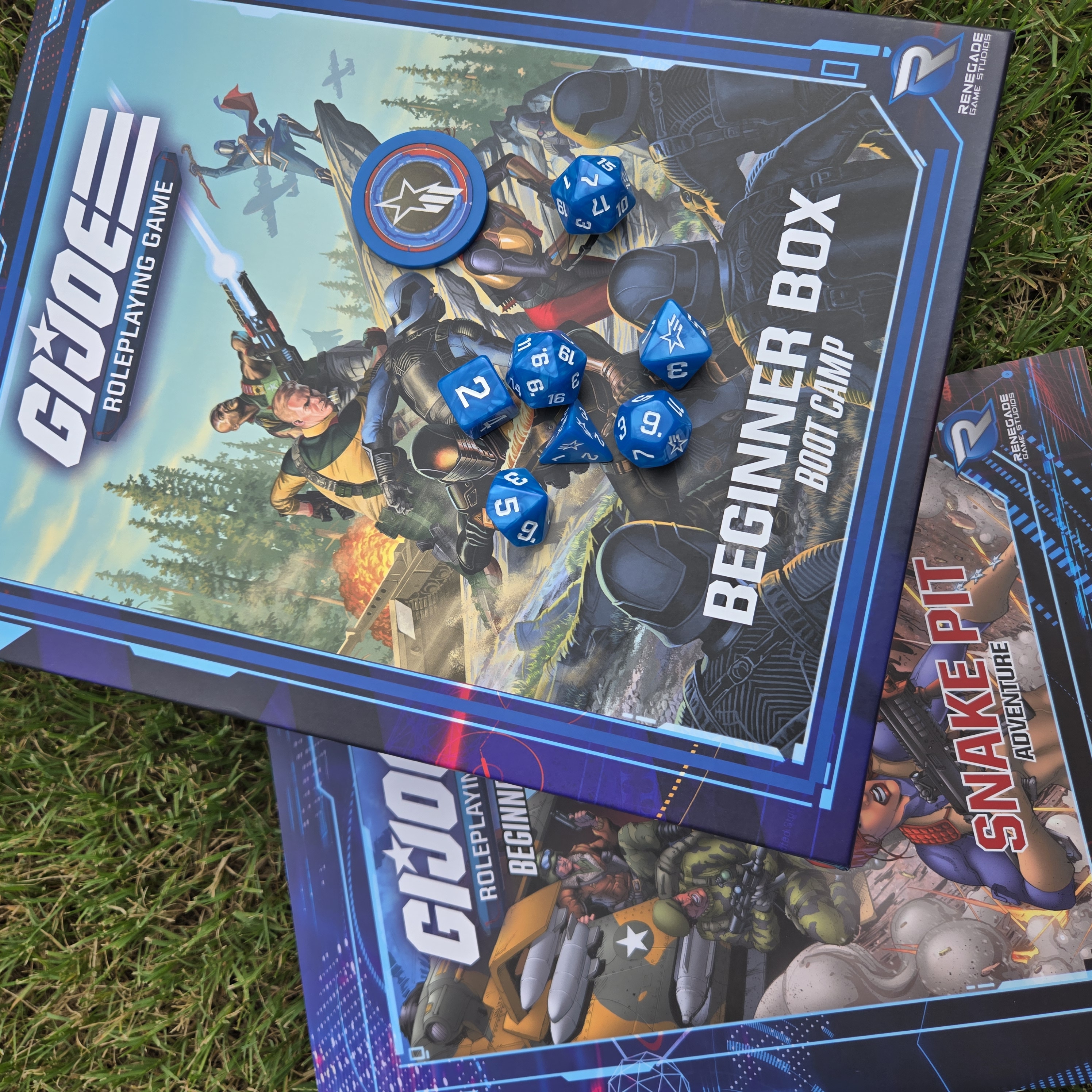
[00:11:26] Speaker A: So the beginner box has two adventures, Snake Pit and Operation Cold Iron Adventure. The Slytherin, which appears to be the name of the second adventure, is a very long name.
[00:11:37] Speaker B: That's an awesome name.
[00:11:40] Speaker A: We played Snake Pit, which takes place in the pit, which is the GI Joe headquarters.
Uh, Tanner, what do we think about this adventure?
[00:11:50] Speaker B: Uh, it was cool. Um, I liked it. I liked that. Uh, it started with sort of an orientation of kind of open ended skill challenge type stuff and then it turned into a defense of the base from uh, the foes infiltrating it.
You took a lot of pride in your prep when you were saying you're reading this and rereading this and stuff.
What was it like? How was this adventure structured from you, your point of view? That's what I'm curious about.
[00:12:17] Speaker A: It's very free form. It's very much a tour of the system. Like when you first arrive, you're doing all these tasks around the base which if you succeed at them and Tanner succeeded at a fairly minimal number of them give you edges later in the adventure or boons, I should say. Sometimes it's an edge Sometimes it's a shift, sometimes it's a story point. But there's. There's quite a few tasks that you can knock out on, like, a punch list of tasks.
And then, um, you, as a gm, have a choice of when to move from that phase to the phase where some. Some renegade members of Cobra actually invade the base and kind of the combat portion begins. So I had a countdown clock going, counting down from six, where I knew I was going to have Tanner try, um, four things and then some failures advance to the clock, and then ultimately four was all he did. Or six things and then failures advanced the clock.
[00:13:10] Speaker B: That was something you invented, or was
[00:13:12] Speaker A: that part of the game? You, as a gm, um, can choose. The advice in the book is to for sure let each player attempt one action in the base, possibly two, if you really want.
[00:13:27] Speaker B: Okay.
[00:13:27] Speaker A: So four to six players, which is what the book recommends, would either do four tasks or for six players doing two each. 12 tasks.
[00:13:38] Speaker B: Yeah. Yeah.
[00:13:38] Speaker A: That'd be a lot around the base, where everyone gets a chance to, like, roll skills and maybe upshifts and maybe assist each other. It's really just, I think, to get some dice flowing.
And you're rewarded with boons for the adventure that we all that everyone knows is to come.
[00:13:53] Speaker B: Gotcha. So, but you had the idea to kind of turn it into a clock.
[00:13:57] Speaker A: I did, yeah. I listed that from Apocalypse World, where I knew for sure I wanted to give you six chances at something, uh, since it's like four to six players. But I also knew that I wanted failures to advance the clock. So you wound up having a chance to do four TAs.
[00:14:15] Speaker B: That was gonna be my question. I was wondering. It was not clear to me that succeeding or failing at these things actually changed anything, but I'm glad to know that they did on the back end. And obviously, whether that ended up mattering or not, the adventure was kind of a steamroll anyway, which is fine. But I'm glad that it wasn't Just let Tanner roll alertness, just so that he knows how to roll the dice. Like, they were actual roles of consequence that did different things on the failure. Success.
[00:14:44] Speaker A: Yes. For example, the vehicles that you refueled, depending on how long it took you to discover the Cobra, they could have made it all the way to, like, trying to escape in the apc, which would have left you with only the vehicles that you refueled in the hangar, and you had to make your way to the hangar, and we. We could have had a vehicle chase. And the vehicles that you refueled gave you access to an experimental faster version of the xh, Whatever, vh, whatever GI Joe, like helicopter vehicle.
[00:15:18] Speaker B: This would be a cool um, scenario to run multiple times. I bet it could end up being quite different in the, in the end game.
[00:15:27] Speaker A: I agree.
[00:15:28] Speaker B: But yeah, it, it kind of um, it was pretty straightforward. It was. How many bad guys were there total in this?
[00:15:36] Speaker A: Uh, five bad guys plus a couple of pets and by pets, like uh, a robot spider, some other spiders, and an Android that was already in the base that the bad guys could have reprogrammed to make it, you know, a little more lethal.
So for a four to six player adventure, five bad guys plus pets that you encounter, depending on how you go one or two at a time is absurd. I knew it was absurd, but I was like, you know what? It recommends four to six players. There's these five bad guys. We're gonna give it a shot.
[00:16:09] Speaker B: It wasn't not fun. Like it was fun to like blow them up and stuff. But like I didn't take a single point of damage. You know, like it. I was acting four times. Sure. And they were all in a row. So like if I got going, I really got going. It's um, it was. I. I don't know.
[00:16:27] Speaker A: I don't know.
[00:16:27] Speaker B: I'm trying to think of what they could have been thinking there, but I don't know.
[00:16:31] Speaker A: I think this would have been a great adventure for one person, for one, for one hero with maybe a couple of extra story points. But the book said four to six, so we did. Our Tanner has four times the hit points and four times the move actions to make the action economy work out thing. It's an absolute pushover adventure. Like that's a complete mess on my uh, from my standpoint.
[00:16:54] Speaker B: Yeah. I'm wondering, so what do you think is the value in that? Like we haven't really talked about at least recently, like the role of like challenge in uh, a role playing game adventure context. Like both there is like mechanical challenge and then obviously like narrative challenge or like puzzle, like trying to find out the right thing to do or not. I still don't know how I feel about that. Like I, I still think that the game is fun and worth playing if it's not particularly challenging in a lot of cases.
But I can't imagine a scenario where I would want an adventure to not be a challenge at all. Right.
[00:17:34] Speaker A: Same maybe. I don't know if you're like socializing and the social, uh, even then though, why don't you just hang out and chat. No, it doesn't make any sense to me. Why should an adventure be this easy? I cannot think of a reason.
Maybe let me get the name of this adventure right. Operation Cold Iron Adventure, the Slithering.
Maybe that second adventure, Operation Cold Iron Adventure, the Slithering is more challenging. I have not frankly cracked that one open and taken a look at it. I hope so. Maybe this is truly meant to be just like a brief tour of the system.
[00:18:08] Speaker B: Yeah, could be. But yeah, it was, uh, it was fine. What do you think about the beginner box as a product? You were the only one who handed, uh, had a physical copy of it handy. I was just playing your copy of it.
[00:18:20] Speaker A: Phenomenal production quality. Like the pages of the booklets are like thick and glossy and nice. And the covers are like thick. The cardboard box itself, like the cardboard's clearly like really. It's a really nice, like thick, dense, I think is what I'm looking for. Like a really nice dense press board that makes up this cardboard box.
The components are nice. It's got dice, it's got eight. Eight premade characters, two adventure booklets, a rules booklet, a GM screen.
There's a lot going on in the box. To me, it's a great physical product.
[00:18:57] Speaker B: Why are you being so specific about saying physical product?
[00:19:01] Speaker A: There's some editing errors, for example, in the rules booklet included in the beginner box, like the number of actions. It's very clear, very clear that it is one free action, one standard action, and one move action. But then when you dig into the core rulebook and I published that cheat sheet online and one of the pieces of feedback that I got was, hey, the actions are wrong. These actions only make sense if your character has a speed of three, because in actuality, with a speed of one, you can only move or attack. With a speed of 2, you can move an attack. With a speed of 3, you can move, attack and have a free action and you get another free action for every additional speed point that you get. And they're pre made characters in the beginner box with speeds of seven.
So like that feels like an error. I caught a few grammatical errors like where they used one word for another. I don't have any examples of that like at my fingertips, but there are quite a few, um, editing errors, number one. Number two, playing this electronically with Tanner was a pain in the butt. I'm used to free or I'm used to beginner boxes. I'm used to. You can go online to publisher's website and for free get access to the Character sheets. That way you can print as many character sheets as you want. Now, the adventure is not free. The rules booklet's not always free. For Wizards of the coast it is, but the adventure is for sure not freely available. Obviously the components aren't freely available, but the character sheets usually are. In this case they were not.
[00:20:29] Speaker B: And they're usually on, um, drive through RPG or something. Not the publishers.
It felt very weird that this company.
It feels like we bought an RPG from 2005 or something like that, honestly. Like, but this came out in 2021 or 2022 or something like that.
[00:20:49] Speaker A: Like the beginner box came out in 2023.
[00:20:51] Speaker B: Yeah. Like what? I, I would love to know the reasoning there. Just going back to the editing and the physical product, uh, aspect, it's very clear.
Like copy editing is a labor intensive job. Like it requires a lot of time for someone to do that and that person should be paid for that time.
But that's why it confuses me that like, like the tan hack has copy editing errors. Me and one other person looked at that game and neither of us were getting paid.
[00:21:20] Speaker A: Right.
[00:21:21] Speaker B: But like, to make such a premium physical product, it feels stupid for it to have like glaring like on first read through errors like that in it.
[00:21:33] Speaker A: Right?
[00:21:33] Speaker B: Like that. That just rubs me the wrong way. It's like, what are your priorities? You know what I mean? Like, would you have rather had a fully complete, understandable text if it meant the paper quality and the box quality was a little bit cheaper? Probably, right?
[00:21:47] Speaker A: I would, yeah.
[00:21:49] Speaker B: Like the thing that matters. Sorry, I just wanted to touch on that before we moved on. That's just a weird distribution of what their priority was in creating that product.
[00:21:58] Speaker A: What I Think about the L5R beginner box included way less stuff. The cardboard that makes up the box is way, way less premium.
Like the cardboard is like thinner than the cardboard of a cereal box.
For the, for the L5R5E, uh, beginner box. But I think the L5R5A beginner box is overall a better product because it's, it's a fully coherent adventure. It's a fully coherent system. Like, it's well edited, it's well laid out. Like, and this is well laid out. The art's beautiful.
[00:22:29] Speaker B: Yeah, I made that comment. I'm like, I'm surprised at how maybe that's not fair. But I'm like, I was impressed by the art and stuff.
[00:22:36] Speaker A: The art is great in this book. So why not spend a little time on the words?
[00:22:41] Speaker B: Yeah, who knows?
[00:22:42] Speaker A: And why not give us those PDFs of the character sheets, man. Like, why do we have to go find a random free product with two random free characters for you to choose from? Give us the, uh, give us the
[00:22:52] Speaker B: premade characters for free.
All right.
[00:22:55] Speaker A: We played on Fantasy Grounds.
I spent real money on the essence 20 rule set in Fantasy Grounds. I spent real money on the GI Joe Core rulebook and the adventure. We played Snake Pit so that I would have all the components that I needed to run this adventure. I would say, overall, I'm not terribly satisfied with my purchases. What did you think of Fantasy Rounds overall?
[00:23:23] Speaker B: It seems like if roll 20 is windows, it seems like Fantasy Ground is like Linux. Like, first off, we couldn't join each other's game because we both did a fresh install of Fantasy Grounds, but we were somehow on different versions of it and we both had to manually update it before we could connect to each other, which is something I had to figure out. The game didn't tell us. It was just like not letting me connect to you, which is weird.
Um, it looks like it has a ton, a ton of features, but it looks like it's like twice as fiddly as roll 20 is. Like, I get how if you wanted to spend the. If you were like somebody who's like, I'm devoting my full time gaming time to doing virtual tabletops and I want to run all these kind of weird edge case games and something that looks, looks nice and is, uh, and stuff like that. Like, I can see why Fantasy Grounds could be your pick, but first impressions for me and you, it was not, uh, flattering, I would say.
[00:24:27] Speaker A: At one point we were like, it's like if Rule 20 was made in 1994, it was, it was the Mr. IRC, the Merc.
Um, if you know those kids, I'm sorry, Google it. It's like, it's like instant messaging. God, they don't even know what it's the messaging is because they just all text each other.
[00:24:42] Speaker B: Um, they're on damn TikTok now. Probably.
[00:24:45] Speaker A: Yeah, probably. Uh, so it's a super old, like, Internet chat program. But it really felt like you made the comment. It felt like Merc. I. The comment. It felt like roll 20 from 1994. Like, it just feels archaic. It feels like I could have loaded that bad boy up in dos.
[00:25:02] Speaker B: Yeah, it feels just like, I don't know, it feels cheap. Um, which is fine. I didn't pay any money for it. But you did. You did. So, like, I understand why there's the frustration there. And Again, this renegade game studio, they only support stuff on Fantasy grounds. I guess. Like I don't get it man. I, I think that this seems like a cool product that they're trying to kind of assemble and put out digitally in the worst possible way.
[00:25:29] Speaker A: So let's get real specific. Like things that don't work out of the box in Fantasy Grounds as far as we can tell. One, the maps that are included in the Snake Pit, like there's some weird double gridding. Like I dropped the map on the grid and it's like this weird double grid because the map's gridded and also the grid's gridded but the map grid, the grid grid don't line up and there's no way to move it. That I could see someone listening is probably like, oh you idiot, you just do this, this and this. But whatever. It wasn't obvious. I was tokens. Not every like beef did not have a token I could drop onto maps. Several of the threats did not have tokens I could drop onto the maps. Up uh, shifts up shifts and downshifts on the skill dice ladder. Like there's no good way to do upshift down. Like I can add the skill to my character sheet. There's no good way where I can like click and roll an upshifted version of my skill. I just had to manually roll the dice. And if we're doing that, why am I using Fantasy Grounds?
[00:26:21] Speaker B: Yeah, like I was clicking and dragging like the dice manually at a certain point. Like it's just, I don't know, it's ill considered. I don't know. Is this like so like roll 20 has like built in games that are like coded right? Like you can have um, Vampire the Masquerade and you can open up and start a new game in that in roll 20 and like you can click things on the character sheet and they auto calculate and spit it out. Those are like fan made things.
And this is like an official renegade game studios like plugin for uh, Fantasy Grounds. And it can't do the core conceit of the system which is shifting up and shifting down. Like what, what are we doing?
[00:27:01] Speaker A: It's it. Yeah, I'm unhappy. I'm happy with the money I spent on the beginner box. The art's beautiful. It was a lovely read. If I never play it again, it's a great product. I'm um, pissed at the money I spent on Fantasy Grounds.
[00:27:14] Speaker B: So do we go sunk cost fallacy and try to figure this out or do we go eh, uh you know what? We have better solutions for this already.
[00:27:21] Speaker A: We use the logic we used in the Baldur's Gate episode and we say that, you know what? We tried to engage with it. Let's move on. Life is short.
[00:27:27] Speaker B: Yeah, I think so too. I just don't know. Even if we got super proficient with this, I don't know for me and you and the games we like to play, what this could offer us that we don't. Does it have. I know we plan on playing some more legend of the five rings soon. I wonder if it has the custom L5R dice in here.
[00:27:46] Speaker A: I don't know.
[00:27:47] Speaker B: I'll do some research. But anyway, it seems dubious as to its continued, uh, use for us, so I will probably.
[00:27:54] Speaker A: Right.
[00:27:54] Speaker B: Clicking on install.
[00:27:56] Speaker A: Same. Well, in fact, let's just go ahead and make that decision.
Um, let's move on to me as a gm, how did I do? And try to divorce my flaws, system's laws, and vice versa. Like, give me some constructive feedback.
[00:28:09] Speaker B: I think you did pretty lovely. Um, I liked that you had clear, like, out of character, above the table moments sometimes when you're explaining how something works or the structure of something. But I also liked you were equally able to slip back into the cheesy 80s, um, jingoistic patriotism stuff of GI Joe and, like, play that. I think you did a really good job kind of balancing that back and forth. I was. I was impressed by that. I think I had kind of a poor sense of space of what this area was.
Like, locations were described to me like, yeah, it's a big underground military complex. There's a hangar, there's some vents in between.
Um, I'm just wondering if there would have been a better way to. Or, like, if it would have added at least like. Like, essentially this is almost kind of like a point crawl, right, where there are, like, there were points of interest, and we traveled between the two of those. Do I need a full map for that? No, but, like, I feel like there. It was kind of nebulous sometimes as to, like, where this was and why.
[00:29:15] Speaker A: Ah, a lot.
[00:29:16] Speaker B: Yeah. And I assume the adventure is just kind of written like that. Like, I. Does it give you a map of the pit or anything?
[00:29:23] Speaker A: No, it does not. But it does mention that a full map of the pit is available in the core rulebook, encouraging you to purchase the core rulebook. Um, I do have a copy of the core rulebook. I did not refer to the map of the pit. I really wanted to run the adventure. I really wanted to run the Beginner box as a thing unto itself.
[00:29:42] Speaker B: Mhm.
[00:29:43] Speaker A: Um, so the pit is reduced to a numbered list from. Hang on. Well, it doesn't matter like 1 to 35 of different locations.
Maybe I could have given you the numbered list. What if I had done this? What if I had given you the numbered list and I had said, okay, here's the deal. As you learn your way around, you can skip every other item on the list, but the less, well, you know, the pit, you have to go from 1 to 33 or from 33 to 1 or 35 or whatever it is.
[00:30:10] Speaker B: Yeah, there's something there. I don't know if that, that would be it because like, okay, I narrate, I go to the barracks and then I go to the rec room. Like what does that actually add, you know, if there's not a threat there or obstacle. I was thinking about your escape from Drusana, um, Star Wars D6 adventure that you ran for me and that had, I guess maybe this lacked like a structure. Like I, maybe I'm not looking for a map but like some way that these things are related into and, or connected to one another.
But I think at that point you're not really running the beginner box adventure like you are taking it and remastering it and doing some other stuff. So I don't blame you for not doing it, but I guess it would be a, like, it would be a uh, strength. I think if I had a better idea of what was where and all that stuff, I could have done a
[00:30:59] Speaker A: better job doing one of two things.
I could have sat down and figured out a sense of space. One or two, I could have had an out of game moment with you and said, hey man, like space doesn't really matter. It's a cartoon. We can dissolve, fade to black and you're in the new space and we won't move the countdown clock because it's cartoon logic. And I think you would have been fine with that if I would have said it, but I didn't say it. And that's on me.
[00:31:21] Speaker B: Yeah, I think either one of those options would have been, would have been good. So I think that's a point of improvement. But I mean it's pretty minor in, in the grand scheme of things. But I just like to be a, I don't want to say a visual learner. But like I get a lot out of imagining the physical surroundings of a place, uh, in role playing games and so that kind of stuff always helps me.
[00:31:42] Speaker A: Fair.
[00:31:43] Speaker B: Um, what about me as a player? I am new to the GI Joe brand. I mean, I had the. The dolls growing up, but, like, do you think I fit in with the tone? Okay. Was I being too stupid or too serious with it? Was I taking the initiative enough? What's your feedback for me as a player?
[00:32:00] Speaker A: Feedback from this player? Uh, I think the tone was great. I really appreciated you doing the homework as a player. We discussed. Players never do homework. I have failed to do homework. So thank you for doing the homework.
[00:32:14] Speaker B: I did it the day it was due, if that makes you feel any better.
[00:32:19] Speaker A: See, what do I think you could have done better? Because the game is so much on the GM and because I'm so worried about myself as I'm GMing.
Did I notice that you could have done anything differently? Do I think you could have engaged with the world differently or more? I don't know. I think I was so focused on GMing, because, you know, GMing is just a bigger cognitive load. I didn't pick up on anything, which it doesn't mean there are. What do you think?
[00:32:45] Speaker B: There were a couple times where I felt like I don't really.
Not. I don't know what to do, but, like, I know what I want to do. Looking at my character sheet, I don't really know the best way to go about doing that. And you did have to kind of prod. Not prod me, but maybe prompt me a couple of times to be like, hey, you know, you should be thinking about the other guy, or, hey, you know, if you looked at this, you might be able to get a sense, uh, of what's going on here. So I think I needed to just kind of be more proactive and get myself in a headspace where I was doing that without prompting. That's sort of the feedback I would give myself.
I definitely don't think I'm a great player in terms of that, like, kind of skill set. But, um, it's something I noticed about myself, at least.
[00:33:30] Speaker A: I did need to remind you that you were playing essentially four characters a couple times, right?
[00:33:35] Speaker B: Yes. And, I mean, to be fair, that's kind of a weird.
[00:33:39] Speaker A: It's weird. And plus, we're in the middle of a new system, and we're also doing new mechanics, so I should have written
[00:33:47] Speaker B: it down after the first time, though, for sure.
[00:33:49] Speaker A: But, no, I appreciate your feedback. For me, with a sense of space, um, not present in the main adventure, but I should have picked up on that. I'm sure you appreciate my feedback for you, but I think we both get a pass on this one new system, new mechanics, new vtt. There was a ton of newness going on here.
[00:34:06] Speaker B: There was. And I feel like we were in pretty good spirits about it the whole time, though. Like, we weren't actually ever getting frustrated with any of it.
[00:34:13] Speaker A: So is a lesson learned for both of us that there was too much newness with a new VTT and a new system? And what was the other new thing?
[00:34:25] Speaker B: Uh, the house rule, the Forex house rule on top of the new system.
[00:34:29] Speaker A: Rule on top of the new system. Like, was there too much newness here?
[00:34:34] Speaker B: Um, I think so.
This is about the limit of newness, I would say. If the system was any more complicated than it was, it would have been too much. If the Virtual Tabletop would have been any fiddlier, it would have been too much. But as it stands this, I don't want to get more new all at once than what we did here.
[00:34:54] Speaker A: Fair. Would we ever play Essence 20 again?
[00:34:58] Speaker B: I would. I would. I would check it out again. I would play another GI Joe Adventure Part two. Cold Iron Colon, the Slithering Colon, the Snake Pit or whatever. Um, we're several colons deep on that one. Um, I would play that. I would play Transformers. I don't have a huge interest in. I would definitely play Power Rangers.
I, um, like Power Rangers, but that feels weird. Almost as like a one on one adventure. Like Power Rangers seems so designed for you to have a team of five. You know, I think that's where I'm at.
[00:35:30] Speaker A: I don't think I'm gonna play Essence 20 again with you. No offense, because we do one on one. I think where this system would really sh.
Is truly as a physical, in person party game.
[00:35:44] Speaker B: Yeah. And I do want to hear about it. So if you ever end up getting that going, report back. Because I want to. I'm curious as to how different it feels. One on one versus in a party environment.
[00:35:54] Speaker A: I have a copy of the Transformers beginner box as well. I know Brian. Those of you who've been with the show a long time, you remember Brian.
[00:36:02] Speaker B: I know Brian fired him and I took his spot.
[00:36:06] Speaker A: You killed him. His body's in the closet. Um, Brian does. Listen, Brian, this is me inviting you to come over to my place and let's get a couple of people together. Brian runs the world's biggest and best Transformers podcast. Let's play oldest and oldest. Let's play the Transformers rpg.
[00:36:25] Speaker B: And then, uh, maybe we can even freaking invite him back on the show again.
[00:36:29] Speaker A: Oh, we should. The only way I'd play Power Rangers is if I said it's Voltron, because it's basically the same thing. Let's finish up on lessons learned.
[00:36:40] Speaker B: Um, lesson learned number one. It is possible to have too much newness at once. You know, I would say, um, if you're starting a new system and new house rules on top of that, even if the house rules are a good idea and a new virtual tabletop and you haven't played in six weeks to eight weeks, you know, there is a limit. Uh, be kind to yourself and try to change only one variable at once. Maybe or one or two. Don't go for three for sure.
[00:37:08] Speaker A: A lesson learned that we've. We've had in so many episodes. And I'm just going to keep saying it. Try. Try different stuff. This is a game that I had on my shelf, and I've wondered how it would work. And now I know how it works. I made the cheat sheet. I know that. I think I want to try it with friends in person as a. As a fun little party game. Um, so try. Try new stuff. Try that system that's on your shelf. Try new things if they don't work out. This one, this one didn't work out. We still had fun, though.
[00:37:37] Speaker B: Yeah, I had like a 7 out of 10 time with it. Enjoyed my meal at the restaurant. Not dying to go back to it. I'd rather try a different restaurant next time. But, yeah, it was fine.
[00:37:47] Speaker A: And then finally, add a sense of space. If you're playing Theater of the Mind, and we were, you have to replace that map with some sense of where these characters are. Even if the cartoon absolutely never, ever has that same sense of space. You have to imbue an RPG because there's so many unknowns and so much lost in translation as you just describe things verbally. A sense of space really grounds the game.
[00:38:13] Speaker B: And a, uh, third lesson learned. Go watch that Viper episode. It's a hoot. It's hilarious. It's laugh out loud. Thank you for recommending that to me, Dusty.
[00:38:20] Speaker A: Absolutely. Thank you for listening.
People call them reviews, postmortems, retrospectives.
We call them lessons learned, and we're sharing ours with you.