[00:00:00] Speaker A: RPG Lessons Learned when the game is over, when your players are gone, that's when lessons are learned.
Find us online at rpgllpodcast.com email
[email protected] and find us on BlueSkyPGL.
[00:00:23] Speaker B: Hello, everybody, and welcome to another episode of the RPG Lessons Learned podcast. The show where you can learn with our. From our mistakes, not with our mistakes. We hopefully. Well, I guess we share them too. That's not important. What's important is that Dusty is here. Dusty, how's it going, man?
[00:00:41] Speaker A: Tanner, I cannot complain. How about yourself?
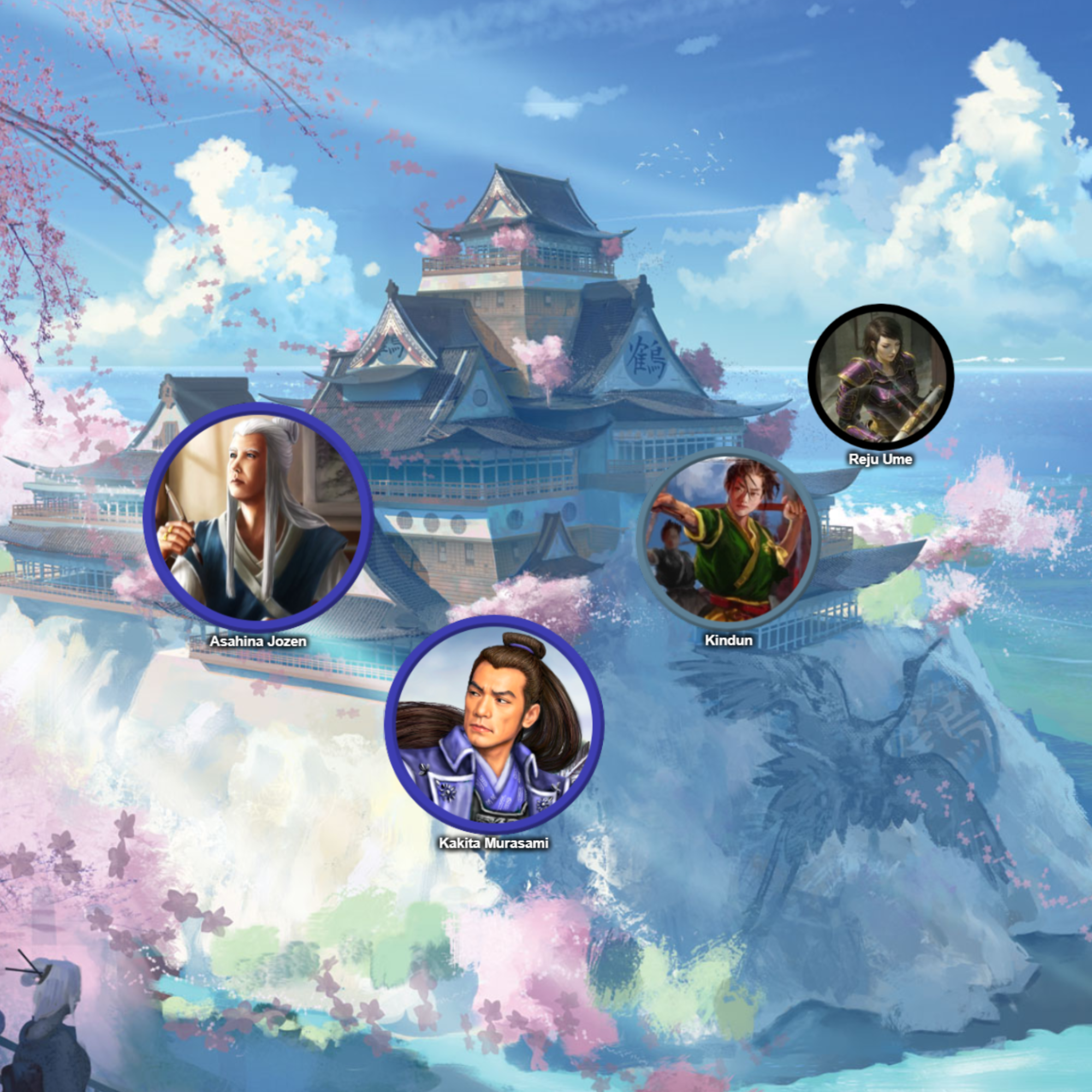
[00:00:43] Speaker B: I'm doing great. And I am. Tanner, you're so right. Um, we just finished our fourth session of playing this little miniature campaign in Legend of the Five Rings, fifth edition.
Um, last time you said that, I think something to the effect that it was the best session I've ever run for you. So it was a lot to live up to. But our session was certainly very unique tonight and I would love to talk about it.
[00:01:13] Speaker A: I don't know how to give this one a numeric rating. I don't know if it's better than the last session. The last one was genuinely just really interesting and well done.
And I screwed up last time when I went into combat too readily, and I screwed up this time when I got a little loose with how I was treating the citizen, the citizenry of Rokugan, and not minding my station.
Um, I had a little more swagger than perhaps I should. Although I was playing Duncan McLeod or Kindo.
So it's a word salad, isn't it?
[00:01:47] Speaker B: Duncan McFarlane.
[00:01:49] Speaker A: Yes. Uh, let me just stop and say this is one of the most moving sessions of a role playing game I have ever played in. I cannot think of a more moving session. I think last time turned me on to the story, Dice. So this one probably is not quite at those heights, but these are two absolute back to back banger sessions with the God damn picture dice.
[00:02:21] Speaker B: That's awesome, man. Yeah. Um, well, thank you. I appreciate that, man. I was. We can kind of, um, no spoilers here, because this is a. An adventure of my own making. So basically, you had to get something from the Crane clan, an important woman in the Crane clan. You had to get food for the, uh, the family that you're working for. You had money, you just needed to buy the food. Now you went into town, you discovered that she was involved in a salacious love triangle that had been outed between her and a stern duelist and another man that she had slept with, who was a sensitive pacifist artist, and you eventually managed to kind uh, of look into things, get the lay of the land, and you had the artist create a flower arrangement that you then presented to the DO list. And the DO list got the message and everybody cried and hugged it out and walked away. The climax of this adventure was the unveiling of a flower arrangement. Is that a disappointment?
[00:03:28] Speaker A: You know, if you would have told me that before the session, I would have said absolutely yes. But having lived the session, not at all. I think it was.
I think there was a lot of fumbling about.
I think Kin Dune had a lesson to learn, and I think she learned that lesson during this adventure.
But no, the flower arrangement, I think it really fit the theme. Whether you intend. I mean, looking at your prep. You shared your prep with me. I'm looking at your prep. You didn't say, like, themes, um, as far as it really was. God, we're going to cut out so much. I'm doing a terrible job. I'm, I'm. I'm trying to work my way through my feelings right now.
The theme of this was our better nature versus our animal nature as human beings.
[00:04:17] Speaker B: Mhm.
[00:04:17] Speaker A: And those words appear nowhere in your prep.
[00:04:20] Speaker B: Yeah, that theme kind of emerged, um, through the decisions you made.
I mean, that's kind of the magic of role playing, right? Is that I come with the prep, you come with the character in the dice, and what happens is something in the middle. I agree that this session totally had a theme, and, and maybe it's one that I was subconsciously thinking of when I was setting up, you know, a. A salacious affair in the lands of the Crane clan, which is where everybody is prim and proper and dignified and doesn't, uh, do anything out of order.
Um, my goal, I guess I could say I didn't go in with a theme. My goal was to make this adventure feel like a different adventure than would have happened on a road or in a town.
This. I wanted this to feel like an adventure that could only. Maybe not only, but this is the type of adventure you would expect in the Crane clan lands. It was a courtly adventure. It was about winning, influence. It was about nonviolence generally, or if there was violence, it was going to be a duel. So did you feel like the atmosphere of this adventure was different in terms of, like, what felt like your possibility space was.
[00:05:29] Speaker A: I did. And I felt like, because I was in a nicer town, like, nice as in, like, rich, nice, um, fancy people, more, um, high class, highfalutin, whatever. I got Put in my place more, which annoyed me, Dusty, but I imagine Kindun would be used to it. So I said, yeah, it felt. It felt very different. If you would have told me. If you, if you right now said, actually, Dusty, I really want to teach you a lesson that in the system of L5R 5E and the world of Rokugan, you can't draw your sword for everything.
And I wanted to show you an adventure that had to be resolved without swords. And I masterminded this whole thing and this emotional journey that both you and your character went on about disrespecting this artist and ultimately respecting this artist. To teach you, Dusty, a lesson, I'd be like, holy crap, Tanner a genius.
That is an illusion that I could have easily taken away from this. And it just goes to show, man, like you said, the magic happens at the table. I now Wonder how many GMs, um, who share stories about this awesome moment they masterminded. How much of it is either on purpose or accidental revisionist history, where they lucked into a crazy theme that carried beginning to end, accidentally, accidentally discovered gold, and then later they revised history in their mind again accidentally or on purpose to say I'm a genius. Because you could easily do that with the session.
[00:07:00] Speaker B: Yeah, I think we've talked before about how RPGs aren't an authored experience. Right. And they are messy and weird and that's kind of the appeal. They're not focus tested, but I think the reason, I think we have themes in fiction because we have themes in life. And we played this, I think, pretty, um. I don't want to say true to life, but we played this from the point of view of the characters and the situations. And a theme emerged just like how you can read about some ancient war during the Roman period. And there was a theme to that story, you know, like, I think that it just goes to show that when you inhabit characters and when you inhabit worlds, themes happen because that's how human beings make sense of stories, you know, and that sounds like super pretentious maybe, but like, once you kind of had this, I tried to steer it towards a position that I've kind of found ourselves in about halfway through the session, which is this idea that kind Dune is. She is rough and tumble and she's coming into this manicured place. And yes, there are people who are going to put them in their place. And some people admonish her and some people try to educate her. And I think you latched on to the education part. And when the Artist Asahina told you about his point of view and unveiled the flower arrangement. And I described it. That was me maybe subconsciously latching on that. That's what you were responding to better. What do you think?
[00:08:33] Speaker A: That makes a lot of sense. I do have to say if I wanted to paint this in a negative light and I'm not, but like, if I wanted to be, like, where are we misaligned? How do we screw up? You realize that this magic happened because we walked into the session fundamentally misaligned. I walked in to this as a Sam Spade 1920s private eye. Like what is a Rodman other than a private eye out there solving problems for hire?
[00:08:59] Speaker B: Yeah.
[00:09:00] Speaker A: And my cigar smoking, hard drinking, gun toting private eye kicked down the door of a uh, Jane Austen ballroom with Jane Austen style politics and pearl clutching. And this story is what emerged from those two fundamentally different points of view that we started the session with a little.
[00:09:26] Speaker B: I think the. The truck full of peanut butter hit the truck full of chocolate is kind of what it feels like where we kind of made something better than the sum of her parts. I love that. And we've talked about this before with one on one games that you are very goals driven, you're very action driven.
And I think that mixes well with situations that require you to suddenly pause and pivot and be like, oh God, I've got to do this a certain way or I've got. I have other considerations besides drawing first at High noon and. And going on. But I want to say I did not pre author an ending to this game. I think that there was a chance that presenting the flower arrangement could have incensed the duelist and a duel would have happened. I think that would have been a perfectly valid ending to the session. 2. Maybe not as a unique of one, but I think it would have been a perfect bow on the story too if it did end up in a sword fight at the end.
Um, and as you can see like when you were kind of gathering information on your opponent duelist, like I was showing you his stat block and that was me being like, hey, this is kind of who you're up against. And that was not an illusion to like I never intended to pull a rug or anything. You know what I mean?
[00:10:45] Speaker A: Yes. Yeah, I see what this could have easily gone into a sword fight. In fact, when he. When I was arrangement was covered and I was trying to tell him this flower arrangement is a message and you were role playing him as annoyed, I was expecting him to like swipe his katana through it Unseen M and that was going to just incense me.
[00:11:07] Speaker B: That would have been a great, great ending to the story too.
[00:11:11] Speaker A: There's so many things done.
[00:11:14] Speaker B: Yeah, maybe if he was a different clan, if he was a different kind of guy, maybe.
Um, I also thought long and hard about. Because when you had the idea to like I'm going to prepare a flower arrangement for this guy to try and put him on his back foot, I was thinking, and I think you were thinking too, maybe I'm wrong. But like you're like should I have a flower arrangement that is going to piss him off and provoke him or am I going to have a flower arrangement that's trying to get him to back off and forgive and forget and move on?
And when you went to Asahina the flower arranger to go to that, that's when I returned to my prep.
And uh, my prep says he is young and inexperienced in political court maneuvers. Maybe I didn't role play that very well. A genuine sensitive and an artistic genius. He's trying to weather the storm. That to me said he this guy is not going to arrange a flower arrangement that's going to piss him off. He's going to try and speak from the heart because that's what he believes art is.
So maybe you could say that the flower arrangement was only going to go one way. But it's. It's interesting that yes, there were several.
This wasn't railroaded by any means. And so I hope that um, my very sparse prep which you commented on just before we started recording was uh, that came across that this could have gone down many different ways.
[00:12:39] Speaker A: It felt all planned but it also felt like I had absolute agency.
Does it help you? So a thing I've started doing with you and I think it's the trust we've developed is I will just out loud stream of consciousness share with you a mixture of what I'm thinking and what my character is thinking and trying to achieve.
And ah, part of the reason I'm doing that is you know, I Dusty we talked about this in the very first session that we played of el5r. I Dusty I'm still trying to learn Rokugon as well as you Tanner know it. So that's the Dusty and Tanner side of the conversation. And then the kind Dune game master part of the conversation is like here's what I'm trying to achieve like within this world that you know better than I do. Help me make choices that move me toward this. So I make my intentions pretty clear pretty early.
Does that help you Pivot and make up. Your description of that file arrangement was like crazy good. Does it help you adjust along the way? Does it annoy you? Like, what do you think about me monologuing?
[00:13:43] Speaker B: I don't mind that at all. I think like being able to switch between out of character and in character and kind of blending that is helpful. I think it's helpful for you more than it is helpful for me.
Um, I try to be very conscious about not. Because that's a great point for if I was a railroader to railroad you into a decision to say the proper thing to do here, you know, would be this. And the consequence of not doing that would be this.
And so I try to be fair, but I. But at the end of whenever I explain anything, I want to be like, but the decision is yours, what you want to do.
So uh, my worry is not like about getting things back on track. I just don't want to feel like I'm already running a GMPC and explaining the world to you. I do not want to influence your decisions. I want those to be yours. Obviously.
[00:14:34] Speaker A: Did I succeed at pulling enough in one direction to make you adjust? Or do you think I bowed too much to the NPCs and GMP season world?
[00:14:44] Speaker B: Well, that's what I was going to ask you. I think Ume, your uh, erstwhile companion, uh, your Jeeves, so to speak, I think she took a bigger role in this than I wanted her to. Maybe like if I had to go back. I think Ume is at her best when it was like in the first session when she would just ask you questions and she would exist to give you a voice where maybe if this was a book you would have an inner monologue as a character and we'd be able to read it. But like my, I was worried that she was suggesting things too much rather than just asking you questions and letting you expound.
[00:15:20] Speaker A: So I'm not letting you do that because uh, and we didn't talk about this explicitly. Indune is trying to educate Ume about how to view peasants as more than just people who are beneath her. They're also, I mean they're people too. They have hopes, they have fears, but also their well being is the same thing as her land's well being and their for her family's well being. So she should think about the well being of the peasants.
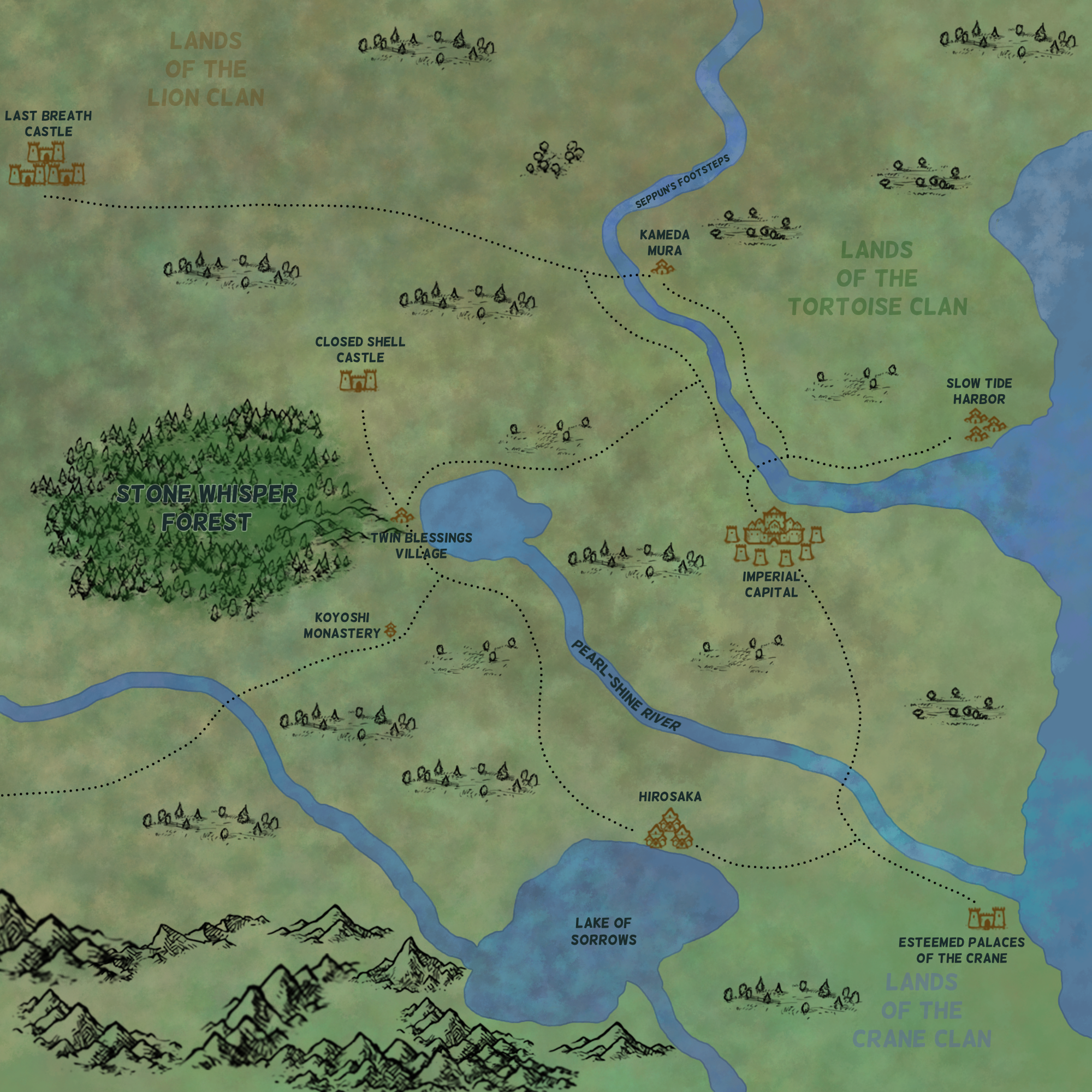
I'm very, uh, very much having little asides with her to teach her that. Because Kin Dune is very much in a Duncan McLeod Highlander sort of way already. Thinking about leaving Twin Blessings Village better than she found it and moving on to keep after her father's killers.
She's already thinking about a time when Twin Blessings Village will no longer benefit from her presence.
So can she leave behind a better Ume?
[00:16:18] Speaker B: Interesting.
[00:16:19] Speaker A: So I'm not. You do that.
[00:16:22] Speaker B: Okay. Okay. As long as it doesn't feel like I'm overstepping. I love that you have not only the main goal of the campaign, well, depending on how you want to rank them, but of helping Twin Blessings Village, the side story of Kin Dunes past, but then also this tertiary thing of trying to mold Ume into the type of person who you think would be a good steward once you're gone.
I wasn't considering that. So I'm going to try and prepare some more, um, opportunities for that to happen.
[00:16:51] Speaker A: That's why I enjoy those conversations that Kendun and Umay have about the peasantry.
[00:16:59] Speaker B: Anything you want to talk about with the system that you've.
There's maybe not many surprises with the system four sessions in at this point, but you're still enjoying it.
[00:17:08] Speaker A: I am still enjoying it.
Um, I do wish.
I wish the opportunity token didn't look like an explosion, and the explosion token didn't look like an opportunity to me. The fact that opportunity looks like a literal explosion confuses the hell out of me. I wish they would have chosen a different pictogram, but that's hardly a complaint about the system.
[00:17:31] Speaker B: Yeah, I think there's too many round things. Um, all the symbols should have been a little bit more diverse, I think.
Do you want to talk about my prep now that you've seen it? Um, is there anything else you want to talk about with that?
[00:17:44] Speaker A: Yeah, there was a lot I was going to ask you. Did you prep. Did you prep the description of the flower arrangements?
Did you prep, like, this phrase and conversation? Did you have a bulleted list of things this person was going to say? I was going to ask all those questions, and I'm looking at your prep, and the answer is definitely no.
[00:18:01] Speaker B: Yeah. Is that, uh. Do you feel like you've, uh, seen the man behind the curtain and you now know that I'm not the great wizard of Oz? Or is that interesting and elucidating that, hey, this all happened in the moment, and that's what made it valuable?
[00:18:15] Speaker A: No. No, I feel more like I've seen the DVD special features. You know, like, remember those days when, like, you really, uh, enjoy a movie and then enjoy diving deep? I feel more like that, and it makes me feel better. About, I don't know. There's a guilt that goes into being a player. I feel more stressed when I'm a gm, but less guilty because I'm taking on prep work and pre work to create an experience.
When I'm a player, I feel guilt because I didn't do the prep. I came in kind of cold. I've not had to think about this game for the last several weeks, and seeing this reassures me of how much of the magic does happen at the table, and it helps take away some of my guilt.
[00:18:56] Speaker B: That's good. Yeah. I think there can be sort of a weird obligation when you're the player. Like, the GM obviously has the obligation of, like, oh, God, did I. I got to make this fun. And, uh, not only got to be the social coordinator, I got to be the storyteller for this, but the player, I think a good player also might have some guilt of, like, I got to make sure this, like, I do it right, you know, Like, I've got to make sure that I. That I play my. That I read my lines and I play my part in the. In the play.
Um, so that's interesting. I'm glad I could at least put you at ease by seeing it. And all the other adventures I have are pretty much formatted and prepared the same way in that my prep is like, kind of the key players, what the situation is, and then stat blocks for creatures that you might end up needing. Stat blocks for creatures or characters, I should say.
And so I try. And that's kind of like a thing I learned from OSR of like, trying to create an interesting situation.
And the prep is creating the situation. And that lets me respond to whatever moves you might want to make in that situation.
Like, I felt like I had a good understanding of what the love triangle is and what was at stake, and that made it easy to improvise whatever reasonable thing you tried to do.
[00:20:11] Speaker A: So I think to sum this up in lessons learned, not that this needs to be the conclusion if we have more to say.
The lessons I'm hearing and that I'm learning are, one, if a theme develops, go with it.
And two, the prep, the dice, the system, the pictograms.
You have to remember that all of that is in service to what happens at the table.
[00:20:36] Speaker B: Yep. With a, uh, great game system is nothing without a decently interesting situation to play them in. Like, part of the prep, the hardest part of prep is coming up with a good idea, I think. And then from there, it's just filling in the blanks. At least for me.
[00:20:51] Speaker A: What do you wish I would have done differently?
[00:20:54] Speaker B: Um, that's a great question.
[00:20:57] Speaker A: I.
[00:20:58] Speaker B: It's a cop out answer, but I think. I can't really think of anything. I think that you did a good job engaging with the fiction. I think you did a good job of meeting the characters you needed to meet.
I would have loved a scene with uh, the Lord of the woman who was, um, scandalized by her love triangle. It didn't really happen. That was sort of like an eventuality that I thought of today and I added to the prep. I'm like, oh, if someone's demanding her seppuku, we should probably figure out who this guy is because you might want to appeal to him instead.
That would have been a scene I would have liked to see because he, he would have put you in your place for sure. But I don't think that this session like needed it. So, you know, and I think with the amount of light prep that I did it, it certainly doesn't hurt that you didn't engage with like three of the sentences that I wrote down here.
It didn't wound me.
[00:21:48] Speaker A: Fair.
[00:21:49] Speaker B: Um, a couple questions for you. Did I make you feel things?
[00:21:53] Speaker A: Yes. Yes. I walked into the conversation with Asahina Jozen positive as the cigar chomping, hard drinking, gun tote and private detective that Kendun is, that he had leaked word of his own affair through bragging. So I walked in with that assumption. You didn't really give me anything to make me assume that I was just positive that was the case.
I think I'm um, role playing Kendoon as a little bit of a, of a. A man hater, shall we say? Yeah. And.
[00:22:24] Speaker B: And she's also, I think a little bit suspicious. But that makes sense considering the life that she had. You know, like she, it seems like she's on edge for threats that don't exist sometimes.
[00:22:35] Speaker A: Yes, very much so. Like her mental scars have as much to do with how she reacts to her traumas.
Uh, and her coping mechanisms have a lot to do with how she reacts stuff which is totally different for me. It feels weird to play a character this different, but. Did you make me feel things? Yes. I walked into that conversation with those assumptions that he was in the wrong and then he wasn't in the wrong and then he made good points and then he hammered home through this piece of art that you described rather beautifully.
Our better natures can win and are worth cultivating.
I do still think he has a bit of a lesson to learn as far as the way the real world works.
But. No, but you made me feel things about the value of art versus practicality.
[00:23:24] Speaker B: I like that.
Uh, just to your credit, he does have a disadvantage in a stat block, and it is a weakness for beauty. He is sheltered from the world of real world. So you're right in your own way, but it just didn't end up coming up in a way that mattered. In the same way you feel anything. Yeah. I think that when you said that in Dune shed a tear at seeing the art, that made me feel like a. Not only was I out of character engaging with you and your character, like, in a way that, like, I felt like I scored a basket there. I'm like, yes. Tanner as the GM changed Dusty as the player's character. That felt like a good moment. But then it was also a double layered thing of like, I love in the fiction this idea that, like Kin Dune is this hardened woman that's traveled hundreds of miles on foot through her life and seeing a little bunch of flowers arranged in a particular way could affect her. I was like, oh, my God. This would be like the. This would be, uh, a moment that people would want to clear clip from the movie. I think this would be when. When Kin Dunes actress wins the Oscar. This is like the scene that they show in like, the best actor.
[00:24:40] Speaker A: That's true.
[00:24:42] Speaker B: I want to ask you about two standout moments, and I want you to give me a standout moment that you can credit to me and a standout moment that you can credit to yourself.
[00:24:53] Speaker A: The standout moment that I'll credit to me is when I had the opportunity to Dusty what to like, I had the opportunity dice, and you were asking me what I wanted to do with. It was the final roll of the game where, um, Masumi had. Or, sorry, Murasami had revealed the flower arrangement. And I was like, no, let's honor Jozen. What would Joseph have wanted to use that opportunity for?
And then you had us kind of like. I'm crediting myself with. With your idea of them embracing and touching like. Like foreheads, which was genius on your part.
But I'm crediting myself with giving that dice to Joseph to give Josen that moment of triumph over Kinden after they're gone.
[00:25:44] Speaker B: That's a heart. That's a hard thing to do as a player. Not only to, like, have a NPC kind of dunk on you, but to do it when he's not even in the scene. He's not even in the game anymore.
[00:25:54] Speaker A: He's.
[00:25:55] Speaker B: He's gone but you took that and you're like, this is his moment to teach us something. Again, not mine.
[00:26:01] Speaker A: I love that. And then the moment I'll credit you with it was a small thing, but when Hiriko at the end of our encounter, like I was treating it as just like standard D and D. You're the quest giver. I'm, um, the quest acceptor. And when she had that moment where she kind of took Ume to task over letting me do the talking when I'm not a samurai, I'm only a running. Mhm. That annoyed me. It pissed me off. But I was also like, damn it. That's correct. So I'll credit you like. Like that changed how I thought about Umay and how I thought about how Umay should conduct herself and how can Doon should conduct herself around Ume with Ume um for the rest of the session. So that was a standout moment. That pissed me off.
But it spurred me to action and thought and to think differently. So I credit you with that.
Love that.
[00:26:53] Speaker B: You ready for some lessons learned? Anything else you want to add?
[00:26:55] Speaker A: What's the biggest surprise I dropped on you? With your minimal prep and my total misalignment with you again. Cigar chomp and hard drinking Gun Toten. When did I surprise you? Did I surprise you?
[00:27:08] Speaker B: Yes. I'm surprised that you didn't go to Murasami. First you investigated Hiriko and then you sent Ume to go kind of look into Murasami, your opponent, and you kind of went, uh, and asked around about him in your own way. But you played it very indirectly when so far you, Dusty as a player, have been very direct. And Kindun is a character who is very direct too. I would have expected you would have gone up to Murasami and had a scene where you sized him up and maybe kind of traded barbs at each other and then walked away for the duel. That was surely going to come later, but the first time you met him was in the finale. So I appreciate your restraint and sort of I thought for sure once I. So first off, I foreshadowed that duelist when you met the other Crane on the road, and then once you found out that he was involved and that your character had this history of duelist, I thought you were going to head straight towards him. So I was surprised that you had the restraint to kind of walk the dog around it.
[00:28:10] Speaker A: When Umay warned me about the nest of vipers that we were going into.
What you were seeing was me fundamentally not trusting Hiroko like, is Hiroko lying to me? Um, ah, is she.
Is Murasami actually the good guy? And I'm gonna go kill the good guy because Hiriko is the first person I talked to, not because, you know, Murasami actually is the bad guy as Hiroko claimed. That's what you were saying was me taking stock of Muras on me from a distance to make sure I wasn't being used against a quote unquote good person.
[00:28:46] Speaker B: If this, uh, took place in the Scorpion Clan lands instead of the Crane Clan, that would have absolutely been what went down. But the Crane are a little bit more. You can. You can trust them. Maybe not too far, but they're not going to betray you in the same way. Hopefully. Fair lessons, um, learned. If you have a theme, awesome. If you can prepare a theme and inject, uh, it into your game.
I've done that like two times ever. And I. And it's still a fluke. I can't do it reliably.
Good on you. If a theme emerges during play, write it down somewhere in your notes, circle it, and try to direct things towards it and run with it. Because it's so magical when those things, those literary type things can happen in an improvisational medium. So take it and run, I say.
Lesson learned. Number two. I think, um, blending sort of above the table talk, AKA out of character talk. And in character talk, we talk a lot about how metagaming is good, but like metagaming with a, um, mix of in character and out of character talk, and we can kind of like arrive at what your character in the game is actually saying. I think that's like kind of a good middle ground that we don't talk about enough. Like, you do some quotes as kin Dune, and then you do some quotes as like. And then I try to get her to understand this, this, and this. I think that's a good style of play.
[00:30:07] Speaker A: I invoked Jane Austen's name earlier in this recording.
Um, if you read a Jane Austen novel, that's how she writes. Like, sometimes you get the dialogue between the characters, and sometimes Jane Austen just tells you in a paragraph. Oh, they talked about this letter for half an hour and she figured this out. Jane Austen will sometimes tell and not show, and I find that fast we've lost that.
[00:30:29] Speaker B: Yeah, that's interesting. Much to consider and obviously once you translate it from one medium to another, but it's almost like being a director, you kind of have to know when to montage and when to watch the scene. So you got it a lot of skill sets involved. Yeah. So looking forward to the next one. And, um, I'm glad that the hits continue, Dusty. They got to run out eventually, so we got to ride this as long as we can.
[00:30:50] Speaker A: I can't wait for our next stinger, because then we can be like, oh, my God, what went wrong? We were in such a. We're such a. Such a streak.
[00:30:57] Speaker B: That'd be so funny if you're like, Tanner, that was the worst session that we've ever played together. Let's dissect it. God willing, that doesn't happen, but I'm excited to play Next Man.
[00:31:05] Speaker A: Thank you for listening. People call them reviews, postmortems, retrospectives.
We call them lessons learned, and we're sharing ours with you.