[00:00:00] Speaker A: RPG Lessons Learned. When the game is over, when your players are gone, that's when lessons are learned.
Find us
[email protected].
email us at rpgllpodcastmail.com and find us on BlueSkyPGL.
[00:00:24] Speaker B: Hi. Welcome to RPG Lessons Learned, the show where you can learn from our mistakes. I'm Dusty, and with me, as always, is Tanner. Hi, Tanner, my man.
[00:00:34] Speaker C: How you been?
[00:00:35] Speaker B: I am good.
I am. I am setting my jealousy to zero because we're going to be talking about your other session. Your other, uh.
[00:00:44] Speaker C: They're not like you.
It's not serious like it is with me and you, Dusty.
[00:00:51] Speaker B: So in all seriousness, you've been playing through your Cherwood campaign, and I have concluded it.
And you're. You're playing that in the tan hack, is that right?
[00:00:59] Speaker C: I am. I've revised the tan hack after the lessons I've learned from it. The beige new edition. The beige hack.
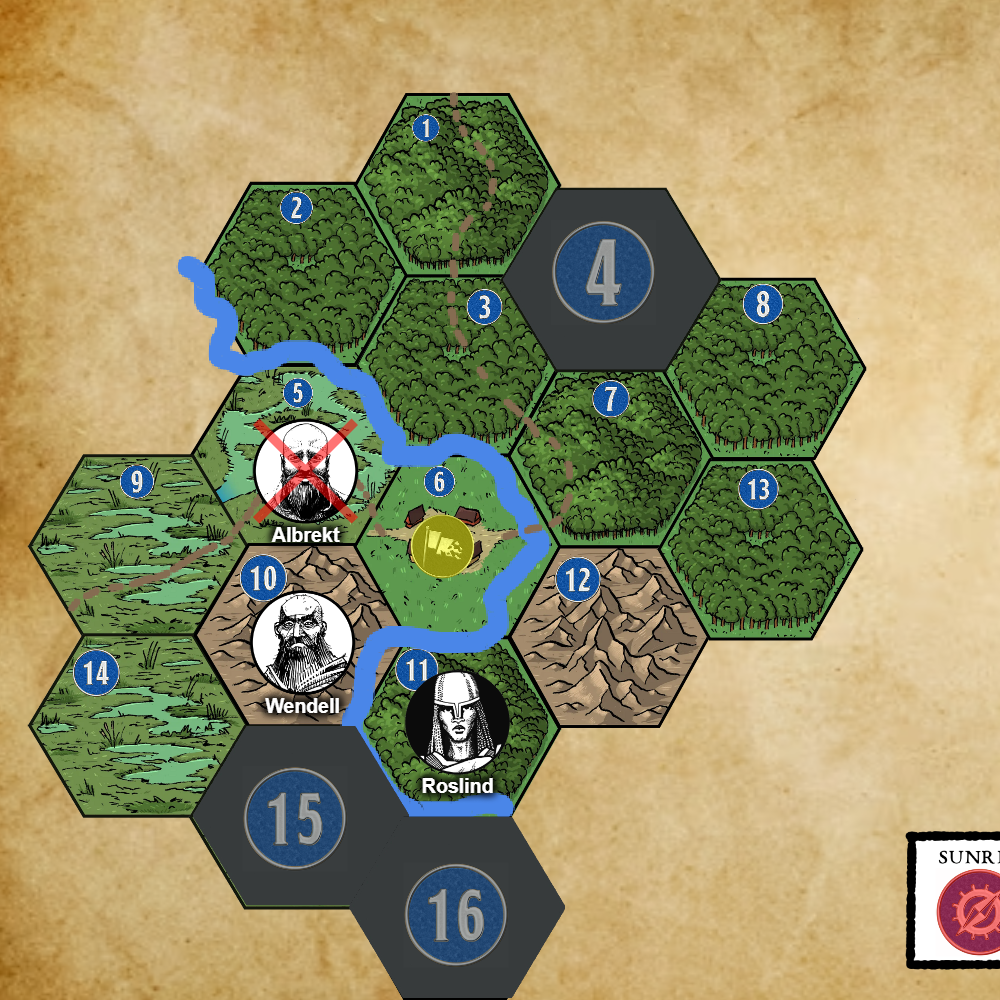
Uh, just sort of a revised edition. Clearing up some stuff. But yeah, we finished a campaign. It was 11 sessions of Hex crawling and dungeon crawling. Um, boy, is it tough to end an open ended campaign, man.
[00:01:21] Speaker B: Oh, expand on that. Do you mean you had to find an ending or do you mean the players had to find an ending? People wanted to keep playing? What does that mean?
[00:01:30] Speaker C: So the m. The idea of the game was that there was an ancient queen who split her soul into five different MacGuffins. And when you reunite the MacGuffins, her spirit will come forth and she will rule the land again.
[00:01:43] Speaker B: Okay.
[00:01:44] Speaker C: Pretty standard stuff.
[00:01:46] Speaker B: And her real name is Angelina Marvolo Riddle.
[00:01:51] Speaker C: That's right. The Anagram special.
Um, yeah, I'm really inspired by J.K. rowling and. No, I'm just joking. Um, God, cut that.
[00:02:01] Speaker B: Cut that.
[00:02:02] Speaker C: Um, yeah, so it's hard to go from an open ended campaign where I have these regions and dungeons and all this systemic stuff, all this procedural stuff, random encounters, and then funnel that back into an ending. Like, do I prepare a linear session at the end of this where this happens? Do I prepare a final dungeon? Are my players sick of that? Like, figuring out how to end a, uh, Hex Crawl is really tricky, man.
[00:02:33] Speaker B: What did you land on?
[00:02:35] Speaker C: I landed. So my players made enemies with the Baron of this land, as you can imagine, adventurers and authority figures.
[00:02:43] Speaker B: Makes sense.
[00:02:44] Speaker C: They really hated this guy. As part of one of my Hex Crawl encounters, they found a vampire woman chained with a silver chain to a tree in the shade in the middle of the woods. Okay. And they let her out and they Said, hey, there's a big fat rich guy over there. Go deal with him. And so she said, okay, thanks.
She sired him as a vampire and turned his cat, his manor, into a mini castle, Ravenloft, and was trying to absorb the powers of the ancient queen to give birth to her sanguine empire. So my players went in to the manor, poked around a little bit, and absolutely annihilated the baron because they stocked up on garlic, uh, and silver. So it went pretty quick. It was a little anticlimactic. But then my players were like, that was really fun. It was really breezy. The pacing was great. And I'm like, oh, man.
So I don't know, you ever have that happen where you're like, that sucked. And I'm not, like, I wasn't, like, creatively satisfied with it, but my players liked it. Is. Should I just take that win or should I strive to analyze that more?
[00:04:00] Speaker B: Oh, I think you take the win. I think I'm trying to find a way not to say the thing we always say about, um, it's an uncurated format.
[00:04:09] Speaker C: Right. Unexpected stuff happens.
[00:04:12] Speaker B: I think you take the win because what is D and D but a magic trick? Like, it's misdirection.
Half your job as a GM is to not let the players know what you did or didn't plan.
Half your job as a GM is to either, you know, not really because of the quantum ogre, make them feel like things matter when they don't, or to make things matter to. To. To take their choices and run with them and let them feel satisfied that they. Anyway, whether it's real or it's an illusion or some of it's real and some of it's an illusion. I think your job as a GM is to give them that feeling. They had control over the world. And if they went and they got that garlic and they went and they prepared to face vampires and then they took the vampires down.
That reminds me of the ending of my favorite movies, Monster Squad.
[00:05:04] Speaker C: Oh, I thought you were gonna say, um, what was the key for Sutherland? Uh, Lost Boys.
[00:05:08] Speaker B: Lost Boys. Yeah, that too. Where at the end of the 80s action movie and they realize they're up against vampires, they stock up on garlic, and you're like, oh, yeah, the good guys are gonna win.
Like, if that's what they chose to do and they chose to stack the deck in their favor, great. I think you would have annoyed them if you would have thrown up these artificial and clearly arbitrary in the moment obstacles for the sake of difficult combat. I think that would have done more harm than good.
[00:05:35] Speaker C: Yeah. Especially with OSR style games where so much of the advice and the mindset for the game is like, prepare ahead of time, bring the right tool for the job.
Combat is not a sport, it's murder. And you need to safeguard yourself and playing smart is playing correctly. So I agree. I think maybe that's just my, my own ego bruised and I'm kind of coming to terms with that still. But you know, that still happens to me as a gm.
[00:06:03] Speaker B: Do you find it difficult to go back and forth between our one on one games and then a game with a full table of how many players?
[00:06:09] Speaker C: We had five regulars, sometimes up to six in a given session.
[00:06:13] Speaker B: Is that hard going back and forth?
[00:06:15] Speaker C: Yes. I know that you are pretty much the, you're the most dedicated person I know to like learning role playing games and being good at like being a good player. My players, God bless them, I love them. It's a beer and pretzels thing for them. They're cracking. I'm trying to evoke a horror tone. They're cracking jokes. I get it. It's part of the fun. I think I struggled a little bit with, um, 11 sessions in maybe players still not knowing how core rules of the game work.
I think, um, I guess there's the biggest difference was how dedicated the players are between this game and that game. And like I said, they're awesome. I love, I love all my friends. I love playing with them. Running role playing games is like literally my favorite thing in the world. But it is a, uh, contrast of the people who can make, you know, 90 minutes for it every other week versus the people like me and you who are like, who like deeply care about improving in this hobby and stuff like that as a hobby. So like I said, it's just. And that's not on them. They're not bad players by any means. It's just that like my expectations for myself I think are higher than maybe is healthy.
[00:07:29] Speaker B: That's fair.
[00:07:30] Speaker C: Um, I have one more kind of failure to talk about the campaign. Uh, the campaign overall was good. I loved getting to use my rule system. We had awesome moments. God, A temple of a thousand swords. Lair of the Key Master. Aberrant Reflections. Those are good, good, good dungeons, man. I would run those twice a year.
[00:07:49] Speaker B: Forever.
[00:07:50] Speaker C: Huge hits.
Um, I would love to talk about something that was not a hit though, and I want to kind of pick your brain about it.
[00:07:57] Speaker B: Oh, let's go.
[00:07:58] Speaker C: So the McGuffins were magic items that were like the regalia of the old Queen. So, like, her sword, her cloak, her armor, her scepter, all these things. And I wanted them to be kind of like artifact level magic items, right where they were clearly had very useful out of combat type magical effects. And each one had three of them, and you could use each one once, and then you'd have to, like, do a thing to recharge it. And they collected four of the five things over the course of the campaign. Dusty. They use those abilities, like, twice, like, total.
[00:08:34] Speaker B: That's interesting.
[00:08:36] Speaker C: I think. I don't think they were playing wrong. I think they never felt like they were in a spot where that was the best option to do. And at the end of the game, they were like, yeah, I felt like I was playing an rpg. I was playing Skyrim, and I would rather sit and wait than use my stamina potion, even though my stamina potion is totally at hand. I would rather not waste an item if I don't have to use an item, you know, and so I get that player psychology.
So maybe was I just, like, not hard enough on them? Like, was it. Was it not dangerous enough, or was it, uh, did I have, again, too much of an ego and infatuation with these devilishly clever magic items that I've made and wanted to be important?
[00:09:20] Speaker B: Were they afraid of the magic items? Did they think that they might be cursed? Do they think that the queen might, I don't know, reincarnate through them? Did they?
[00:09:29] Speaker C: No. And I. I, uh, don't think so. I think at the end of the game, once they had all of them, they started being suspicious of, like, wait, is reincarnating the queen a good idea? But when they had just the cloak of Queen Elena and it had an effect like, you can turn into butterflies, or if you drape this over the head of a sleeping creature, they will remain asleep no matter what. Like, they didn't seem to be, like, particularly excited about those powers when I was, like, describing them to them. So I don't know, maybe again, it's just, like, kind of not what they play games for. They kind of want to hang out with their friends and, like, accumulating cool effects just aren't the. The same type of fun for them? I don't know. I don't really, really know what to make of it.
[00:10:13] Speaker B: It makes me think of the difference between episodic tv, like Star the Next Generation, where you wind up kind of back at the same place you started every episode because you're not meant to watch the episodes in order versus serialized TV where it's kind of like a miniseries like Babylon 5. And these are old examples that are revealing my age.
And they're probably modern shows like, you know, Modern Family or the Office or Parks and Rec as largely episodic with some through lines, but largely episodic versus, I don't know, Longmire or some other TV show succession where clearly there's a running storyline and you cannot watch out of order. It's like they were kind of more up for episodic entertainment. Like my fighter swings a sword in every episode.
My cleric heals somebody every episode. And they weren't really interested in accumulating things session to session. Is that true?
[00:11:12] Speaker C: Yeah, I think they thought it was a cool sandbox to play in that eventually had like a background story that paid off. And I guess I wanted them to be engaged more with the story and like understanding that like, hey, the fiction of these items are that they are sick and awesome.
But like, I didn't give them a, ah, good enough reason to do that. I think. Like, and especially in an OSR game, like, I feel like story is secondary again. I don't think they played it wrong at all. I'm just a little disappointed of like, why did my.
Why did I feel kind of bad about this? You know, I don't know much to
[00:11:45] Speaker B: consider, I wonder, because you did limit the number of uses. I do find like even in this, in a session of L5R that we recently played and I had void points and I'm like, I don't want to use the void point. But I'm like, wait a minute, we're going to play like a three hour session. We're two hours in. Why am I not using my void points? This is really dumb, but even I have that instinct years into trying to hone my craft at being an RPG player.
Would it have been better to give those magic items always on effects? That way there's no scarcity, but make the effects weaker.
[00:12:19] Speaker C: Yeah, uh, the idea is that I didn't want any bookkeeping type effects like, oh, this magic breastplate gives you plus two armor class and plus two strength, which are like kind of the passive always on effects that I imagined. So I think that would have been better maybe like, hey, while you're wearing the cloak, you can't be surprised or you always go first in combat or something like that. Something that made them feel valuable but not, um, didn't feel like a scarcity, like a resource to be spent. Because I think if you give players resources they will try to not spend them.
[00:12:53] Speaker B: And if you give them something that's always on, they will put it on.
[00:12:56] Speaker C: And I think that they'll remind you that it's always on. Yeah, actually. Actually, um, I go first. Tanner, please. Like, they'll. They'll do that. Maybe it is. You just kind of got to appeal to the psychology of the player, and I was appealing to the psychology of the dm.
[00:13:10] Speaker B: Um, I am annoyed at games that have a lot of scarcity, that have a lot of resources that I have to manage.
Like that game, um, Invisible Sun.
[00:13:19] Speaker C: About to cook one.
[00:13:20] Speaker B: Yes.
[00:13:21] Speaker C: I was thinking of the other one, the, uh, Numenara, where, like, there's all the one time use powerful magic items all over the world. Yeah, Monty, come on. Yeah, like, sorry, invisible sun.
[00:13:33] Speaker B: But, yeah, invisible sun. Like, you have all these different resources. You got to manage them throughout the session. And it's just the scarcity makes you afraid to do anything.
[00:13:40] Speaker A: Yeah.
[00:13:41] Speaker C: I think that is a good lesson to take forward is that, like, give players effects that if you're gonna give players, like, magic items or effects like that, give them things they're excited to use and not reluctant to use, I think is maybe the takeaway there. I thank you for helping me understand that.
[00:13:58] Speaker B: No problem. I kind of feel the same way about the first time someone plays a wizard and it's like, will you please stop hitting him with your staff and cast a GD spell?
[00:14:09] Speaker C: Yes.
[00:14:10] Speaker B: But they're terrified because I have three
[00:14:12] Speaker C: spells this session and they don't know how long the dungeon is. They don't know how long they're playing. They don't know what kind of situation they're going to get in. Yeah, it's tough. Well, those are my failures. But I would love to talk about a cool resource that I use for the game that you and I are familiar with.
That is the Monster Overhaul, A Practical Bestiary by Skirples. You were so kind enough to buy me this, uh, this book for Christmas. And if you're not familiar, we'll link it in the show description. If you're into OSR games, you've probably heard of it, but this is a gate. This is a book I wish I had at the start of this campaign.
Um, it's a monster manual of a bunch of, like, BX level monsters or BX era monsters. But each one is expanded into, like, four pages that gives you random tables, like, what this monster wants, what a layer of it might look like, what are the rules governing. Governing this monster? And I use this for the vampire thing, um, I directly rolled on this table to figure out what ver. What mythology of vampire this is.
And, um, the final death method I arrived on that. They had to have their heart carved from their chest and the heart soaked in vinegar for the vampires to finally be put to death. So my players that happened in the game because of this book. So, like, those are the types of things that this book is just really, really awesome at. Anything you want to talk about with this book, Dusty?
[00:15:45] Speaker B: Yeah, I bought that book. I saw it on YouTube, reviewed in several places. I forget which channels, but I just really liked the book. It was beautiful. It was bound really nicely. I got it from like indie press revolution dot com. So I don't. I don't know how pod it was, but it felt to me like it was.
[00:16:05] Speaker C: It feels very premium. And the layout is awesome. It's. It's stark, it's black and white, but God, is it usable.
[00:16:11] Speaker B: It's a beautiful book. Now, 95% of it is so fun.
95% of it. Like, there's layers, there's, um, tables you roll. It's just all the stuff you can really.
If you don't have an adventure for the week and you need adventure for the week, you can just read this book and come up with an adventure.
[00:16:31] Speaker C: But it has gamble content in it. That's the thing I want to like. It's not just, oh, the wizard path of Drewnax said that chimeras were first invented when the elves experimented with dragons and lions. That's great. That's a great bit of prose you wrote in your monster manual. That does nothing for me at the table. What does help me at the table is like, oh, here is. You know, I'm going to flip to a random thing. A golem. Here are features of the golem. Um, here's how this particular golem is controlled. Here are alternative things that could be made from and why they made a golem. Um, that is all usable stuff at a table. And like, oh, here's a little layer for a golem too. Awesome.
[00:17:13] Speaker B: And I love that stuff. 95% of it. Gameable. Amazing, beautiful layout. Great stuff.
5% of it is like, it was written by the cringiest fourth grader you've ever met.
[00:17:26] Speaker C: Yeah, there's some content in here that is explicit but not mature.
[00:17:32] Speaker B: I would say like edgelord. 4th grade, 5th grade, 6th grade edgelord type stuff.
[00:17:39] Speaker C: Now I want to defend Skirples here again. Don't know the guy. Don't know if he's a Cool guy or not, you wrote a cool book.
I would say like 5% of the OSR is like that too. And I think that it's okay that on a list of 20 things, one of them is really stupid. Like I, it appeals to the people who play that stupid crap or uh, you know, cringy edge, lordy stuff. But like, I'm so free to skip it. It's such a minor part that I go, uh, never going to do that. Moving on. And I read the next entry.
[00:18:13] Speaker B: Yeah, it does not stop me from using the book. It did not stop me from gifting you. Like I was so enamored with it after getting it and I, I did definitely did not read it cover to cover. But I read a bunch of entries and considered using monsters I've never previously considered before. And I was like, man, as weird as the weird stuff is, the 95% of it is phenomenal. I have to gift this.
So I gifted a copy to you and I gifted some copies to some other friends that I know in person.
[00:18:39] Speaker C: But yeah, the weird little cringiness of it, the immature content, I should say it prevents me from wanting to give it to like a 13 year old who. This would be the perfect book for them to run adventures for the rest
[00:18:53] Speaker B: of their life if it weren't for the 5%.
[00:18:57] Speaker C: Yeah. Again, kind of a minor thing. Um, I mean it's awesome that like for the entry in Sphinx. For the Sphinx there's like here's like 20 riddles you could have. Here's it. Okay, one thing I want to call out is the generic things. I love this. So like the book is divided kind of by um, theme. It's not like alphabetized by monsters, but like it will show you. Like for dragon, it will have. Here is a generic dragon's hoard and it's a Dyson Logos map. And it's like this room is for the dragon's hoard. This is where the dragon keeps the servants. Like you could flick to that glance that over and instantly, I mean instantly run it. There's a generic mega dungeon that it lays out, which I've never played a mega dungeon, but it makes me want to. But it's like, yeah, you know, this is where the fungi guy are. Here's where the skeletons are, here's the evil lizard cult and it lays them out and it's like, yeah, you could just take that and flesh it out. It gives you the skeleton for so many awesome, awesome things, man. I love the generic. Like here's a generic monastery Here's a generic, um, bone temple. Here's a generic mermaid's temple. That kind of thing. Like, God. Ah, not enough good things to say about that, man.
[00:20:10] Speaker B: But you cannot give it to kids.
[00:20:13] Speaker C: Can I give it to kids, man? So, I don't know. I would love a PG version of this because you could buy this and a copy of the Tan Hack available online for any, any person, and they could hit the ground running with it, you know? But, um, again, I'm an adult. I can gloss over the stuff that doesn't. That doesn't vibe with me. That kind of bothers me. But again, I just can't recommend it to a mom to buy it for her kid who wants to get into
[00:20:40] Speaker B: D. I said that. This show has the explicit tag on Apple podcasts and all the other podcasts. So if, uh, I'm an adult. If you're listening to this, you're an adult, or you should be. I want you to be. Please be. Don't listen to this. But I love it.
I unabashedly love it. Read it. Check it out. If you want to buy it, buy it. No affiliation with scruples whatsoever. But yeah, if you're a mom listening and you're looking for books for your kid, this ain't it.
[00:21:08] Speaker C: Yeah. But whatever the next OSR campaign I do, this will. When I prepare for it, this will literally be like the go to thing on the table. Like, it's. It's just invaluable in terms of preparing interesting things. With all the weird little beasties of
[00:21:25] Speaker B: the world, I'm often gifted RPG books.
I'm always thankful. Some of them go on the shelf. Some of them get thumbed through once and never looked at again. Some of them get, like, read.
Nothing ever gets read cover to cover in the RPG world for me. But some things do get, like, read thoroughly. How. How do you make those distinctions? Like, how does this play out for you?
[00:21:47] Speaker C: I would love to have a episode where we take a picture of our RPG collections and then, like, talk about them. That'd be fun. Post it in the show notes or something.
Um, I have two shelves of RPG books. One of them is dedicated to only Legend of the Five Ring stuff. That's the one you can see behind me here. Dusty. It's only like two shelves worth, but it's a lot of L5R stuff. And then the other one is dedicated to everything else. That one's off to my. My left here.
I love having it as a reference library. I love when I'm stumped On something. I'll just grab like the Dungeon Crawl classics book and I'll just flip through it looking for good ideas. I love when I'm running an L5R session and I'm like, I actually don't know what the deal with this, like, the Phoenix Clan is with regards to this. And I'll thumb through it and say, ooh, a little nugget. My imagination's moving now. I put the book away. So I thumbed through this and was immediately impressed with it. But it did sit on the shelf until I kind of ran into writer's block and I said, you know what? I have this big, gorgeous, bright red book. I'm going to see what it says about vampires. And then the session. The dungeon designed itself basically at my fingertips once I was reading through this. So I think this is probably, as of now, the most valuable reference, uh, book. And that's kind of how I consider it is like an encyclopedia type book. When I'm, you know how I assume that old people before ChatGPT, when people were actually writing, they're like, Hm, what were the Romans doing in this era? And they'd pull a book off their shelf, you know, so that's what this is for me. Now it's a reference book and it's just full, full, full of cool ideas, man. Can't say enough cool things about it.
[00:23:27] Speaker B: The last book that made me feel that way before the monster overhaul was Scarlet Heroes, actually. And all the great tables for rolling an adventure that appear in Scarlet Heroes.
[00:23:37] Speaker C: Kevin Crawford is such a master at that. All the stars without number stuff. Worlds without number. Yeah. Just. It's awesome that this hobby can support people who make reference material for games that they don't even own, you know? It's cool, man.
[00:23:53] Speaker B: We should do an episode. In addition to taking pictures of ourselves, we should do an episode for moms where we cover a bunch of systems where we've looked at it and be like, you know what if your kid is D and D curious, Here are some safe things you can start with.
[00:24:10] Speaker C: Yeah, like safe, cool things that aren't just the core rule book of a game. Right. Like inspirational type stuff. I like that.
[00:24:17] Speaker B: Well, thanks for sharing with me. That's really cool. I'm glad to hear that it's getting some use and that you like it as much as I do.
[00:24:23] Speaker C: Yeah, man. Uh, like I said, the next, uh, OSR campaign I start, or D and D of any sort, fantasy game of any sort, I'm cracking this open first thing, man, and thanks, uh, for entertaining my, uh, my Cherwood anxieties. Being my RPG therapist tonight, I appreciate it.
[00:24:38] Speaker B: Thank you for listening.
[00:24:40] Speaker A: People call them reviews, postmortems, retrospectives.
We call them lessons learned, and we're sharing ours with you.