[00:00:00] Speaker A: RPG Lessons Learned. When the game is over, when your players are gone, that's when lessons are learned.
Find us online at rpgllpodcast.com email
[email protected] and find us on blueskypgl.
[00:00:23] Speaker B: Hello everybody and welcome to another episode of the award winning RPG Lessons Learned. My mom's favorite podcast.
I'm Tanner. I'm your co host. I'm here with Dusty, your main host. What's up Dusty Tanner?
[00:00:37] Speaker A: How is it going?
[00:00:38] Speaker B: It is going great. We've been playing some games. It's been a little bit, but we got back in the saddle and we concluded the adventure that we now know as Slug House.
Which is. Uh, it remained unnamed because I didn't want to spoil the big slug before.
[00:00:55] Speaker A: You encountered it, you know, and I thought it was a gelatinous cube the entire time.
[00:01:00] Speaker B: Interesting.
[00:01:01] Speaker A: So I'm glad you did not spoil the slug.
[00:01:04] Speaker B: This is a level one to three fantasy adventure by Daniel Herz.
Um, for BX and other old school systems.
Um, no AI was used in any part of this work. I like that disclaimer. Well, I'm sad that that disclaimer has to be a thing now, but I'm glad when I see it, I guess.
[00:01:24] Speaker A: Yeah, same. That makes a lot of sense. I put it on my work. Um, I released Dragon in Dungeon and I felt compelled to put the same thing.
[00:01:34] Speaker B: Yeah, it's such a weird. This is already. We're already on a tangent. My thing with AI, besides all the other ethical concerns about it, is that why would I want to play something or experience something that someone didn't think it was worth their time to create in the first place.
[00:01:50] Speaker A: Yep. And it really has damaged my consumption of legitimate creator stuff because my self defense against AI Like I love reading self published novels.
[00:02:02] Speaker B: Yeah.
[00:02:03] Speaker A: Because it's not formulaic. I've gone over this before. I've talked about it. It's not, it's not written by committee. It's not been through nine editors who all give the same advice.
Um, but I'm not going to read any self published stuff that came out basically after 2022.
[00:02:18] Speaker B: Yeah, it's hard. And I think that you can find kind of ethical sources for it, um, and places that require you to disclose whether or not you used AI. Um, like there are creators I follow on itch that I know I can trust to not use AI, you know what I mean? Who are very outspoken against it or have otherwise put disclaimers. But yeah, it's such a mixed bag. I'm really Hoping in three to five years, it's a bubble that bursts and we don't have to worry about this anymore. But for now, it's here, but it's not in Slug House. Which is what matters.
[00:02:52] Speaker A: That is what matters. So, Sluggow, how many sessions did we play Slughouse?
[00:02:56] Speaker B: I think we did three sessions of Slug House.
And should we give an overall sort of. What was our thoughts with this adventure numbered 1 through 10?
[00:03:08] Speaker A: Yes, that's. That's what I was just going to say.
[00:03:11] Speaker B: I'm gonna give our time with Slug House a five and a half out of ten.
[00:03:16] Speaker A: I'm pausing because that's the same number I was thinking we said it before and I wish we'd like, write the number down and show each other at the same time, but if that's the.
[00:03:26] Speaker B: Number you're thinking, that's fine.
[00:03:27] Speaker A: It is. And. And I really don't want that to reflect on the author.
Um, no, I. I think it's how we approached it. Uh, I'll give some quick examples. My first foray in the Slug House, I got my ass handed to me like two rooms or three rooms into the dungeon. Um, so it just felt very lethal. And that made me like, very nervous for every subsequent For Ray into the House. And I was probably overly cautious and reluctant to explore. And I noped out of rooms, like entire rooms very quickly because I'm just like, nope, not messing with that. Let's do something else.
Um, so the way we played it was with the tan hack. Your system.
[00:04:11] Speaker B: Yep.
[00:04:11] Speaker A: I'm not criticizing your system, but I think since it was just the two of us, and I don't mean you and I, I mean Vikram and, um, Hartman.
Since it was just the two player characters, it felt like they were very squishy. I wish I would have played either with four player characters or like maybe Hartman and Vikram should. It should have started at level two.
[00:04:40] Speaker B: Yeah.
And it's interesting because we specifically wanted to try the game. M. Uh, you very generously correct me if I'm wrong on this, by the way, but this is how I remember this. I said, hey, we can use like the Scarlet Hero ified rules for one on one play that I kind of hacked into my system and you said, no, let's try your system. I'm just going to run two characters, which we had never done before together. You've done it plenty. But not with me.
[00:05:07] Speaker A: Yes. And running two characters I find very easy.
I should have said. I felt like I would have been asking for too much, but I should have said, let me run two characters at level two.
[00:05:17] Speaker B: I think so. I think that would have been good too. Um, Slughouse, the adventure, it feels very. Our time with it was very fine. I don't think it was like especially great. I don't think there were any disasters in it really. But I don't think it's going to go in the hall of fame in my memory of like great adventures that we've run together.
And I'm wondering if it's because, and this has nothing to do with the quality of the adventure, if I picked one that was too big for our tastes and our schedule.
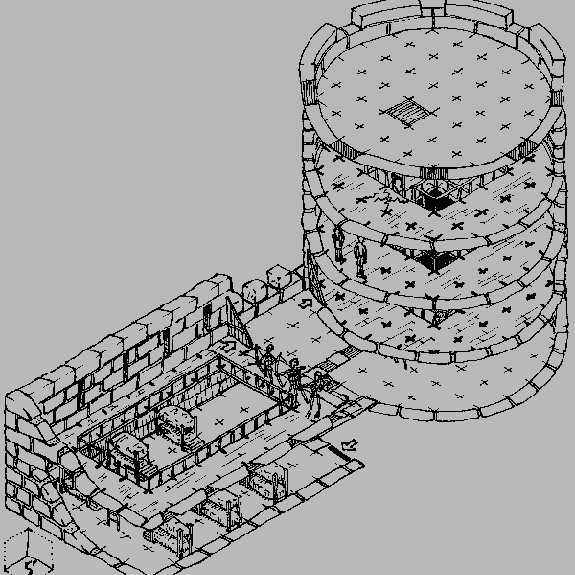
Because it's a three level dungeon. I'm looking at the key here. There are 82 rooms with keys. And I would, I would say that you explored maybe half to two thirds of them.
Um, and you got what you wanted to out of the dungeon. But like for two guys with jobs and families and, and commitments, is that too much?
[00:06:13] Speaker A: Probably in high school I would have loved. I didn't play D and D in high school, but if I played D and D in high school, you know, like on a Saturday when you'd go over to your friend's house and be there for like 10 hours, we had.
[00:06:27] Speaker B: Lots of half days that a buddy of mine lived like right next to our high school and we would like have a day on Friday and we would stay there till Saturday at like 3:00am um, it was awesome.
[00:06:37] Speaker A: Yeah. When I was doing that with friends, I would have devoured this entire dungeon in a session. So it not being right for two adult men in their 40s slash 30s.
Um, doesn't mean it's not right for, for anyone.
I would have loved 82 rooms of fun in a 10 hour session. And this, this dungeon would have been so super great, but it was too intricate and we had to span it across four sessions over the course of like two and a half, if not three months.
[00:07:12] Speaker B: Yeah.
[00:07:12] Speaker A: Which diluted like. What was that treasure? Oh, what was this amber liquid again? Oh, uh, what was this? What did this key go to?
[00:07:18] Speaker B: And I want to compliment this game because it is this, this module is really fantastically interconnected. Pretty much every character that's there makes sense. Every key that you find has a place where it goes like a Resident Evil game.
Um, there are solutions to treas that are in other rooms. Like no shade at all to the way that this module is written. When I say that five and a half, I'm talking about our experience with it, which was perfunctory and we kind of Owed this game, this, this module something better or it would have been a better fit for another group that meets every Friday or something like that.
[00:07:59] Speaker A: It's fair. I did enjoy exploring a larger dungeon than we usually do.
Um, and you're right, it is super interconnected. Again, if you're listening and you play in 10 hour sessions, first of all, I hate you.
Because I'm jealous.
[00:08:13] Speaker B: Yeah.
[00:08:14] Speaker A: But second of all, you would. This dungeon is great.
You would love it.
[00:08:18] Speaker B: Or if you play regularly, if you could, if you have a weekly game, play this dungeon. For sure.
[00:08:23] Speaker A: Yep. Again, I hate you. But yes, but yes, play this. Um, don't mind my jealousy.
Uh, I wish a bigger dungeon was a lot of fun. I wish we'd found like a 40 room dungeon.
[00:08:36] Speaker B: I agree.
[00:08:36] Speaker A: I.
[00:08:37] Speaker B: One thing about our hex dungeons, which we loved so much, is that I think the formula, it was a good formula, but it was a formula, you know what I mean? Like, you knew, looking at the size of the hex, you knew how big that dungeon was when you were exploring this manor. You had no idea whether there'd be a room over there or not. You know what I mean? And like, maybe that's something that hex dungeons lose a little bit, um, in comparison to traditional dungeons. But, like, I like the sense of, like, I genuinely don't know how deep this labyrinth is going to go.
[00:09:11] Speaker A: What percentage of this dungeon did I explore? Is there any way to keep track of that, um, gut feel? 50.
[00:09:19] Speaker B: Let me see here. I think it's a little bit more than 50. Um, yeah, I think probably in the 50% zone, now that I'm looking at it, because you explored about what looks like, I'd say 1/3 to 2 to 2/3 of each floor. So I would say on average around 50 is a good way to think about it.
[00:09:42] Speaker A: So feedback, feedback on me. How did I approach this as a player? Like, were you annoyed by. You use the word perfunctory and I'm fascinated by that.
What did you mean by perfunctory?
[00:09:57] Speaker B: I think that this. We had a time that we could describe as having done a dungeon crawl. Um, you were listening at doors, you were interacting with items, you were engaged.
That being said, I don't think that you made like too many fascinating decisions, not that you should have. I don't think you made too many stupid decisions, like your head was in the game. And I really. That's one thing about this session that really, um, stood out to me is that like, you, every time I described a room, you were like interacting with the fiction of it. You were playing a suspicious rogue trying to interact in ways that did not trigger magical effects, which was great.
Um, but it ended up feeling kind of dry overall. And that's not your job necessarily to, like, be this actor who infuses my game with chaos and joy and sadness and pain or whatever, but, like, it felt very rote, if that makes sense. Like, like you were following a process.
You were engaged, but it was a pro. It reminded me of that episode that you guys talked about, your tomb of horrors dwarven expedition, where you had your standard operating procedure of I open the door, I sweep it with a 10 foot pole. We make one step. You know, like, I feel like Vikram was, like, maybe one step away from doing that as he explored this dungeon.
[00:11:27] Speaker A: I mean, I think last session you were like, all right, from now on, I'm gonna assume that you're listening indoors and doing this and doing that. So. No, I think. I think. I think you're very right. And I'll say, emotionally, I had a hard time connecting with this, um, adventure. Again, not the way it was written, the way we played it. I emotionally didn't connect. I was looking for emotional connections. I don't know if you noticed that, but, like, I was in.
I was imagining. I kept imagining, like, is this what the story is? And at first, I'm imagining the story of, like, um, potential spoilers of, like, a husband who's a necromancer, which I think was the truth, and his wife that was horrified by that. And I'm like, those are the first notes I found. And then I forgot that. And then, you know, two and a half months later, we resumed, um, playing. And I'm misremembering, and I'm thinking, oh, the lady's a necromancer, and can we find her, like, in a coffin and maybe drive a stick through her heart? And then you're like, no, no, no, no. Reread, Reread these notes you found. Oh, yeah, yeah. I'm back to trying to save this lady from her abusive husband and, like, free her of this.
Of this cursed marriage with a necromancer. And then I start finding clues to, like, oh, maybe the lady's here. Maybe I can rescue her. And then turns out, no, no, no, no, she's a bad guy too.
[00:12:44] Speaker B: Like, is there anything more heartbreaking than a player, like, theorizing about something that's great? And I know I'm gonna disappoint them when they realize that that's not what it is?
[00:12:56] Speaker A: I Don't know. Like, for. Maybe if I were you, I. I would have been like, oh, yeah. But I was looking for that emotion.
[00:13:04] Speaker B: I know.
[00:13:05] Speaker A: And.
[00:13:05] Speaker B: And I'm wondering, is it, A, is it the job for a dungeon designer to be emotional? B, if not, is it my job as a gm, um, to imbue these things with an emotional connection besides the rote of dungeon crawling, which we both agree, like, the process of dungeon crawling, we're a fan of. It's fun, but, like, are we looking for something more that wasn't here? I don't know.
[00:13:32] Speaker A: Probably. And it's not fair to ask for it.
[00:13:34] Speaker B: Like, no.
[00:13:34] Speaker A: Temple of a Thousand Swords. There was no emotional Hook. There was no one I was trying to rescue.
Um, gosh, Ruined Asylum of Olgareth by you. There was no, like, emotional hook. No one I was trying to, like, help or rescue. Except for my professional back home where I was trying to.
[00:13:52] Speaker B: But you engaged with the. With the troglodytes in that one. And you.
You found an emotion to act on in that one as you decided not to be a colonial imperialist and steal their crap. And I would say in Temple, um, of a Thousand Swords, like, you got made fun of by the merfolk. You got in a scrap with the duck people. I think there is something there. Maybe this dungeon didn't have enough.
It seemed like the only people you could talk to were, like, bandits and gang members who are kind of a holes. Like, there are factions in this dungeon, but I can't see you ever emotionally deciding to side with one of them. You know what I mean?
[00:14:34] Speaker A: Yeah. My only friend was that silent little homunculus that sold me crap that was thrown out of Will.
[00:14:39] Speaker B: Yeah. Yeah. Which is, like, great. Like, all those little vignettes are awesome. But it might be missing some sort of secret sauce that keeps it, at least for us, from becoming one of the greats. It sounds like we're down on it. Like, I. Again, I think this is a well designed dungeon, but maybe just not to our tastes and our schedules.
[00:14:57] Speaker A: Yeah, we keep emphasizing too, like, the art was really good. I thought the, uh, assume. Was the map yours or was the map from the dungeon.
[00:15:07] Speaker B: Uh, the map on roll 20 that we did.
[00:15:08] Speaker A: Yes, that.
[00:15:09] Speaker B: I made that. But yeah, I mean, it's from the dungeon, but it came. It came with the handouts for all the notes and stuff like that. Like it. The, um, the PDF is great. It has great art in it too, as you'll see dusty once you take a look at it. So, like, it's Easy to reference too. Like, every time I had to, like, flip a page, I'm like, oh, I can click here for, uh, the wine room or whatever. So, again, competently made. We had a competent time with it.
I wish I was happier with it, but.
[00:15:43] Speaker A: What else is there to say about this?
[00:15:47] Speaker B: Um, what did you think of my rules? I guess we can talk about the, the tan hack a little bit.
I caught you being confused on the roll high, roll low plus 1 minus 1. Because the black hack is a roll low system.
And when you're fighting something with larger hit dice than you, you're adding. But if you're using a magic sword, you're subtracting.
So I think the tan hack might need some work.
Um, or maybe it's not the perfect one size fits all system for dungeon crawling. To my taste, that I wanted it to be. But I liked certain things. Like, I liked my dungeoneering die, which is not something I invented, but it's like the hazard die that you might see that, um, in other old school games. And I liked, um, how easy it was to just rule something to say, yeah, ah, roll in for this, roll con for this. And it was, it was pretty quick to do that.
I think this would be more successful at a real table, but I don't know. I want you to let loose on the tan hack and give me your honest feedback on that.
[00:16:56] Speaker A: I would find it easier if I was adding to the target number instead of to the rolls.
[00:17:01] Speaker B: Interesting.
[00:17:04] Speaker A: Subtracting target number, I guess. Yeah. If I moving the target, I find conceptually easier.
Like, But Scarlet Heroes does the same thing. Like, you add their AC to your role. So it's, it's not insurmountable. I just.
[00:17:20] Speaker B: There's a little bit of friction there one way or another.
[00:17:23] Speaker A: Yeah. Yeah. I'm not sure how to solve it. Several sessions of the tanak. I think it'd be good. I really enjoyed the magic system. I really enjoyed the dungeoneering rules. I enjoyed the usage die on the light sources and the food.
Uh, food, by the way, like, I like how unpredictable it is.
Food in my first couple forays into the dungeon were a real obstacle. You kept rolling food and I kept rolling low on the usage die. And like, I kept running out of food. Yeah. But this last session, food didn't even come up.
[00:17:52] Speaker B: Yeah.
[00:17:53] Speaker A: And, uh, you kept rolling light sources and I kept rolling well on the light sources.
I like how unpredictable that is though. I get. I enjoyed dungeoneering.
Um, I really like the inventory system. Like, you caught me repeatedly having to make Trade off decisions. I left a hacksaw upstairs a couple sessions ago.
I had to repeatedly like leave stuff behind or not pick things up. Like I didn't pick up the Silver Bell because I didn't have any inventory slots. I like, it's not so finicky as encumbrance where different objects weigh different things. Like that's too finicky.
[00:18:31] Speaker B: Yeah.
[00:18:31] Speaker A: But I like making trade off decisions about how much I can carry.
[00:18:35] Speaker B: Yeah. And just for the listeners, um, benefit the encumbrance rules, feel free to steal. I didn't invent this. Um, you can carry a number of items equal to your strength score and then if you carry more than that for whatever reason, you're impaired somehow. And small items like all, all of your keys that you find in the dungeon, those don't take a slot thing, uh, of matches doesn't take a slot. But like anything, you know, specifically large enough to make note of like all your weapons, all your armor. Anything interesting you find just takes a slot.
I'm very proud of all the little bits and bobs. I like the way that we have. I like the way the magic system works, which I kind of designed from scratch with the help of nave of just like nobody prepares spells, nobody likes preparing spells.
You just know the spells and you can cast them. And each spell is a one sentence description. So I think there are successes in there. But yeah, I think it'll take a little bit of learning. I'm planning to use the system for my next campaign starting in about a month.
So I'm hoping with repeated sessions and in like a hex crawl where they can learn different parts of the system that um, that people will really become familiar with it in a good way, I think.
[00:19:52] Speaker A: Don't confuse me not being good at roll low with roll low being bad.
I think if you're playing this in person, get like a big honking, you know, D8 or something.
And the, the delta between the hit die of your players and the hit die of whatever monster they're fighting.
Like just flip over the D8 to reflect that number.
That way they can just glance down and know what they're adding each time.
Um, I think that would help. Like you could, you could. There's a bunch of things you could do at the table physically.
One of the things I like about index card rpg and I don't actually like that much about it, but I love that each. Like in this room everything is D.C. whatever, in this other room everything. And I like that because you can get a big honking D20 and just flip it over to that number and now everyone knows what they're rolling.
Some something like that at your table would be helpful.
[00:20:48] Speaker B: Yeah. If I was doing this physically for every creature, like if you're fighting an orc that was hit die 5 I could just put a little thing on the outside of my screen that just says orc HD5 and everybody knows there's no confusion.
[00:21:00] Speaker A: So.
[00:21:01] Speaker B: Yeah. And anything, anything that involves digital um, playing and virtual tabletops. It's a lot of juggling of windows, it's a lot of typing of formulas into roll 20.
So I think that there's going to be kind of pain points that you didn't see coming with virtual tabletops too. Sometimes they're great for some things, but for other things maybe they're a little overkill.
[00:21:25] Speaker A: Yep. So lessons learned.
I'd say one, um, even if you read a dungeon and are inspired by it and think it's really fun, I think choose you have a limited number of sessions in your life, probably not to be macabre, and uh, choose carefully curate a pre written dungeon that works for your group. This is a wonderful dungeon that would work great for a certain type of player and a certain type of group, but not for us and could have made different choices.
[00:21:55] Speaker B: Lesson learned. Number two, have an emotional hook for your game.
I think if you're running a pre written adventure, maybe you can't add those in or maybe if it's part of a bigger campaign you can say, hey, you know the mayor's daughter that Tim had a crush on, she's trapped in the dungeon. Now Tim has a reason to go explore the dungeon. So I think making a session your own and trying to find some, some heart in it, not only, you know, some dungeons have beauty and brains, but not all of them have heart, you know. So try and find something if you can that will um, give your players something emotional to bite into. If that's the uh, the proclivities that they have like Dusty has.
[00:22:39] Speaker A: And three, try stuff. Even though, um, we didn't, we learned so much from our failures. I think part of the magic of this show and this format and the lessons learned. We're not always incredibly complimentary the things that we play and we're usually very honest that hey, that's more about us and how we engage with it than it is the content itself.
But I really value having these varied experiences. Um, we can't just be small dungeon dungeon crawlers from now on because variety is the spice of life and a big dungeon was fun. And now I've learned a big dungeon's fun. Maybe half the size. Maybe make a few tweaks. Like, we learned a lot about our preferences, and ultimately, I did have a good time with this.
[00:23:24] Speaker B: Yeah. And I would recommend the adventure to anybody who, with some caveats about, hey, it's a big dungeon, you should have some, um, some time set aside for it. And what you said about variety being the spice of life is so true. You don't know where your limits are until you get close to them or hit. Hit the boundary. You know, people bowl with bumpers on all the time, and sometimes you order something new out of. I view this session as us going to the same burger place that we know and love. And me and you decided to get a chicken sandwich this time, and we said, nah, chicken sandwich, not for us. Let's go to the. Let's get burgers next time. So you know what? You gotta make some. Make, uh, some mistakes. But that's what the show is about, and we love it.
[00:24:10] Speaker A: Awesome. Thank you for listening.
People call them reviews, postmortems, retrospectives.
We call them lessons learned, and we're sharing ours with you.