[00:00:00] Speaker A: RPG Lessons Learned. When the game is over, when your players are gone, that's when lessons are learned.
Find us online at rpgllpodcast.com email
[email protected] and find us on BlueSkyPGL.
[00:00:22] Speaker B: Hi.
[00:00:23] Speaker A: Welcome to RPG Lessons Learned, the show where you can learn from our mistakes. I'm Dusty. With me, as always, is Tanner. Hi, Tanner.
[00:00:31] Speaker B: Hail and well met, Dusty.
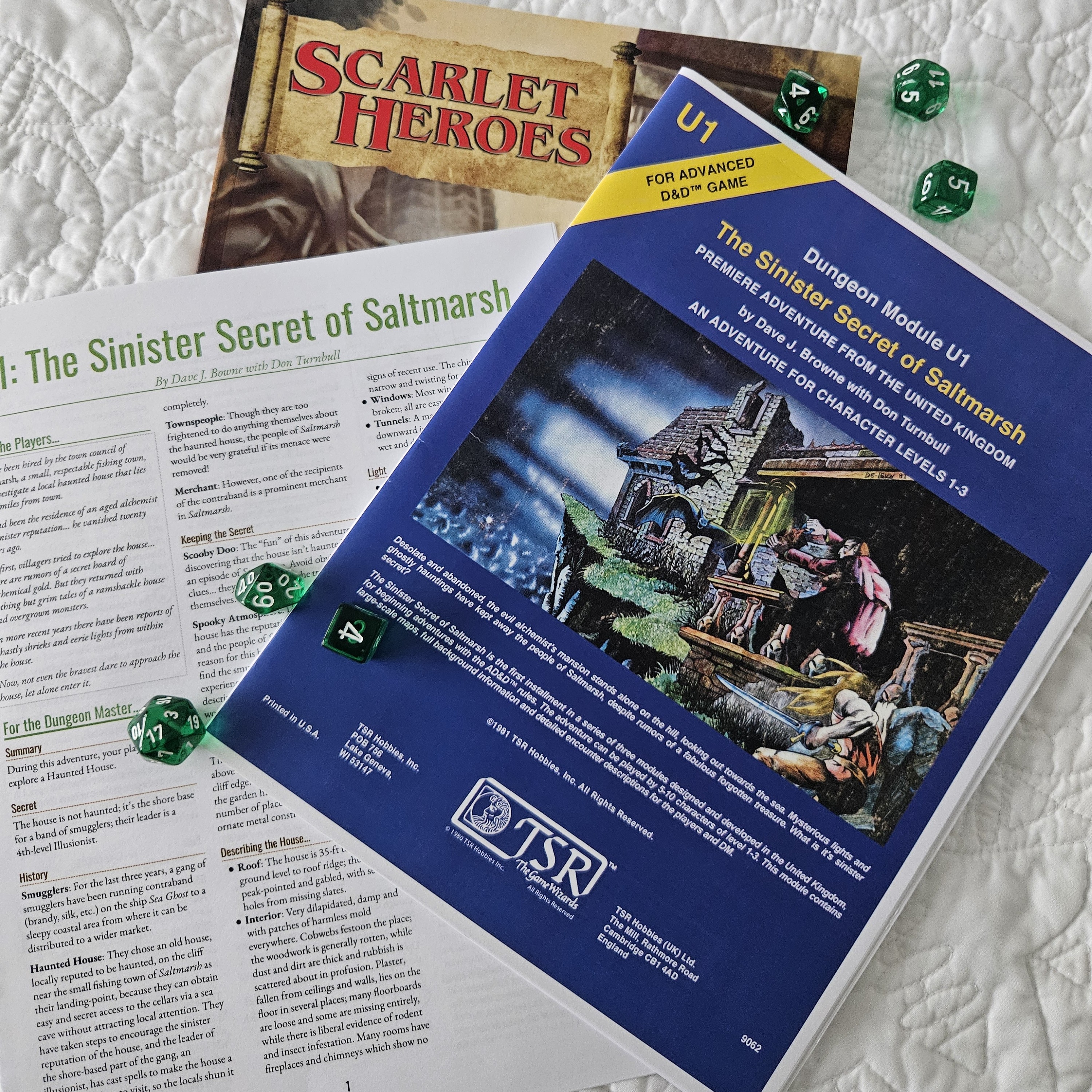
[00:00:33] Speaker A: And we have literally, less than a minute ago, finished a gaming session where I ran the second half of the Sinister Secret of Saltmarsh for you. That classic adventure by Dave J.
Brown. I think I said Brown last time. It looks like it's actually Bounty and Don Turnbull. So, yes.
Shall we start right away with numeric ratings?
[00:01:00] Speaker B: Yeah, I want to hear from you first.
Oh, we should start actually, by warning. We're going to spoil the whole adventure at this point. Yeah, it actually is Brown.
[00:01:09] Speaker A: Never mind. It is. It is Dave J. Brown. And yes, we will spoil the adventure.
I plan on thoroughly discussing the Sinister Secret Assault Marsh and its two sequels, so for GM's ears only.
All right, so, first of all, my numeric rating. Um, I didn't feel as good about this one. I think it's on me.
I was going through the motions of, like, reading the module box text and, like, running the combats and doing the bookkeeping, and I was kind of caught up in making sure I ran the Sinister Secret of Saltmarsh. I feel like last time I was a little more energetic and, dare I say, performative.
[00:01:45] Speaker B: Yeah.
[00:01:46] Speaker A: And this time I kind of fell into the trap of just, just, just running the module and not running a game.
So I didn't feel great about that. I kind of caught myself. I tried to improve in the last half hour, hour or so, but I caught myself falling into that trap. So my numeric rating. Did I already say it?
[00:02:06] Speaker B: No, you didn't.
[00:02:07] Speaker A: I'd give it a six. I feel better than average about it. I might go six and a half. Seven.
[00:02:13] Speaker B: I'll give you a seven. I agree that it was a little transactional, I guess is maybe the way I describe it in the first half. Um, and I wonder how much of that is on you and how much of that is on the adventure.
[00:02:26] Speaker A: Actually, it's me.
[00:02:28] Speaker B: I don't know. There was a. There was a lot of rooms where there was just nothing going on.
[00:02:33] Speaker A: Yeah. Well, do you. I don't know if you remember this. When I first told you I was going to run this, I was like, it's kind of an adventure where nothing happens and, and like, yeah, dude, I cut out rooms where there's nothing.
[00:02:45] Speaker B: Yeah, I understand the.
Well, I guess let's. I'll give my rating. Uh, I'll give it a seven. I think it is a good time. I think it was very much like the first half of this session was like a 5, and then the last section of it was like an 8 or 9 to me. So that's kind of where I, where I ended up. I basically ended up exploring all of the upstairs, which.
Man, you could cut the upstairs from this adventure.
It was cool running into the guy who was. What was his name? Ned, who was. I still don't quite understand that plan. But he was basically a secret trader who would. Who was. I found tied up. And he worked with me until I, I, uh, want to step too far and then he wanted to kill me.
That stuff is all cool and I like that. But besides the random encounters and a couple of like, okay pieces of treasure, there's really not much going on upstairs, is there?
[00:03:46] Speaker A: So in that room where it had the best view of the sea outside.
[00:03:51] Speaker B: Yeah.
[00:03:51] Speaker A: If you had more closely examined the window, I don't know what would move you to do that. I made a luck roll to see if you noticed stuff and you didn't. I don't know if you noticed. I made a couple luck rolls and like, didn't tell you why.
[00:04:01] Speaker B: That's which I'm fine with.
[00:04:02] Speaker A: Yep, there was some, like, scratches in the windowsill and like a, like a hook in the window sill where that lantern you found, that bullseye lantern with the hood, the movable hood, uh, and
[00:04:16] Speaker B: signal ships or whatever.
[00:04:18] Speaker A: And the sheet you found with the letters of the Alphabet and the random dots that was like Morse code.
[00:04:23] Speaker B: Gotcha. So, yeah, basically the story of this adventure is that the so called sinister secret was that a group of smugglers were using this house and had a, uh, magic user who enchanted the house with illusions to make it seem haunted to keep the townsfolk away.
[00:04:40] Speaker A: The ultimate spoiler for this adventure is when I read the whole thing a couple times and I told Susan, this is a Scooby Doo adventure.
[00:04:48] Speaker B: I wrote this. I wrote Scooby Doo ass adventure in my notes, which is kind of awesome. I don't, I don't hate that. Especially for a low level adventure. I think that's like, totally fine. But it is so Scooby Doo.
It really is Haunted house that's not actually haunted.
Like, guy who. It was, it was old, uh, Mr. Jenkins, the caretaker the whole time. Like, it was, it was a Very civil, urbane conspiracy that was, like, very low stakes, even though people were willing to kill each other over it. I. That kind of stuff does work on me at low levels, and I. I can't help but be charmed by it, you know? But it is. It's a Scooby Doo,
[00:05:33] Speaker A: which we had fun with.
[00:05:35] Speaker B: Yeah, no, I had fun with it.
[00:05:37] Speaker A: I'm glad I read. It's a haunted house adventure that turns out to be like, Old Man Jenkins makes. It is making the house seem haunted because it's a perfect place to smuggle stuff into town from.
[00:05:47] Speaker B: Yeah. And they weren't even, like. It wasn't even nefarious smuggling. It was just, like, food and whiskey and cloth.
Is it nefarious?
[00:05:56] Speaker A: Yes, it is. So there is more to this adventure. Not even the sequels to this adventure. There is a whole part that takes place on the Sea Ghost, which is the ship that's actually doing the smuggling.
[00:06:11] Speaker B: Okay.
[00:06:12] Speaker A: I, uh, didn't find that particularly interesting.
But if you were to get on the Sea Ghost, which you would have to, like, wait around and wait for it to come into port and, like, row out to it and convince them.
[00:06:24] Speaker B: It just.
[00:06:24] Speaker A: It was a lot of asinine stuff. But if you were to get on the Seagulls, what you would ultimately discover is what they had just unloaded when you walked in were, like, luxury goods that Gottfried. And by the way, I made up the name Godfrey that a merchant in town was gonna, like, make a profit on and not pay taxes and duties. That's what they had just unloaded.
What they had just loaded was a bunch of weapons. These guys are arms dealers, and they are in the process of arming. I'm gonna give away the sequel adventures.
Let's see. Let me go to my summary, where I've summarized the sequel adventures.
Uh, the sequel adventures to this are U2, danger at Dunwater, and U3, the final enemy.
Ultimately, um, arms are being run out to lizardmen, which you find in Danger at Dunwater. And those lizardmen are in turn, in turn arming Sahagin.
And those Sahagin are ma. Are massing arms and armor and weaponry because they plan to attack salt marsh and wipe out all the humans in salt marsh.
[00:07:39] Speaker B: I see.
Okay, well, I don't hate that. Then as a hook for those other adventures, I. I agree with you. It seems asinine to get the players to want to take those extra steps to get involved in the Sea Ghost.
Um, but I don't hate that as, like, an arc for a series.
It seems kind of cool.
[00:08:00] Speaker A: Yeah. These British people did a great job writing these adventures.
[00:08:04] Speaker B: Yeah. Do you want to talk about some more, um, patterns I noticed besides Scooby Doo in this adventure.
[00:08:11] Speaker A: Uh, in the adventure or in my running of the adventure?
[00:08:14] Speaker B: In the adventure.
[00:08:15] Speaker A: Okay.
[00:08:15] Speaker B: This is the most secret drawers I've ever per square foot.
Yeah. Like, once I got to the point where I found one secret drawer I just told. I'm like, I checked the false bottom. I checked the like, uh, which I like for. Again, for a smuggler adventure. And it kind of tricks you into, like, being like, oh, this is kind of like. But they were all on the. The wizards stuff, weren't they?
[00:08:39] Speaker A: Oh, uh, there's stuff you didn't find. There was stuff under Sanbelay's bed that you didn't find that included a bunch of platinum pieces.
[00:08:48] Speaker B: Understood. Okay. So I. I like that there is, like, stuff kind of hidden in all sorts of stupid places. But yeah, I. I made note of that. Um, I'm like, oh, my God. Another false bottom. Another fake compartment of the straw. But now that I know it is smuggler adventure again, I kind of like it fair. Were there keys to any of these locked doors anywhere?
[00:09:10] Speaker A: They were not there.
[00:09:11] Speaker B: Okay. So that was like driving. I feel like I could have stumbled across the whole thing in the first adventure, but I thought that a door was, like, locked. Locked and not just like, I could get into it with my crowbar at any time.
[00:09:26] Speaker A: You know, I like a quote that I heard. I forget who said it about od. Original Dungeons and Dragons, where essentially it was a game of doors.
[00:09:36] Speaker B: Yes.
[00:09:37] Speaker A: And this. This, uh, also is a lot of early dungeons were a game of doors. There really is no key, but you just need a thief who can pick locks or a fighter who can, like, open the door.
[00:09:49] Speaker B: I thought that for sure.
I think it would have been interesting. I don't know. This would have been like, rewriting the adventure. But, like, if, um, Ned had, like, a key ring on him or something, he was part of these guys. But that would have given away very early, like, kind of what he was. So I don't. He probably had some sort of secret knock he could get in and out with or something.
[00:10:12] Speaker A: Dude, there are paragraphs about Ned, uh, and about role playing Ned and about. At what point does Ned betray you? At what point does he try to use his assassinate ability and assassinate one of you?
[00:10:22] Speaker B: I thought you ran him really well, by the way.
[00:10:24] Speaker A: I appreciate that. Did you. The moment when I said Ned almost says ah, something and then doesn't say Something when you were going to use the crowbar in the door, Ned was going to offer to pick the lock, and then he caught himself.
[00:10:35] Speaker B: Interesting. That's kind of fun. Does it say that in the adventure? Did you come up with it?
[00:10:39] Speaker A: No, I don't.
[00:10:40] Speaker B: I like that. That was cool. Um, I also liked the way that, like, I was suspicious of him, but I did trust him for the first, like, once.
Okay, can you explain what his scheme was? They. So he. He is the guy who signals the ships to come in, right? With or no.
[00:10:57] Speaker A: Okay, now. Now he. He is very little involved in the actual smuggling. He has no idea how the smuggling is happening. All that happened was. And again, I made up the name Godfrey. So if you're. If you're listening to this at home, I'm going to keep saying Godfrey to refer to the merchant in town who's benefiting from the smuggling.
[00:11:15] Speaker B: They didn't bother to give that guy a name.
[00:11:17] Speaker A: They didn't. In. In most old school adventures, they didn't name anyone because I guess they wanted you to be able to run it anywhere in any locale.
So if you're running it in Alsace Lorraine, you need German and French names. If you're running this in, like, you know, wherever you need, whatever names. So, no, they didn't name anyone.
Uh, they. They did name Ned, actually, and they named Sambalay, but they didn't name any of the townspeople. Anyway, Godfrey to my name for the crooked merchant.
Godfrey knew the town council was doing this because they're telegraphing it. They're, like, telling everyone in town, like, hey, we're. We're hiring adventurers to finally clear out that haunted house. Well, Godfrey knows the haunted house is where the smugglers work from. Ned has been to the outside of the haunted house to, like, load up a cart with, like, bolts of fine cloth and casks of brand or whiskey.
So Ned has been there, but Ned. And Ned knows the smugglers, but Ned has never been down in the house. Ned did not know they were in the cellar. Ned doesn't know about the signaling. Ned didn't know any of that. Godfrey planted him there specifically for you because he knew the town council.
In fact, you kind of threw a, uh, curveball to me when you left the house the first time. Yeah, because the adventure makes it clear that Godfrey brought him here. Godfrey hit him over the head to, like, give him a realistic bruise. Godfrey legit T tied him up.
[00:12:41] Speaker B: Okay, okay.
[00:12:43] Speaker A: Like, I mean, they're in on it. They're probably talking to each other while he's Tied him up. But God playing. By the way, crazy plan makes no sense.
[00:12:52] Speaker B: Again, kind of charmed by it though.
[00:12:54] Speaker A: But in my head, like when last session when you were like, I'm gonna leave and I'm like, uh, Ned's tied up upstairs.
I guess he's just gonna piss himself tonight.
[00:13:06] Speaker B: It would be kind of cool if, um, once Ned heard something, he would start making noise upstairs or something. That would be kind of a.
A thing that would make me make some decisions about where I would explore and stuff. Okay. That there is an explanation, albeit an insane one, but I will accept it.
[00:13:24] Speaker A: I, I really would love for you to read this adventure now.
[00:13:28] Speaker B: I should. Yeah.
[00:13:29] Speaker A: And see how I adapted it. Because it is so much longer, as we said last time, than what I paired it down to. And I want you to see the sheer number of empty rooms. And again, there is stuff that does happen on the ship that I just didn't even want to get into. Like you find a tied up water elf because the water elf is investing the Sahagin and that kind of ties you into the danger of Dunwater the sea. There is more stuff that happens, but I just, I just did not care about anything on the sea ghost. I just wanted to run the haunted house.
[00:14:05] Speaker B: Um, yeah, that's, that's interesting. I think, um, as an adventure, it did seem bloated. And I kind of want to talk about empty rooms a little bit dusty. You're not, uh, an exquisitely up to date modern gamer, but the video game Elden Ring, okay, was a big deal when it came out a couple years ago by the creators of Dark Souls and all that good stuff. And that game has a lot of exploration and kind of OSR tendencies sometimes. But one of the big things that people complained about with that game is that you would find so much stuff or like you would find a spot where something should be hidden and there was nothing there. Or you would find an item that looked like like, ooh, this is behind a waterfall. It's in a really cool spot. And it was kind of just like a nothing item, you know.
And I defend that choice as I defend the choice of empty rooms because I think discovery only works when there isn't always something to discover.
Like there has to be a chest with nothing in it. There has to be something to keep you on your toes and keep you interested to look in a chest. Obviously you don't want to have 15 empty rooms in, uh, a 20 room dungeon or whatever. But I do like that sometimes there is nothing to find because that does drive the uncertainty and the exploration forward. What do you think about that?
[00:15:31] Speaker A: I think that's right. But I think one of the things I like about our hex dungeons is it cuts down on that.
[00:15:40] Speaker B: Yes.
[00:15:41] Speaker A: It doesn't eliminate it.
And the hex dungeon worked its magic today. You couldn't find an obvious entrance into a place. You were like, there must be a secret door. And you searched harder. Which is the whole reason why, like, mapping makes a lot of sense. Like, I took that lesson away, as I told previously, from the, uh, the Secrets of Blackmoor, that documentary.
So I do like it some. But I feel the same way about empty rooms that I feel about red herrings in a mystery adventure. You can have way too many.
[00:16:11] Speaker B: That's definitely fair. And it seems like even whatever it was, I will say originally, as written, even after Dusty's editing, there were still like one or two extra empty rooms that I felt like were too much. So you can definitely go overboard. This is about the maximum amount of empty rooming I would want in your abridged version of Saltmarsh.
[00:16:35] Speaker A: I wish there were more illusions to make the house seem haunted. Yeah.
[00:16:39] Speaker B: Was there only two?
[00:16:41] Speaker A: There were the two magic mouth spells. And in the original adventure, there might be have been a third, but I don't think so. I think. I think in the original intro, there's only the two magic mouth spells. The one on the trapdoor and the one where you walk into that room
[00:16:53] Speaker B: would not have been awesome if he had, like, a cage with a parrot upstairs that would make like, ghost noises or something that would tie the pirate
[00:17:00] Speaker A: theme in with the haunted house theme.
[00:17:03] Speaker B: And it would be very Scooby Doo.
[00:17:05] Speaker A: But also, like, he's an illusionist, like, right. I. I wish there were some just visual ghostly illusions illusions in addition to the magic mouth spells.
[00:17:15] Speaker B: Well, I want to give you props for the way that you role played, um, the wizard, the. The illusionist, because he fought, I think, very intelligently in that. The moment I had my first turn with him and his lackeys, I came out ahead quite a bit. And he instantly cast invisibility, and he then instantly cast a wall of water separating himself and tried to escape. So, like, I liked your characterization. Like, he was doing all the right things. Scarlet heroes characters are just so powerful that they can kind of just tank that and get him anyway, you know, But I would.
I want to compliment you for playing him shrewdly, if not, like, intelligently.
[00:17:56] Speaker A: You know, I was surprised you didn't
[00:17:58] Speaker B: defy death to get through the wall Interesting. Yeah, I didn't even, you know what, uh, Defy Death to me is such a mechanic for, like, literal. I guess I don't see it in the same way of like, there's an obstacle I want to get through. It's more of like, this is a dead end for the adventure if I can't continue, or like, I need to. This is a save or die effect. I would like to defy death.
And also at that point, like, I was so convinced that I had broken up the smuggling ring so thoroughly, we could talk about that a little bit. So I guess it just didn't come to mind. I suppose, circling back to the Hex Crawl or the. The Hex Dungeon stuff, I want to talk about your procedure for investigation because a couple of times I did notice that you got caught up by, um, not describing the exits to the rooms.
[00:18:53] Speaker A: Yes.
[00:18:54] Speaker B: Or me not narrating specifically what room I was in and where I was going, or you not checking for random encounters at the right frequency.
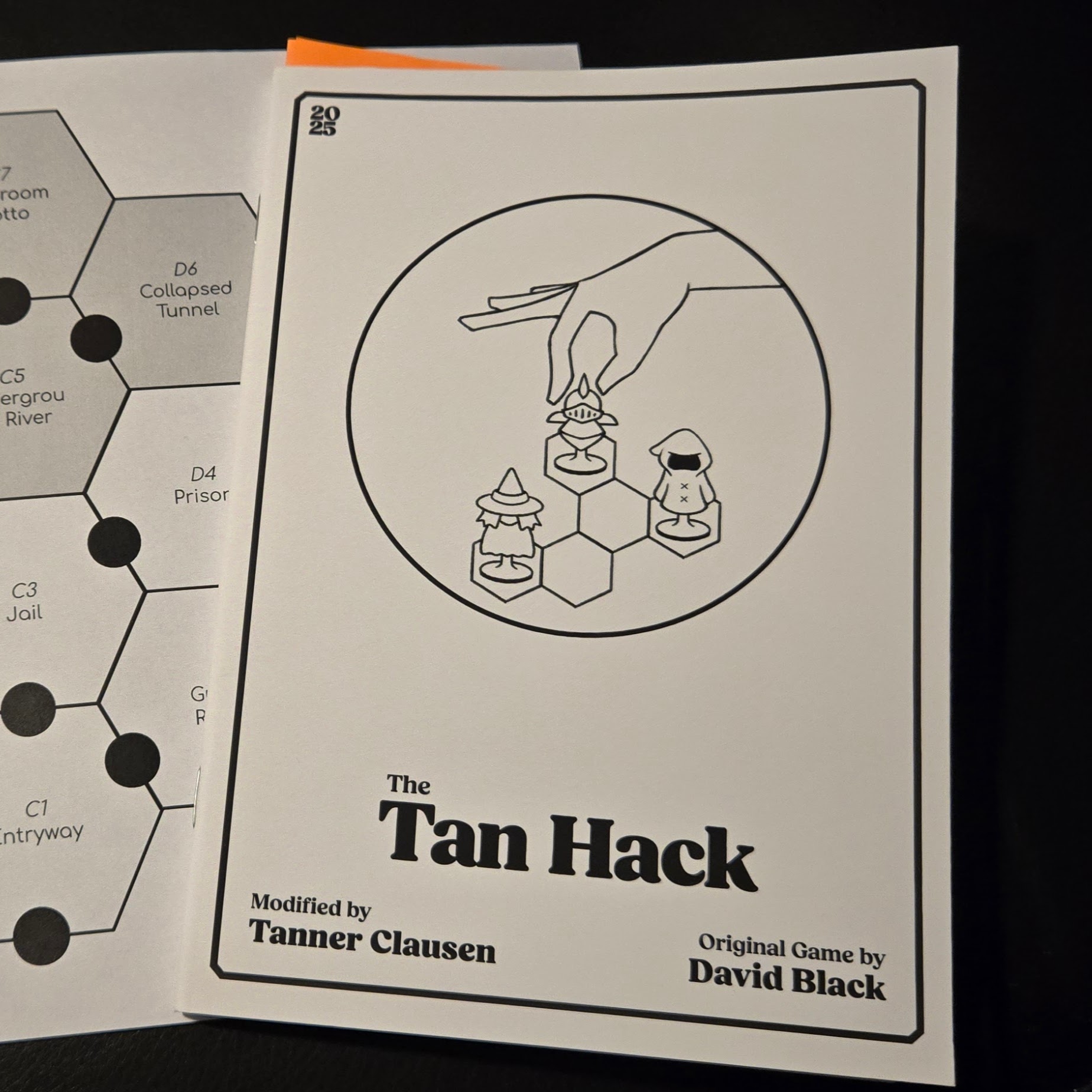
That would be something I think would be a constructive criticism of, like, have literally a list of procedures like these old school. I don't think Scarlet Heroes actually has one. But like, when I wrote the Tan hack and copied that from the Black hack and other stuff, like, I had a, uh, procedure that was like, go to room check for random encounters, describe room players, decide what they want to do, narrate the results, start over, like.
[00:19:30] Speaker A: Yep.
[00:19:31] Speaker B: Do you feel like this session would have been. Felt like even m more mechanical, or do you think it would have helped?
[00:19:37] Speaker A: It would have helped because part of what felt mechanical is when I break the illusion, be like, oh, hang on, let me roll random encounters real quick. Yeah. And like me saying that is not. But if, if I had it written, I don't know, in front of me on a sticky note or something where it's a reminder and I'm doing it every time. What would happen is I get caught up in like, yeah, you're in this room, you find this. All you want to get is clothes.
Um, yeah, that makes sense. Oh, wait, you're traversing rooms. Let me roll Random encounters.
[00:20:04] Speaker B: Yeah. M.
And that's kind of the idea of a procedure, right? Is that it is a step by step thing that makes sure that it's a checklist that you keep cycling through so that you don't overlook that stuff. But at the same time it can become very roach. And, um, you know, it's. I don't think it's a one size fits all, ah, solution. But I'm just Wondering if you felt the lack of it here.
[00:20:27] Speaker A: I need something there. So I. In my original holiday adventures document, which I've put out drafts of but haven't got anything close to a final release, I have a page for checking off 10 minute exploration turns and then I've got shaded columns where it's like, hey, your torches burn out. Hey, this happens. Hey, this happens. So I've got like a checklist where I can like take notes. The issue is I'm sitting here with um, a booklet for the adventure with all the hit, you know, hit points and check boxes. I've got a sheet of the Scarlet Heroes, um, reference cheat. Ah sheet that you made. I've got the map of this place on a separate piece of paper. So then I need like a fourth piece of paper floating around with like the checklist of all the turns and like me taking notes.
[00:21:22] Speaker B: Yeah.
[00:21:23] Speaker A: And just. It's a lot of paper to juggle. But having said that, I've already designed a worksheet to do exactly what you're talking about.
I mhm. Just need to like print it and have it handy.
[00:21:34] Speaker B: Yeah. And you might, you might figure out some stuff you want to change with it too. You know, you, you'd be testing it and stuff and be making your own procedures better.
[00:21:42] Speaker A: I think if I, if I somehow combined it with the Scarlet Heroes cheat
[00:21:46] Speaker B: sheet, I think that would be the. Or just even have it like double sided or something and have the um, checklist of exploration on one side and just have that open and then if you need to flip over and reference something, you do that for a second then you flip it back over.
That would be the type of thing that would be great on a Dungeon Master screen. But obviously we play remotely, so it'd be kind of silly if you set up a screen.
[00:22:14] Speaker A: Another thing that would have helped me thinking constructively for the future. We talked for a while. We caught up for a few minutes. We talked about things we purchased and then we just jumped right in.
I wish when we, when we started the first session I had that kind of box text to read about. Hey, the town council has hired you. You find yourself like. We had a, we had a couple moments to just spend a few sentences getting into the mood and like setting the scene. You and I were like, okay, mechanically you bought some things in town. Okay. And now you're back and what room are you going to? All right.
I wish I had figured out a way to like narrate just a little something about you coming back. What it looks like if I had done a little bit of narration to, like, set the mood.
I think it would have improved the whole first half for me as well, because I think.
[00:23:01] Speaker B: I think so, too. I think that's smart. Um, that could be totally something that you prepare between sessions. Like, uh, just write a paragraph, you know, last night or this morning, you know, whenever you have free time, read it, get yourself back in the mood, and that way you don't have to improvise it on the spot. But I remember we kind of had that. I don't want to say it's an issue because I think it is really minor, but I think it came up when we did the heist in Mutants and Masterminds. Do you remember that?
[00:23:34] Speaker A: Yes.
[00:23:34] Speaker B: One of the things we talked about was that you kind of. We kind of went straight into mechanics mode without, like, describing the physical space. And I think you have a tendency to do that.
So I think.
And again, this is. This is a constructive feedback. Oh, for sure. Yeah. So don't. Don't. Uh, dear listener, I'm not ragging on Dusty too hard, but I've noticed that seems to be a thing that's happened twice now. So I think, you know, giving yourself a little flavor text to get started would be great.
[00:24:04] Speaker A: I agree. And dear listener, you should know that I am having these conversations with Tanner to get better, and he does me no favors if he holds this feedback back.
[00:24:15] Speaker B: That's right.
[00:24:16] Speaker A: So, dear listener, please know that I am totally good with these conversations. No, uh, yeah, it is a habit that I do have. I think it is probably the number one way I could improve as a
[00:24:26] Speaker B: GM is think about the space more,
[00:24:29] Speaker A: maybe setting the scene and setting the mood.
[00:24:32] Speaker B: Yeah, that'd be interesting. I wonder if there. There could be something that you could run or play that would be, like, even extra helpful for that.
[00:24:42] Speaker A: I don't know. That's interesting, though.
[00:24:44] Speaker B: Maybe that Call of Cthulhu or something. Who knows?
[00:24:47] Speaker A: One of those systems that I hate that have the stupid dice with pictures on them.
[00:24:51] Speaker B: That's right.
[00:24:52] Speaker A: Yeah.
[00:24:52] Speaker B: Those ones that make you think about the fiction of the game. Yeah, those suck.
[00:24:56] Speaker A: Um, I like numbers.
[00:24:59] Speaker B: Um, Yeah, I have one other thing I want to talk about. Um, but I want to hear if there's anything else that. Any other thoughts that you have overarching about our experience?
[00:25:08] Speaker A: No, it was fun to adapt another adventure. Um, I don't plan to do that again anytime soon. I don't know what the next thing I'll run will be, but I think I'm going to write My own adventure. I think I generally do better at setting the scene and improvising and remembering all the things if I'm running something that I wrote.
[00:25:25] Speaker B: Yeah. Um, so thinking something osr ear.
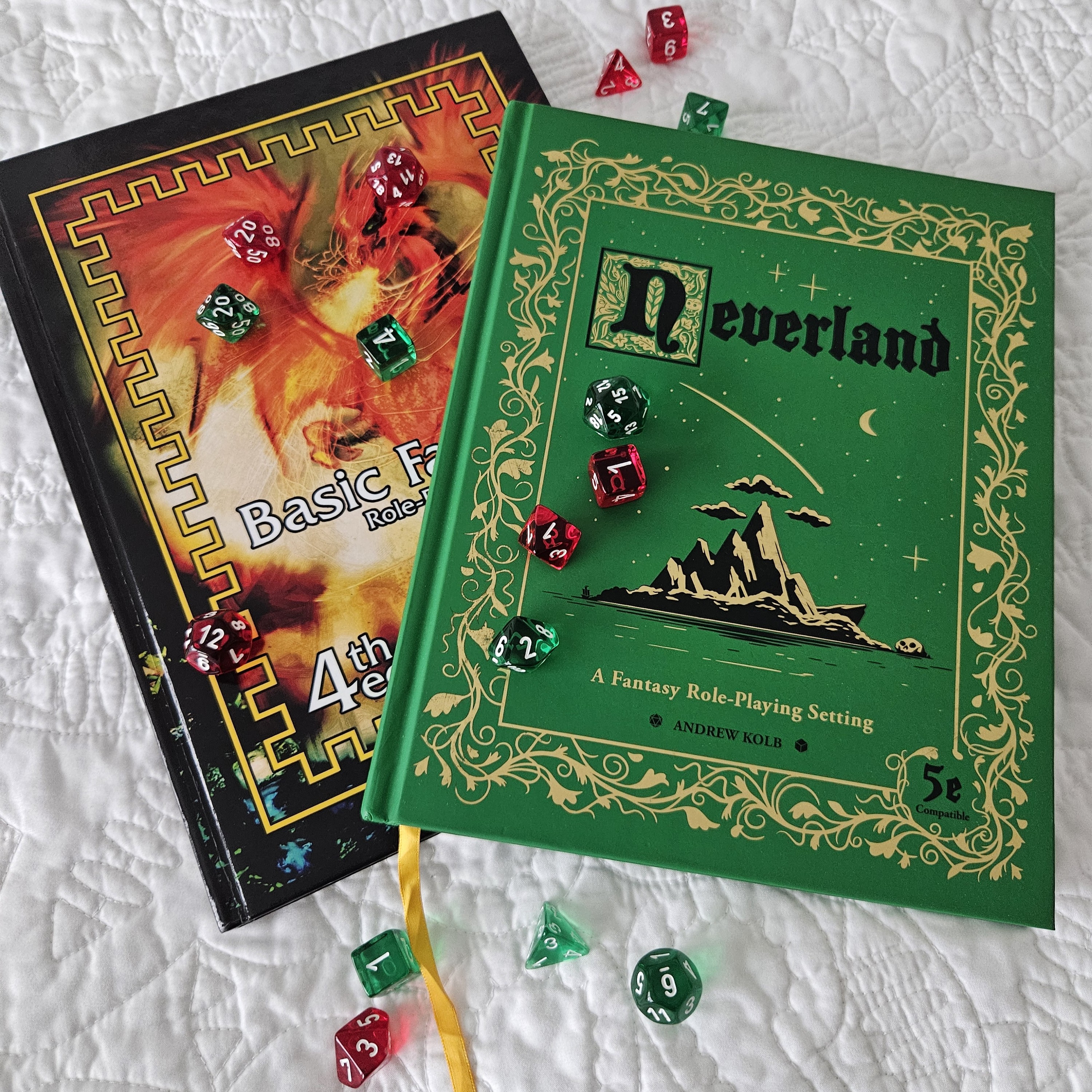
[00:25:30] Speaker A: I don't know. I think we just finished this. I have a Neverland game with. With Margo's friends Sunday.
[00:25:38] Speaker B: Okay.
[00:25:39] Speaker A: Um, I don't know what I got to think on what I feel like running.
[00:25:45] Speaker B: Well, I'm going to tag in and run some stuff for you for a while, so I want you to stew on it and make sure it's something that sounds fun for you.
[00:25:52] Speaker A: Sure. What was your thing you wanted to cover?
[00:25:54] Speaker B: I just wanted to say that there were some good OSR gaming moments in the back half of this adventure. Um, throwing a wad of chalk dust on a wizard who's about to turn invisible because I saw. I found his spell book, saw that he had the invisibility spell, I had chalk, I ground it up, and I'm like, if this wizard goes invisible, I'm going to chuck this at him. Were you pleased when I. When I did that?
[00:26:18] Speaker A: I was, yes. I hope that. Like that. And the Molotov cocktail that you dropped kind of down the stairs, more or less, shall we say?
[00:26:27] Speaker B: I did some crimes.
[00:26:28] Speaker A: Yeah, you did. Um, I was great with it. It kind of broke some encounters and it kept you from being in serious danger. But it's Scarlet Heroes where you are, quote, a whirlwind of violence anyway, so I found those to be, like, fun and satisfying. I hope you didn't think I was, quote, letting you get away with too much.
[00:26:49] Speaker B: No, I. That they were.
I was trying to use my player skill to overcome what could be tough encounters.
Um, and, yeah, there was some smugglers coming up, uh, the stairs with some very flammable whiskey spirits and casks, and I threw a Molotov cocktail at them and lit them up and waited 20 minutes for their friends to come up. And I threw another barrel of whiskey down and yeah, I mean, like, that was. That was awesome. Like, that felt like some real, like, real hood rat type adventurer, um, scrappy play and I. And it's nice that there's room for that in Scarlet Heroes, given how invincible the players kind of are. And I think as a cleric, I might be even, like, a little bit more invincible than the average Scarlet Heroes character. So, like, I guess don't judge Scarlet Heroes Dusty too harshly based on the fact that I got nary a scratch on me when I had a, uh, ring of protection. And plus one, I didn't have the ring of protection on, but I had plus one full plate after like the third room I investigated. Turns out that's pretty good.
Turns out it is first or second level, so. Yeah, no, but that. That last. Those last couple encounters were a hoot. And, um, I almost got done in by yellow mold.
[00:28:09] Speaker A: I would love for you to read Scarlet Heroes in a future episode. Tell me if you feel like the pared down, summarized version that I ran for you had all the flavor that you would have wanted from the original. Sorry, I said Scarlet Heroes. I meant Sinister Secret Saltmarsh. If you feel like that the pared down version I ran for you had all the flavor of the Sinister Secret of Salt Marsh.
[00:28:32] Speaker B: Yeah, I definitely plan on reading it in the interim. I really like that.
Um, yeah, uh, that is basically all I've got. I had a good time overall. Like I said, maybe the first half of the session was a little bit slower than the second half, but, um, I can now say I've played through a classic DND adventure, albeit the abridged version. And I. I had a hoot.
[00:28:56] Speaker A: So.
[00:28:56] Speaker B: Thank you, Dusty.
[00:28:57] Speaker A: So, lessons learned. Do a good job setting the scene when you're running the second session of the same adventure. You might not have introductory box text to start a second session off with, like you do when you start the whole adventure, but you can always mix some up to set the scene.
Um, two, don't get so lost in the sauce on the mechanics of the game that you forget to, like, set the scene and tell a little story or let the story unfold with the player's senses visually. Smells, sounds, etc.
Uh, and I think those are the key lessons. Oh, well, you know, finally, don't feed. Don't be afraid to engage with old dungeons, even if it is, quote, a Scooby Doo ass dungeon.
It can be a lot of fun to see the original tropes, um, or actually not even tropes. The original adventures, where all the tropes came from.
Yeah.
[00:29:55] Speaker B: And then I'll just tack on a rare fourth lesson learned here. Um, if your game derives strength from following a procedure as the gm, make sure you have that in front of you. And you can, uh, cycle through that and make sure that, um, everything flows, uh, from A to B to C. And it'll help keep you in the game, and it'll help, uh, keep the game running perfect.
[00:30:19] Speaker A: Thank you for listening. People call them reviews, postmortems, retrospectives.
We call them lessons learned, and we're sharing ours with you.