[00:00:00] Speaker A: RPG Lessons Learned. When the game is over, when your players are gone, that's when lessons are learned.
Find us
[email protected].
email us at rpgllpodcastmail.com and find us on BlueSkyPGL.
[00:00:23] Speaker B: Hi, welcome to RPG Lessons Learned, the show where you can learn from our mistakes. I'm Dusty and. And with me, as always, is Tanner. Hi, Tanner.
[00:00:32] Speaker C: Hey, Dusty. How you been, man?
[00:00:34] Speaker B: I'm good. It's been a while since we've gotten together. We did a brief catch up a couple of weeks ago, uh, but just now we finally finished running our first game. For months and months. I don't care to try to calculate how long it's been.
[00:00:49] Speaker C: Too long. Too long.
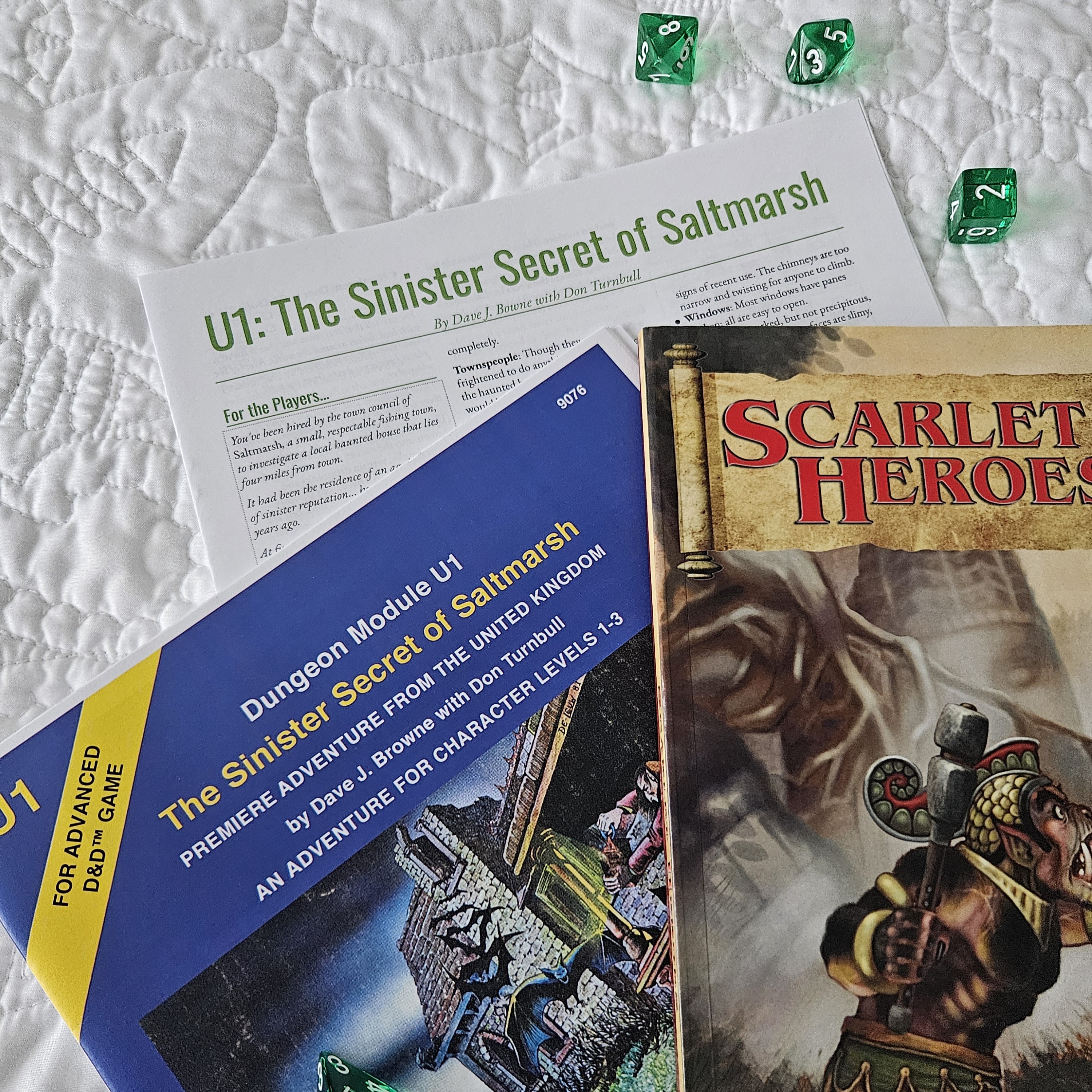
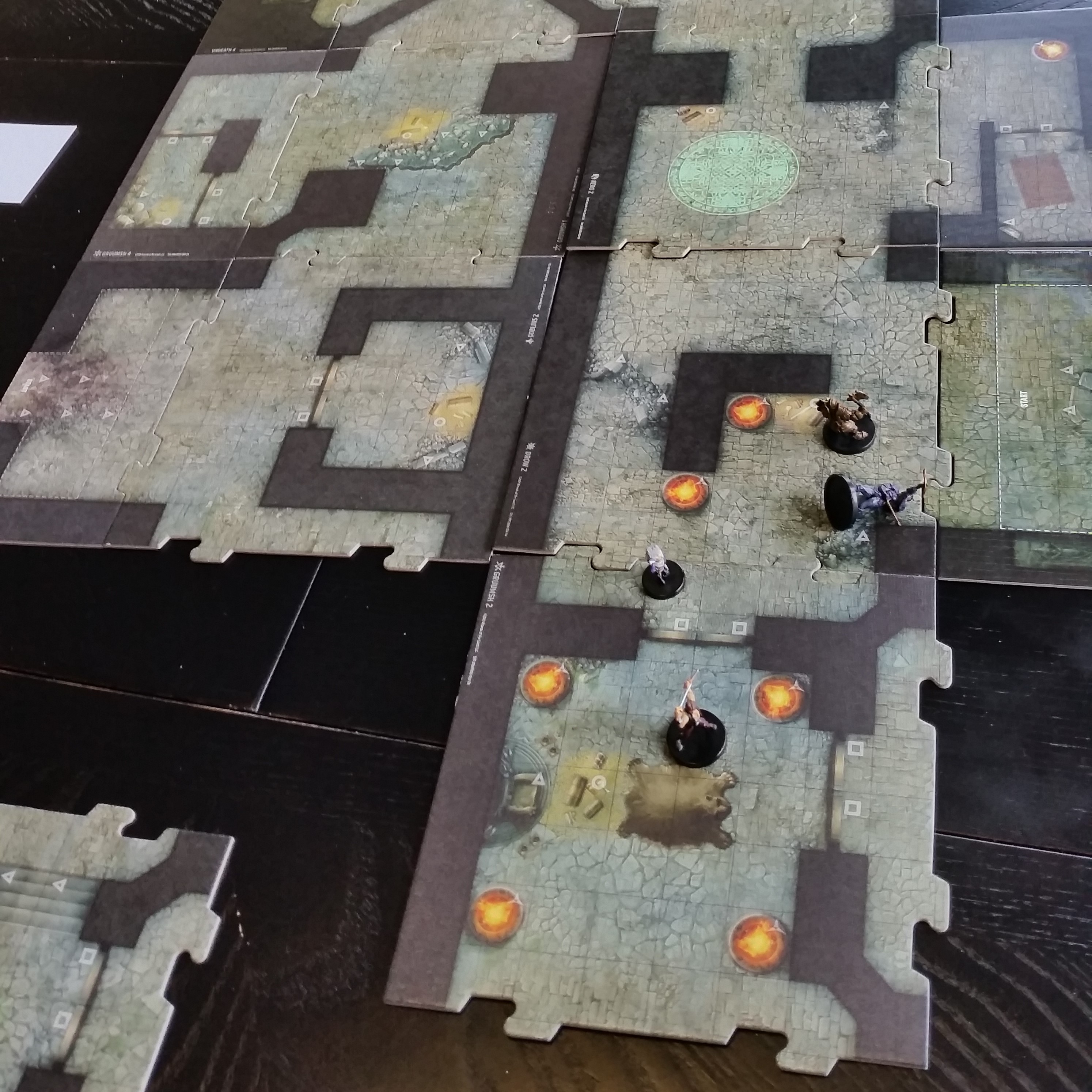
[00:00:51] Speaker B: Too long indeed. Uh, and we're playing again. Scarlet Heroes, the system that you introduced me to that I absolutely love, that's specifically designed to let one hero crawl through a classic dungeon. And the classic dungeon that I am running for you is the Sinister Secret of Saltmarsh.
[00:01:11] Speaker C: Indeed. Yeah, but it's kind of Sinister Secret of Saltmarsh remastered by Dusty because you have, uh, you've turned it into a hex dungeon.
[00:01:20] Speaker B: I have as I am want to do.
Uh, it helps me feel like the adventure is a little more focused, I think, for one on one play, you know, not dealing with roll 20 and the map and regularly sized rooms. I think it just streamlines everything for me. But I'm trying really hard to leave the flavor of that classic, classic adventure container. What do you know about the history of the Sinister Secret of Saltmarsh as. As a document, as a product, not necessarily as a piece of D and D lore.
[00:01:50] Speaker C: Um, not much. I know that it was a very early. It was a basic adventure, right?
[00:01:57] Speaker B: It was.
[00:01:58] Speaker C: Is it a Zeb Cook classic?
[00:02:01] Speaker B: Oh, actually it's U1. Oh, no, it is for the advanced D and D game. So it is for AD&D. Uh, it is not Zeb Cook. It is in fact by Dave J. Brown and Don Turnbull. Famously, the Sinister Secret of Saltmarsh is the first adventure published by TSR uk. This is a British adventure.
[00:02:21] Speaker C: Oh, no wonder there was something off about it.
[00:02:24] Speaker B: Uh, for me as Dungeon Master, there are a lot of extra U's in words like color and armor.
[00:02:31] Speaker C: Yeah. Uh, it was cool though. I liked it so far. The flavor definitely came through. I think having not read the original, obviously this feels like a classic D and D adventure. So whatever you did to it to transform it into its current form, I would say you kept a lot of the flavor and a lot of the essence of it. But, uh, a little bit ago you were saying it's a 32 page adventure, not with. With maps and stuff. And you've cut it down to eight pages. Eight pages, yeah, you've cut it down too. So my hypothesis is that you love editing things. Um, not the podcast, because I do that mostly, but editing documents for clarity and purpose. And I think that you. That's like part of your GM fun.
[00:03:17] Speaker B: I do love editing things, but I also have the benefit of masters like Brad Kerr who use very few words to create very flavorful dungeons, for sure. And, um, certainly Mr. Brown and Mr. Turnbull would not have had, you know, the example of years and years of evolution on a dungeon crawl and how many words you should write to be evocative but still accessible. So I think there's a lot of overriding here.
But my God, these guys were pioneers, so don't take that as a criticism.
[00:03:51] Speaker C: No, totally. It's just different. The art form hadn't. It wasn't as sophisticated back then, I guess. Um, I also think if you ever go back and look at a lot of old, um, dungeon magazine adventures, a lot of those are very wordy, I think, to hit article size. Like they were getting paid by the word. A lot of these guys. That's my conspiracy theory. But yeah, the, um, the economy of writing is certainly, definitely praised these days. And sort of the OSR scene. But this isn't even osr. This is older than that. This is the original stuff. So. So was what was, I guess, the hardest part of editing something down? Was it like being like, this room doesn't matter, cutting it? Or is it like actually the pros trying to edit all that together?
[00:04:37] Speaker B: Um, a lot of it was easy to cut. Actually, it wasn't terribly hard to cut down. The hardest part for me is I say to myself, you know, hey, when I run the Sinister Secret Assault Marsh, my version, like when I ran the Veiled Society, my version, I really want, if you, Tanner, finish this adventure and read the classic adventure.
I want you to feel like you were just watching the extended versions of Lord of the Rings, but that you got all the key story beats from my version.
[00:05:08] Speaker C: Yeah. And I think that's a good, um, a noble quest, I suppose, because, I mean, there were still like plenty of empty rooms in this. Not in the sense of like there was nothing to see or do, but it didn't feel like you cut all the in between spaces and it was like a compressed down version. Like, it didn't feel like that. It felt like, yeah, I'm on the ground floor of a manor. There are seven major areas to kind of poke around through, and it didn't feel like there's. It doesn't feel like there's anything missing. To. To your credit, I would say thank you for that.
[00:05:39] Speaker B: Um, we should say we have just finished the first session, and you, Tanner, have not read the Sinister Secret of Salt Marsh. You've never played it, and you don't, in fact, know what the Sinister Secret of Saltmarsh is?
[00:05:54] Speaker C: No, I just went into a house that everyone says it was haunted, but there's just bugs in here so far.
[00:05:58] Speaker B: Dusty, do you have spoiler? Ah, warning for those at home. Although I don't want to spoil things for Tanner, since we still have roughly half the adventure to go. We'll do that next. Next session. Um, do you have any theories right now about what's going on? And those who are more familiar with the module can delight in your guesses.
[00:06:17] Speaker C: I have a vague understanding, through cultural osmosis, that I think this has something to do with reptiles eventually.
I don't know if that's true, and I don't know if I'm mixing that up. What's that other adventure? Like the Hidden Shrine of Tamochlatan or something like that?
[00:06:34] Speaker B: The. I thought it was the. I thought it was.
[00:06:38] Speaker C: Jokanth Hidden Shrine of Tomoe Chan.
[00:06:43] Speaker B: Oh, my bad.
I'm thinking of the lost something.
[00:06:48] Speaker C: Yeah, Yeah, I don't. I don't want to look up anything about that either, because we might play it someday. I know people like salt Marsh, and, um, that's all I know. I. I told my friend, uh, that I was playing it, and she sent me a snake emoji back. So I think that may be confirming, you know, what's going on. Not like I'm going to do anything about it, but I think it's related to reptilian hijinks.
[00:07:12] Speaker B: Well, let me at least set your mind at ease that nothing has been spoiled. Okay. Uh, the Sinister Secret of Saltmarsh is the first in a trilogy of adventures.
[00:07:20] Speaker C: I did know that.
[00:07:22] Speaker B: And the later adventures have to do with that. I won't say exactly what.
[00:07:28] Speaker C: Understood.
[00:07:29] Speaker B: But in this very first adventure, there is none of that.
[00:07:34] Speaker C: Gotcha. So then I have no idea what I'm in for.
[00:07:36] Speaker B: Perfect. And the key conceit of this first adventure does not carry through to the subsequent two.
[00:07:44] Speaker C: That's kind of how a lot of those were, weren't they? That, like, they are in a series, but only, like, very loosely, which I guess is like, to the credit, you can kind of just pick an adventure and run it. But there are some connections. If you were the type of GM who wanted to run U1 through U3, you know, I like it.
[00:08:01] Speaker B: I like that it built variety into the campaign for the GM who. I mean, no one had GM advice. So if you have a trilogy adventures and one is, we'll just go ahead and say kind of a haunted house walkthrough. And the next one is. And this is not what the next one is. I'm just gonna make things up so that I don't spoil things for you. Let's say, let's say the next one is, I don't know, uh, a rousing pirate adventure with like sea chases and then say the third one is like a crazy underwater city invasion, something like that. I dig the fact that that gaming group would get three very different, uh, adventures, because, yeah, this first one is for sure like a haunted house type situation.
Who would want to do three of those back to back?
[00:08:47] Speaker C: That's true. I mean, I guess at the same time, Ravenloft is so popular and Ravenloft was like five haunted houses stuck together. So. I get what you mean. I think it might just come down to, I don't know, whoever the editor at TSR was, whoever the shot caller was of, like, make this adventure or if that was totally up to the authors. I don't really know how, what direction they got back in the day. But, um, I get what you mean. I think it is a strength for it. Um, I am curious, though, that I think it could lead to one of the three adventures standing out well above the others because they are so different, you know, but we're just still focused on this first one, so that's kind of here nor there. Uh, 1 thought I had the last time we played an OSR game, Dungeon Crawl was Slug House, which was also an abandoned haunted house of a, uh, wizard alchemist who may or may not have been crazy and gone mad. How do you compare and contrast these? They're kind of similar premises, I guess these two.
[00:09:49] Speaker B: You know, until you said that, that had not occurred to me. Yeah, that's funny.
[00:09:54] Speaker C: Um, I mean, Wizards Mansion or Manor.
I mean, that's just one of the all time great adventure locations.
[00:10:02] Speaker B: Yeah, I think so. God. A, uh, Wizard's Tower. Uh, the Troller Games. The publishers of Castles and Crusades. One of my favorite little tiny books they have is like, I think it's Seven Wizards Towers. It could be more than that, but it's a whole book of Wizards Towers to explore and deal with. Um, thematically, what do I think about that? I think Slug House was a lot more sprawling.
[00:10:31] Speaker C: Yeah.
[00:10:32] Speaker B: I think there's a, there's a good deal more content. This feels to me Slug House was a mansion.
This was, this is like a big house.
[00:10:41] Speaker C: Yeah. This feels like an episode of Ghost Adventures or something that I'm um, poking through.
[00:10:44] Speaker B: Yes, yes. I think that's a, it's a great way to put it. I would say thematically also Slug House, like unambiguously, from the first room that I went in to Slughouse, when I went in through that, that um, neighboring basement, there were monsters right away. And in this you had to like poke around a little bit before you found some monsters.
[00:11:02] Speaker C: Yeah. Um, I'm playing Boris Greathammer, Dwarven exorcist. I'm playing a cleric in Scarlet Heroes. I forgot how much fun Scarlet Heroes is, man. Like, it's quite snappy. I really like the way that they deal with AC and Fake O. Or rather choose to work around it. I know we've talked about it before, but it has been a long time since we played it. Do you have any more insights or uh, any new thoughts about Scarlet Heroes?
[00:11:29] Speaker B: Nothing new. It is, it is what it is. Which is a great way to not have to roll and manage four characters and experience a classic dungeon. Mhm. It's a great way for one character, which means one player and one GM, to go back and experience this fantastic content from the 70s, 80s, 90s, these old dungeons. So what a genius creation by Kevin Crawford to let us enjoy those things.
[00:11:55] Speaker C: It kind of feels like, you know, for a long time all those classic movies that were lost on film reels and now suddenly Scarlet Heroes gives us a Blu Ray copy that we can just pop in and it's compatible and we can get the experience.
[00:12:10] Speaker B: That's a great way to put it. And there are people at home who are like, the colors aren't perfect, it's not quite right.
The James Cameron Blu Ray overused AI and now the aliens are all blurry. Like there are people who say that and you know, they're probably right, but.
[00:12:24] Speaker C: Unless you have them next to each other, you're never gonna. It's a perfectly valid way to experience these. So don't gatekeep about that imaginary person that Dusty just made up.
Fair.
[00:12:35] Speaker B: So I think, would you mind to let everyone know kind of what you've experienced so far?
[00:12:41] Speaker C: Yes.
[00:12:42] Speaker B: And then maybe we'll talk about some of those key encounters I want to know, as you talk about the things you experienced, kind of, what's your high water mark? What. What was like, oh, that's really cool. And then what's been disapp rating? And then what's your overall numerical rating for this? But. But talk us through Boris's experience in, um, this house.
[00:13:00] Speaker C: So, yeah, I went in on the ground floor, went through, like, sort of the main foyer, through the dining room. I got attacked by spite, a giant spider from a chimney. I went to the kitchen. There was a centipede that I trapped in a cupboard before it could come out and get me.
Um, and I was following these kind of footprints or tracks or scrape marks through the house. And I eventually went to the kitchen, which had a trap door.
I went down into the wine cellar where there were rot grubs. Correct, correct. Scrubs. Yeah. Um, Inhabiting a corpse who tried to get me. I had to use Defy Death, which is a Scarlet Heroes mechanic, to prevent them from burrowing into my heart and killing me instantly.
And then I kind of hit a dead end there because there's a locked door into a lit area, which I'm still very curious about. And so I backtracked back from the basement, up the stairs, and I kind of explored the other wing of the ground floor of the mansion and found a study and, um, a library with some. Some minor treasures, I guess. Pretty significant. Significant treasures, but nothing super revelatory.
And I have not been upstairs, and I haven't explored about half the basement. So I would say I've explored maybe 50%, based on what I know. I'm having a great time, man. I would give this an 8 out of 10. I would. The only thing I would deduct points for is that, like, nothing super crazy or, like, standing ovation moments happened, but what it was is a solid, evocative crawl through an abandoned space with creepy crawlies and a lot of peril and, um, some cool stuff. I got treasure. I got a suit of magic armor. Dude, I couldn't be more pleased.
[00:14:51] Speaker B: Nice.
[00:14:52] Speaker C: Yeah. One thing I just want to add. Uh, I can really imagine this place in my head, and I don't know whether to give credit. I'll give credit to Dusty because he's the guy here for describing these places so well. But, like, you know, as a teen, I would break into abandoned, old, dilapidated buildings and stuff and do a little Urbex and stuff. And it reminds me of, like, those musty, old, dusty, dilapidated places that are all over the country and all over the towns of America, like poking through, you're probably going to see a giant gross bug. And that's just like kind of a fun space to be in again. Is, uh, as we play make believe here.
[00:15:28] Speaker B: Nice. I'm happy to hear that, um, the descriptions are very close to their original form. In the original, I really wanted this to feel not like my work, but like, um, Dave Brown and Don Turnbull's work is. Again, I really want, when we're done, if you ever read the whole 32 page adventure, I really want you to be like, yeah, this is what Dusty ran.
[00:15:51] Speaker C: Yeah. And like there are certain details. Like I was really impressed by the one room where all the plaster had fallen off the ceiling. Like that is a detail that has to have come from life, I think. Like that's not something, uh, at least I would think to write about an old abandoned building like that is something I can imagine the photo of, of this, of this place in my mind. I don't know whether these guys have experience with all the banded buildings. Probably they were kids in the 60s and 70s, so I don't know what else there was to do. But like it felt very realized to me. Even though it was sort of a fantastical place and highlight for me, probably the rot grub encounter, um, the fact that I was being so careful about what I thought was a undead corpse, tried to turn undead, nothing happened, and then got ambushed by corpses. And then I had to use the genius Defy Death mechanic in um, Scarlet Heroes to get through it. And you know what? I didn't take any HP damage. Or maybe I took one HP damage.
[00:16:52] Speaker B: From Defy Death itself.
[00:16:53] Speaker C: Yes, yes. But I mean I was close to death. I, I was defying death, you know, so it's not like even though these old adventures, HP is like a thing that sometimes matters and sometimes stuff attacks your life points directly and you have to come up with a way to deal with that. And if I was an OSC character, what happened would be I probably die of rock grubs in my heart. But in this, um, because it's a one on one game and they give you some concessions and a little bit of forgiveness, they give you the Defy Death mechanic to deal damage to yourself, to overcome the encounter somehow and you narrate it.
[00:17:31] Speaker B: So your character Boris had never encountered rock grubs before. Have you, Tanner, ever encountered rock grubs in a classic adventure?
[00:17:38] Speaker C: I might have. I don't think so though.
So, like the idea that like they're grubs that live in a corpse, right?
[00:17:47] Speaker A: Yes.
[00:17:48] Speaker B: And they're non magical. They're just like big fat grubs and they launch themselves at you and if they succeed on their attack roll, they do zero damage according to the adventure. But they burrow under your skin and in 1D3 rounds they will make it to your heart and kill you.
[00:18:04] Speaker C: Yeah, like the Mummy.
[00:18:06] Speaker B: And again, non magical. So to your point, what a great way to like fake someone out with a corpse with a sword and a shield. And you're like, the skeleton's going to stand up. I've played this game before and no, it's just infested with non magical, you know, gross monsters that are going to jump at you and burrow into your heart and kill you. Nothing to do with turn undead. I think that was a. I mean.
[00:18:29] Speaker C: That'S a classic haunted house of like. Oh, like you know that movie in the horror movie where like they hear something and then a cat goes rare and he goes, oh, it's just the cat. And then the killer comes out. Like that's what, that's what that moment is like. I thought it was something I said, oh, it's not an undead. And then it was something worse. Right. Like, that's cool.
[00:18:48] Speaker B: I really enjoyed the sound effects that you've kicked off, which I notice didn't make an impression on you because I specifically noticed that you did not mention either sound effect, the screaming, or the welcome to your death, fool in your overview to our audience about what Boris experienced.
[00:19:05] Speaker C: Yeah. So there are a couple of, uh, illusory, for lack of a better term, things that would certainly make, uh, an amateur pedestrian think that this place haunted. But a Boris Greathammer, the expert dwarven exorcist, would notice that this isn't ghost. It's just magic. So, no, those did make an impression on me. I thought it was the first one with the trap door. Got me. I mean, I thought it was like ghostly or magical, but you were like, no, you're definitely hearing this with your ears. I'm like, okay, I'm going down. I'm expecting something bad. And there was nothing. But then by the time I got to the second door, I'm like, really, dude? Come on. Like, which. Which I think is probably the intended effect of adventure. Right?
[00:19:46] Speaker B: Yes, I. I very much believe so.
[00:19:48] Speaker C: Yeah. Anyway, man, I'm having a. I'm having a great time. I want to play more. I want to see what the. The secret assault marshes. And.
Yeah, is there anything that I guess. What, what number would you give it as the person running it?
[00:20:00] Speaker B: It's a lot of fun to run. I. I've tripped over a couple things I wish I had. In the little hex map that I made myself, drawn out the tracks, um, because I had to take a moment and do that.
Uh, but other than that, I'm glad I adapted it because I think I'm running it more effectively than I would if I were, you know, I'm sure running the classic adventure on the classic map.
There's something about, like, there's wonderful maps of the house online that people have redone. Beautiful color maps meant for roll 20. Gorgeous. But to me, something about mapping it and giving someone pictures is so much less creepy than whatever they might be, uh, imagining. So I'm really loving how it lets us do kind of this combination of theater of the mind as far as all the descriptions, but still the hex dungeon thing about geographic spaces. So I would probably give this.
I think this is the first time I'm going to rate it lower than you. A, uh, seven.
I'm a little harsh on myself about some things that I could have handled more smoothly.
[00:21:01] Speaker C: That's fair.
[00:21:02] Speaker B: And I think running is always more stressful than playing.
[00:21:06] Speaker C: Yeah, we've talked about that sort of anxiety before.
Um, and as long as it's constructive and it kind of keeps you not on edge, I don't want to say, but, like, in the zone, like, about describing stuff. And you know what, we play so infrequently that, like, you have to warm up with a couple rooms of the dungeon. And I think after the first couple of rooms, it was totally fine.
[00:21:29] Speaker B: So I'm really glad I played with my daughter and her friends recently, like, last weekend to knock some of that road dust off before I stepped, uh, up to the. To the big leagues and tried to run a game for Mr. Tanner.
[00:21:43] Speaker C: Yeah, that's right. I'm the. The expert judge here. Um, but no, man, like, I had a great time. Um, it sounds like there's some stuff that you want to improve. Should we get into some, uh, some lessons learned here?
[00:21:54] Speaker B: Yeah, lessons learned. You have to play test. And I think this, for better or for worse, is my play test. This. I can already tell I'm going to run this adventure a couple of times for people. The guy. Like, I have already done for the veiled society, like I did for Christmas. I like running for different groups. I can already tell them to run this one. And I'm going to take lessons that I have learned from playing with you. Like changing the map to, like, show the footprints to make it Easy on myself to have you track from room to room. Uh, a few things like that. A few places where I'll change the description to remove some of the cardinal directions, like north, northwest, whatever. Um, a few small things like that, but nothing major. Like, my 7 is. Is a really good rating. Like, I'm having a great time as well. I can't wait for the next session.
[00:22:35] Speaker C: Yeah, me too.
[00:22:36] Speaker B: Let's learn.
[00:22:36] Speaker C: For me, I would just say, I think more and more I'm discovering this because I know I've said this before. I'm trying to think of where, but, like, I am most engaged in a game when I have, like, a very strong visual of an environment that I'm in and what I'm looking at. And it helps inform my role play too. Like, I get better at describing what my character does when I'm envisioning the space better. And we've talked before that, like, it is kind of an advanced GM skill to know that you, Dusty, are imagining a different place than me. Tanner is. But the descriptions, the evocative words you're using, words that are evoking memories that I have that you had no way of knowing. But because the writing is good and your editing is good, it strengthens the game because it's connecting to real things that I've seen poking around in abandoned buildings in my life. This makes it sound so much more important than it is. But I feel like we've talked about this before with some other adventure that you never know what sort of images and memories that you're going to hook on to another player with or the GM with. And sometimes that can be hazardous if it's, um, something sensitive or triggering to that person. But for most stuff, like describe stuff with good word and it will make player happy, I would say yeah.
[00:23:59] Speaker B: Why? Why use many word when few words you trick?
Yeah.
[00:24:02] Speaker C: It's really funny for two podcasters to say, two guys who love the sound of our own voice more than anything.
[00:24:08] Speaker B: My lesson learned. We had a great time with the Veiled Society. That was, you said at the time, the best adventure I ever ran for you. And then we're having a great time with this one. I think sometimes I want to insist on writing my own adventures to. The lesson learned for me is, you know that there are people who are better than me at writing adventures. They did it professionally, they blazed, uh, pioneered this trail that we all walk now. So just a good lesson to always learn is it's worth going back and learning from the masters and, uh, walking a mile in their shoes and running their dungeons to get a sense for where all these tropes came from. It's like reading classic literature. They're classic for a reason. They survive the test of time for a reason. So don't be afraid, dear listener. In this world where you have just an embarrassment of riches, as far as awesome new adventures coming out constantly, don't be afraid to go back and crack an old one. Take a look at it, Deal with how wordy it is.
Um, but see if there's not kind of a gem there for you to play with.
[00:25:11] Speaker C: We should ride an adventure together.
[00:25:13] Speaker B: We should. I don't know how that would work.
[00:25:14] Speaker C: But I don't know. These two guys did it.
[00:25:17] Speaker B: Yeah, it's fair.
[00:25:18] Speaker C: Uh, it'd be fun if we wrote an adventure together and we both ran it for our own groups and compared notes.
[00:25:24] Speaker B: Ooh, homework. Homework.
[00:25:27] Speaker C: Yeah, put it on the big list of ideas.
[00:25:29] Speaker B: Thank you for listening.
[00:25:31] Speaker A: People call them reviews, postmortems, retrospectives.
We call them lessons learned, and we're sharing ours with you.